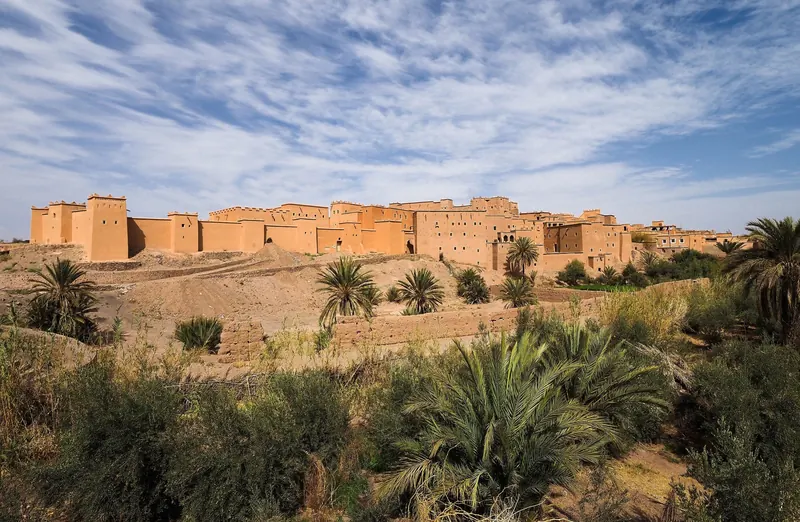
The Best Time to Visit Ouarzazate, Season by Season
Spring and autumn bring warm days and cool nights, summer is fiercely hot and winter is sunny but cold after dark. Here is how Ouarzazate's weather changes month by month and how to plan around it.

The best time to visit Ouarzazate is spring (March to May) and autumn (late September to November). Days are warm and sunny, nights are cool, and it is comfortable to explore the kasbahs, cross the High Atlas and continue to the Sahara. Summer is very hot, often above 38°C in July and August, while winter brings sunny days and cold nights that can approach freezing.
That said, Ouarzazate is a year-round destination. Sitting at around 1,100 m on the edge of the desert, it gets sunshine almost every day of the year and very little rain. The real question is not whether to go, but how to plan around the heat or the cold. This guide covers the climate month by month, what each season is like, Ramadan, and what to pack.
Ouarzazate's climate in a nutshell
Ouarzazate has a hot desert climate. Three things define it:
- Sunshine and dryness. Rain is rare, with only a few wet days a year. Skies are usually clear and the air is dry.
- Big day-night swings. Because of the altitude and dry air, temperatures often drop 12 to 15°C after sunset. A warm afternoon can become a chilly evening.
- Mountains nearby. The High Atlas, just to the north, can see snow in winter, and the Tizi n'Tichka pass between Marrakech and Ouarzazate occasionally closes for a short time after heavy snowfall.
Ouarzazate weather month by month
The table shows approximate average daily highs and lows, rounded from long-term climate records. Individual days can be much hotter or colder, so treat these as a guide rather than a forecast.
| Month | Average high (approx.) | Average low (approx.) | What it feels like |
|---|---|---|---|
| January | 17°C | 2°C | Sunny days, cold nights, possible frost |
| February | 19°C | 5°C | Mild afternoons, cold evenings |
| March | 23°C | 8°C | Pleasant, spring begins |
| April | 27°C | 12°C | Best for sightseeing and the desert |
| May | 31°C | 16°C | Warm, rose season in the Dades valley |
| June | 35°C | 20°C | Hot, early starts recommended |
| July | 39°C | 23°C | Very hot, the peak of summer |
| August | 37°C | 22°C | Very hot, occasional storms |
| September | 33°C | 18°C | Hot at first, easing late in the month |
| October | 28°C | 14°C | Excellent, warm days, cool nights |
| November | 22°C | 8°C | Pleasant days, chilly evenings |
| December | 18°C | 4°C | Sunny and crisp, cold at night |
Sources: NOAA, WMO climate normals for Ouarzazate airport, 1991 to 2020 (temperatures, rainfall and rain days), and 1981 to 2010 for sunshine. Values are rounded averages, not forecasts.
What each month is like in Ouarzazate
The table gives the averages. Here is what they mean on the ground, month by month, with the number of days that usually see at least 1 mm of rain. In every month that figure stays between about one and three days, so rain rarely decides a trip here: heat and cold do.
Ouarzazate in January
January is the coldest month, with afternoons around 17°C and nights close to 2°C. Frost happens on clear nights, and the lowest temperature recorded is about minus 7°C. The sun still shines for roughly 260 hours over the month, so sightseeing in the middle of the day is very pleasant. Snow is common on the High Atlas peaks you see to the north, and the Tizi n'Tichka pass can close for a few hours after heavy falls.
Ouarzazate in February
February warms a little, with highs near 19°C and lows near 5°C. It is one of the slightly wetter months, with about two rainy days on average, which is still very little. The air is clear and the light is sharp, which photographers like. Pack a warm layer for the evenings and for desert nights, which are colder than in town.
Ouarzazate in March
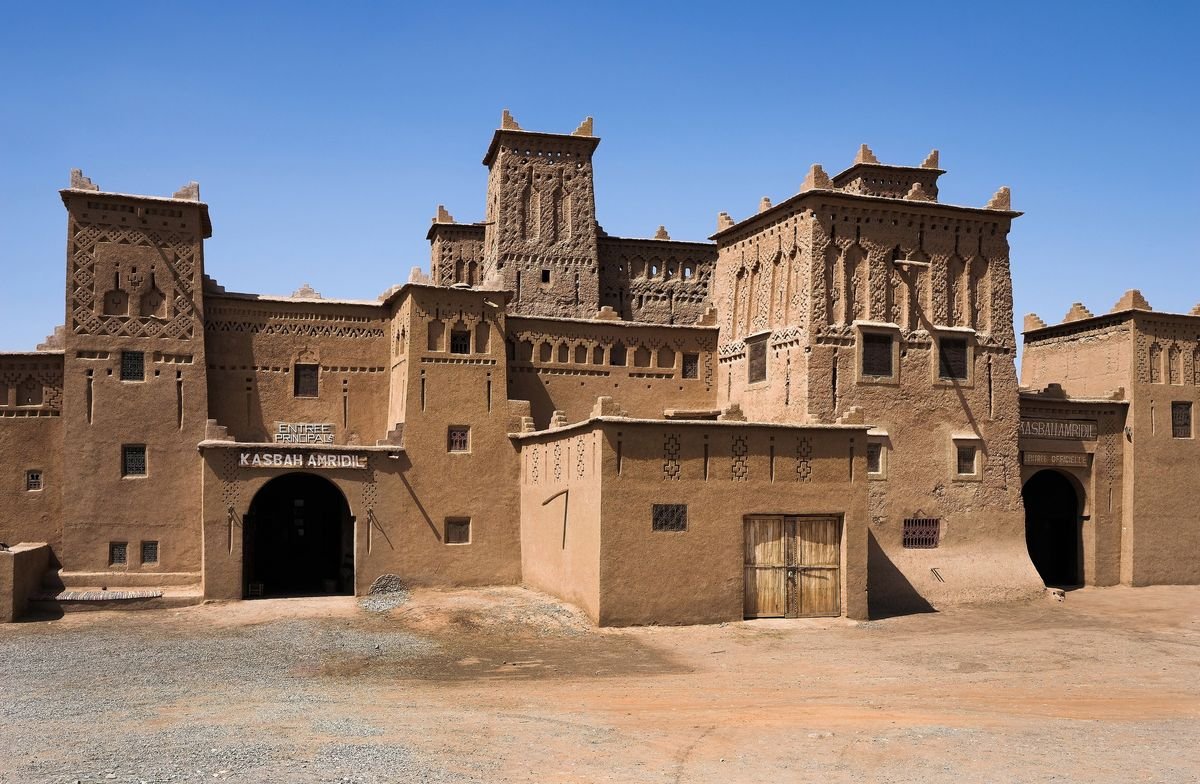
Spring arrives in March: about 23°C in the afternoon and 8°C at night. It has the most rainy days of the first half of the year (a little over two on average) and can be windy. Fields along the rivers turn green, and it is a comfortable month for walking in the palm groves, in Aït Ben Haddou or in the gorges.
Ouarzazate in April
April is one of the best months of the year. Highs are around 27°C, nights about 12°C, and there are more than 300 hours of sunshine. It is warm enough for a night in the dunes without needing heavy blankets, and cool enough for long days of driving. Easter holidays in Europe often fall in April, so book accommodation and desert camps ahead.
Ouarzazate in May
May is warm, around 31°C by day and 16°C at night, and it is the sunniest month, with roughly 340 hours of sunshine. The rose harvest takes place in the Kelaat M'Gouna area east of Ouarzazate, with a festival whose date depends on the flowering. Start excursions early: by the end of the month, afternoons are already hot.
Ouarzazate in June
June brings real heat, with average highs around 35°C and nights near 20°C. Early mornings and evenings are the time for visits; the middle of the day is for shade, a siesta or air conditioning. Days are long, which makes it easy to fit a sunrise visit and a sunset walk into the same day.
Ouarzazate in July
July is the hottest month, with average highs near 39°C and nights around 23°C. Temperatures above 40°C occur on some days, and the record is about 44°C. The air is very dry, so drink more than you think you need. Plan outings for 7 to 11 am and after 6 pm, and choose desert camps that schedule the camel ride late in the day.
Ouarzazate in August
August stays very hot, around 37°C by day and 22°C at night. It has the most rainy days of the year on average (between two and three), usually as short afternoon thunderstorms that can bring dust and sudden flooding in dry riverbeds. Never cross a flooded wadi by car, and check the forecast before driving in the gorges.
Ouarzazate in September
September starts hot, with highs around 33°C, and becomes more comfortable in the second half of the month. Nights fall to about 18°C. It is a good month for travellers who like warmth without the peak of summer, and in the oases the dates ripen as autumn approaches.
Ouarzazate in October
October is excellent: highs around 28°C, lows around 13°C and clear skies most days, with about two rainy days on average. It is one of the best months for the road to the Sahara, for hiking and for long excursions. Evenings cool down quickly after sunset, so bring a light jacket.
Ouarzazate in November
In November, afternoons are pleasant at about 22°C, but nights drop to around 7°C and can approach freezing late in the month. Rain is rare (a little over one day on average). It is a quiet, comfortable month for sightseeing; for a night in a desert camp, ask for extra blankets and pack a warm layer.
Ouarzazate in December
December is sunny and crisp, with highs near 18°C and lows near 3°C. Frost is possible at night, and the Atlas often has snow. Christmas and New Year bring more visitors, so book early for those dates. Make sure your accommodation is heated or has reversible air conditioning, and avoid crossing the Tizi n'Tichka pass at night.
Spring, March to May, is the sweet spot
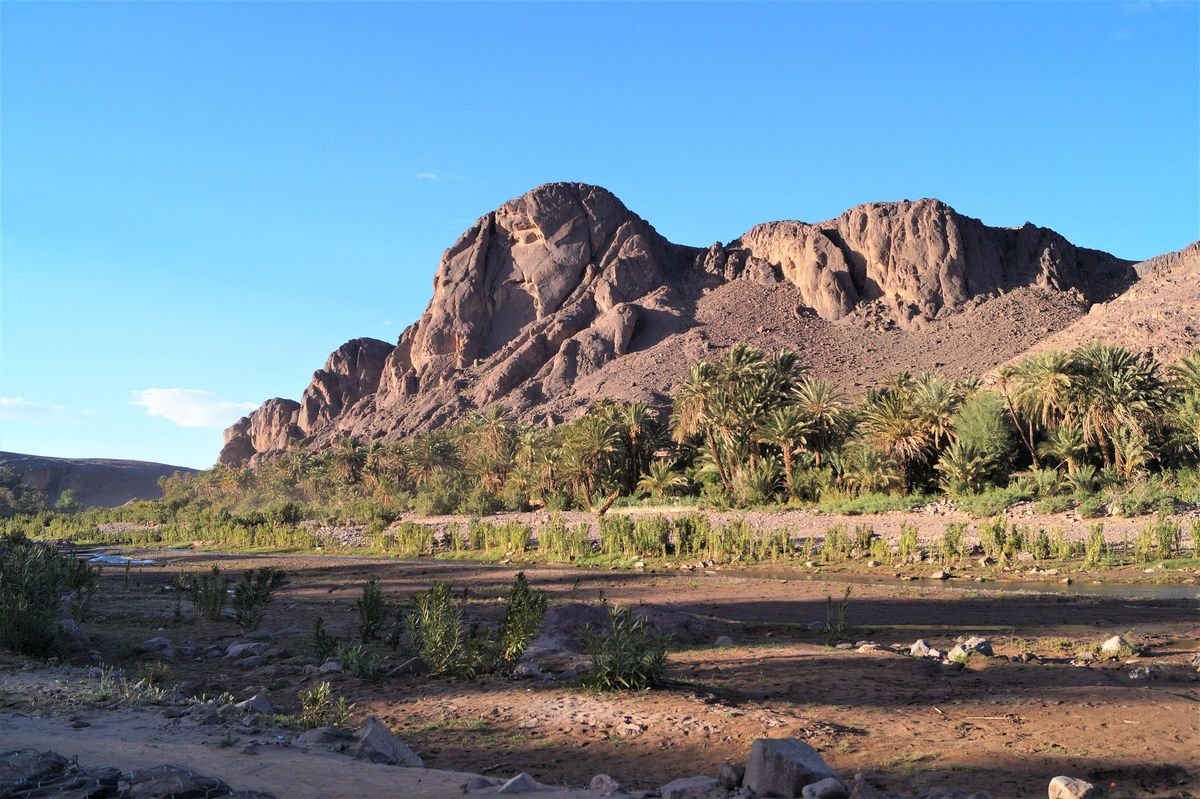
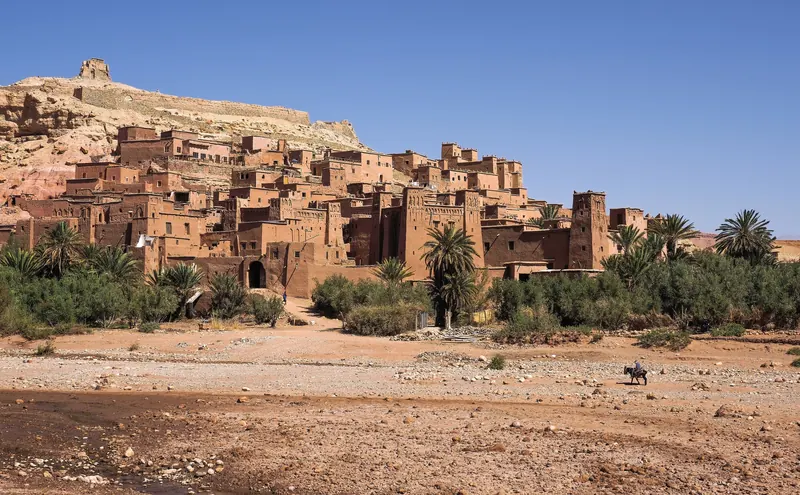
Spring is the favourite season for most visitors. Temperatures climb from the low 20s in March to around 30°C in May, nights stay fresh, and the palm groves and fields along the rivers turn green. It is a good time for walking through Aït Ben Haddou, hiking in the gorges and spending a night in the dunes without freezing or overheating.
Around May, the Kelaat M'Gouna area, about 90 km east, celebrates the harvest of its pink roses with an annual rose festival. Dates change each year with the bloom, so check before planning around it. Spring is also a popular period with European school holidays around Easter, so book accommodation and desert camps ahead.
Summer, June to August, is hot and quiet
Summer in Ouarzazate is seriously hot. July is the hottest month, with afternoon highs often at or above 38°C and peaks well above 40°C on some days. Nights stay warm. On the plus side, the air is dry, the light is beautiful in the early morning and the region is quieter with international travellers.
To enjoy a summer visit:
- start sightseeing at around 7:00 or 8:00 and finish by late morning;
- spend the hot hours (roughly 12:00 to 17:00) indoors, in air conditioning;
- go back out for sunset and dinner, when the town comes to life;
- keep desert trips short, or choose a camp that offers cooling and a late camel ride;
- drink more water than you think you need.
Late summer can bring occasional short, violent storms and dust in the wind. They rarely last long, but avoid crossing riverbeds after heavy rain.
Autumn, September to November, brings warm days and golden light
From late September the heat eases and autumn becomes, with spring, the best time to visit. October is one of the best months: highs in the upper 20s, cool nights and clear skies. It is a great month for the drive to Merzouga and a night under the stars. The date harvest takes place in the oases in autumn, so markets in the palm grove towns are full of fresh dates.
By November, days are still pleasant at around 20 to 22°C, but evenings turn cold and desert nights call for a warm jacket. Read our Ouarzazate to Merzouga guide for planning the desert leg.
Winter, December to February, is sunny by day and cold at night
Winter has a lot going for it: bright sunshine, mild afternoons around 17 to 19°C, very few crowds outside the Christmas and New Year holidays, and spectacular views of snow-capped Atlas peaks. The downside is the cold after dark. Nights in Ouarzazate can drop close to 0°C, and in the desert camps they can be even colder.
Keep two things in mind:
- Heating matters. Many traditional buildings are cold inside in winter. Check that your accommodation has heating or reversible air conditioning, and that your desert camp provides warm blankets.
- Check the mountain road. Snow can temporarily close the Tizi n'Tichka pass between Marrakech and Ouarzazate, usually for a short period after heavy snowfall. Check conditions before driving, leave early and never cross in the dark in winter. Flying into Ouarzazate airport is an alternative; see our airport guide.
Visiting during Ramadan
Ramadan moves about 10 to 11 days earlier each year because it follows the lunar calendar, and its exact start is announced in Morocco after the sighting of the new moon. In the next few years it falls in winter, which means pleasant temperatures for travellers.
Visiting during Ramadan is perfectly possible and can be a rich experience. What to expect:
- Most sights remain open, sometimes with shorter hours. Check timings locally.
- Some cafes and small restaurants close during the day; others serving tourists stay open.
- Afternoons can feel slow, and service may take longer just before sunset.
- After the evening meal (ftour), streets, cafes and shops come alive late into the night.
- Out of respect, avoid eating, drinking or smoking openly in the street during the day.
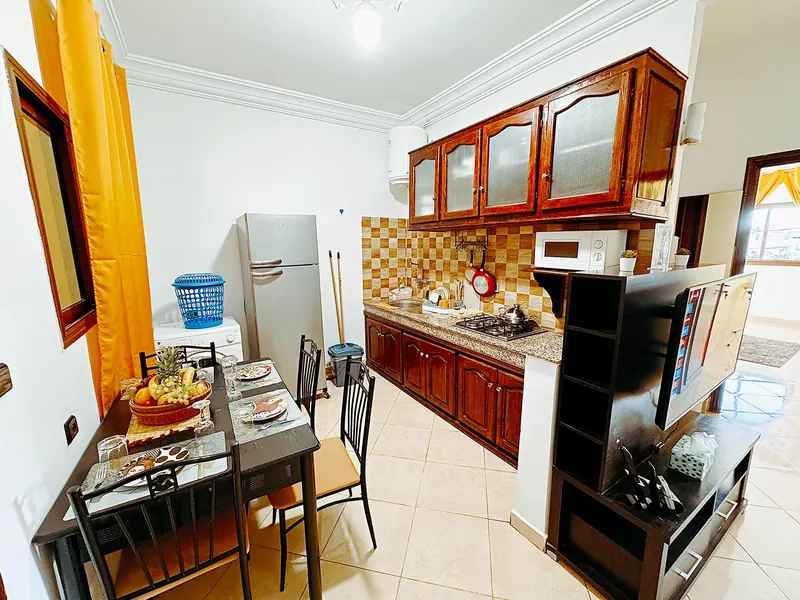
An apartment with a kitchen is particularly practical in Ramadan, since you can prepare your own lunch whatever the opening hours outside.
What to pack, season by season
Spring and autumn
- light breathable clothes for the day, plus a fleece or light jacket for the evening;
- a warm layer for a desert night;
- comfortable walking shoes for kasbahs and gorges;
- sunglasses, hat and sunscreen.
Summer
- loose, light-coloured cotton or linen clothing that covers shoulders and knees;
- a wide-brimmed hat and a scarf for sun and dust;
- high SPF sunscreen, lip balm and a reusable water bottle;
- sandals plus closed shoes for rocky ground.
Winter
- a proper warm coat or down jacket, a hat and gloves for evenings;
- warm layers and socks for sleeping in the desert;
- still sunglasses and sunscreen: the winter sun is strong.
Choosing your dates and where to stay
If you can choose freely, aim for April, October or early November. If you can only travel in summer or winter, Ouarzazate still works well: you simply plan around the middle of the day in summer and around cold evenings in winter.
Also keep an eye on busy periods. Easter, the Christmas and New Year holidays and long European school breaks bring more visitors to the region, and desert camps and guided tours fill up first. If your trip falls in one of these windows, book your accommodation and any Sahara excursion a few weeks ahead, and plan major sights like Aït Ben Haddou for early morning.
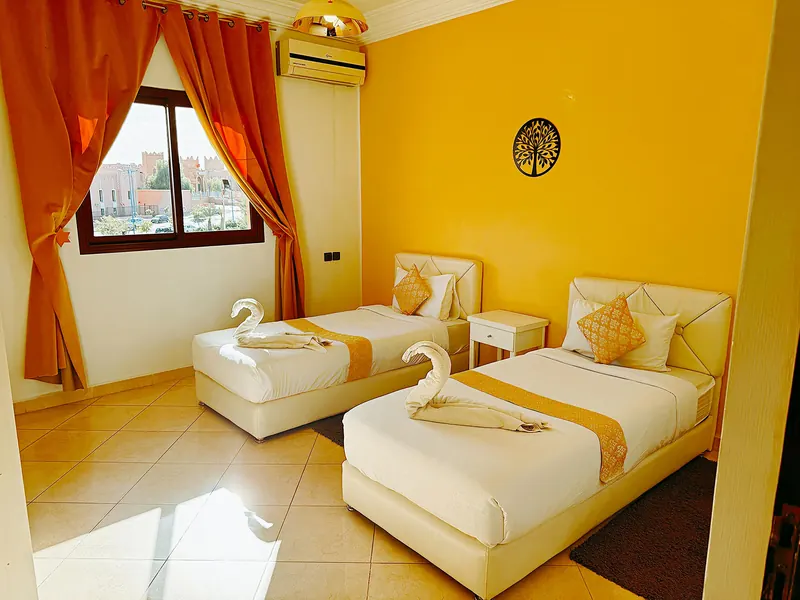
In both cases, comfortable accommodation makes a real difference. At Residence Chay, every apartment has air conditioning for hot afternoons, an equipped kitchen and a washing machine, and the residence is about 3 minutes from downtown and 2 minutes from the airport (see our location). Once your dates are set, you can check availability on our booking page.
Questions travellers ask
What is the best month to visit Ouarzazate?
March, April, October and early November are usually the most comfortable, with daytime highs of roughly 22 to 28°C, cool nights and very little rain. They are also good months to continue to the Sahara.
Is Ouarzazate too hot in summer?
July and August often reach 38°C or more in the afternoon. It is manageable if you sightsee early in the morning and in the evening, rest in air conditioning at midday and drink plenty of water, but long desert trips are tiring at that time of year.
Does it get cold in Ouarzazate in winter?
Yes, at night. December and January days are often sunny and mild, around 17 to 18°C, but nights can drop close to freezing. Bring warm layers, especially for a desert night or the Tizi n'Tichka pass.
Does it rain in Ouarzazate?
Very little. Ouarzazate has a desert climate with only a handful of rainy days a year. Occasional short storms can happen, mostly in late summer and autumn, and snow sometimes falls on the High Atlas between November and March.
Is it a good idea to visit during Ramadan?
Yes, as long as you plan for it. Sights and many restaurants stay open, but rhythms change: some cafes close during the day, services can be slower in the afternoon and evenings come alive after sunset. Eating and drinking discreetly in public during daylight is appreciated.