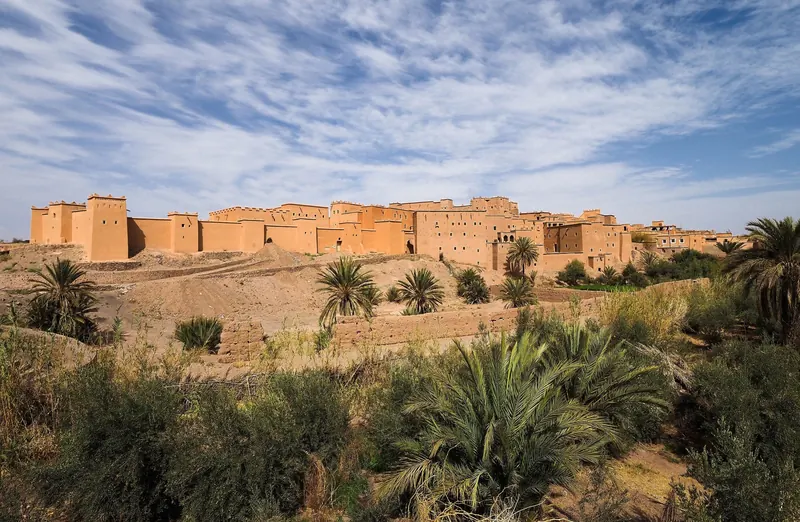
Dades Gorges from Ouarzazate: The Gorge Road, Walks and Timing
Boumalne Dades is about 115 km and 2 hours from Ouarzazate. From there a narrow road climbs north into the Dades gorges, past kasbahs, the monkey fingers rocks and the Tissadrine hairpin bends.
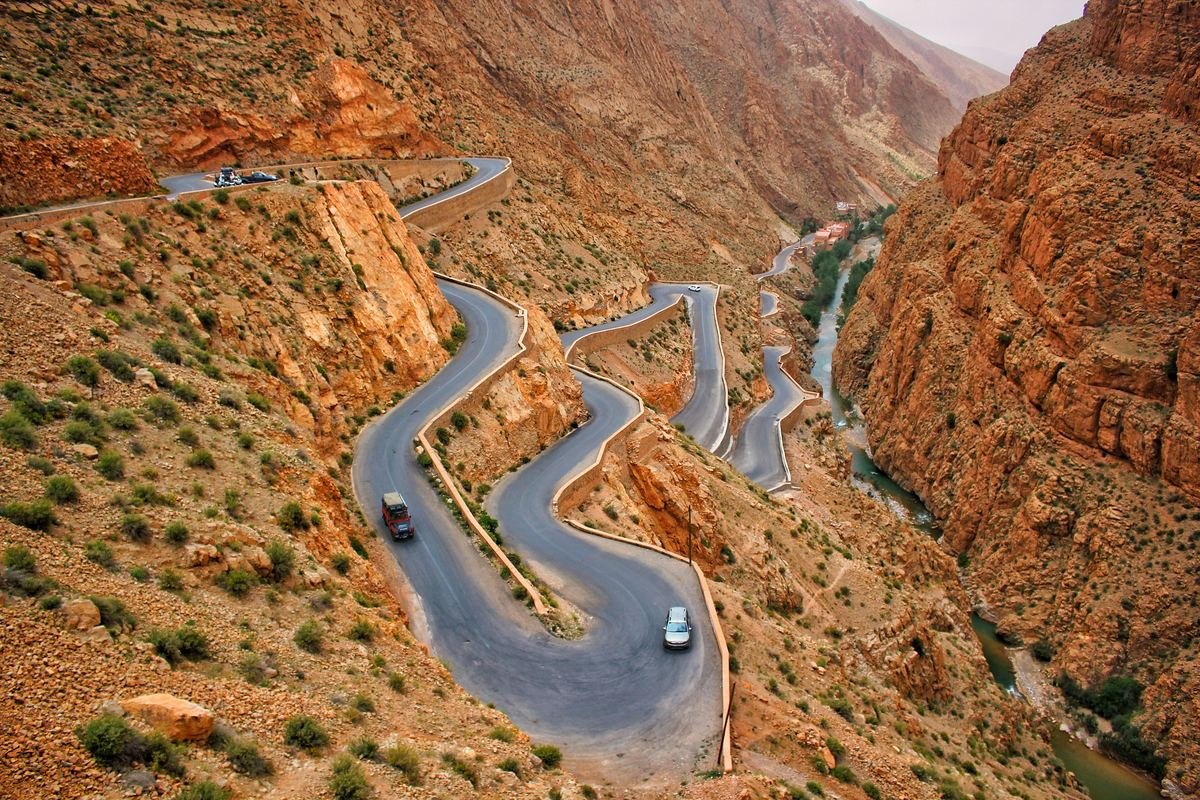
The Dades gorges are the most dramatic side trip east of Ouarzazate. From town you drive about 115 km, roughly 2 hours, to Boumalne Dades, then turn north onto a narrow road that follows the river into the High Atlas, past earthen kasbahs, the red rock formations known as the monkey fingers and the tight Tissadrine hairpin bends. You can see the highlights in a long day trip from Ouarzazate, or sleep in the gorge and walk.
Our guide to the road from Ouarzazate to Merzouga covers the main N10 route through the Dades valley. This article goes up the side road instead: what you see in what order, how far each stop is, which walks are worth it, when to go, and whether to stay the night.
Dades gorges at a glance
The Dades river comes down from the High Atlas and meets the N10 at Boumalne. The broad, cultivated stretch between Skoura, Kelaat M'Gouna and Boumalne is usually called the Dades valley. The gorges proper start just north of Boumalne, where the R704 road climbs along the river towards Msemrir. All distances below are approximate.
| Point | Approx. distance | What you find |
|---|---|---|
| Ouarzazate to Boumalne Dades | about 115 km, around 2 hours | Last town with a full range of shops and fuel |
| Boumalne to Aït Arbi | a few km | Clusters of old kasbahs above the fields |
| Boumalne to Tamellalt | about 10 to 15 km | The monkey fingers rock formations |
| Boumalne to Aït Oudinar | about 25 km | The narrowest section, road squeezed between the walls |
| Boumalne to the Tissadrine hairpins | about 25 to 30 km | The zigzag road and the classic viewpoint |
| Boumalne to Msemrir | about 60 km | Upper valley, end of the usual day trip |
From Boumalne to the hairpins allow 40 minutes to an hour of driving without stops. The full return trip up the gorge and back, with photo stops, lunch and a short walk, easily fills 3 to 4 hours.
Getting from Ouarzazate to Boumalne Dades
Take the N10 east out of Ouarzazate. After about 40 km you pass Skoura, then the road runs along the valley to Kelaat M'Gouna at about 90 km and Boumalne Dades at about 115 km. The road is paved and straightforward, but it crosses many villages with 40 or 60 km/h limits and frequent radar checks, so the 2 hours is realistic rather than generous.
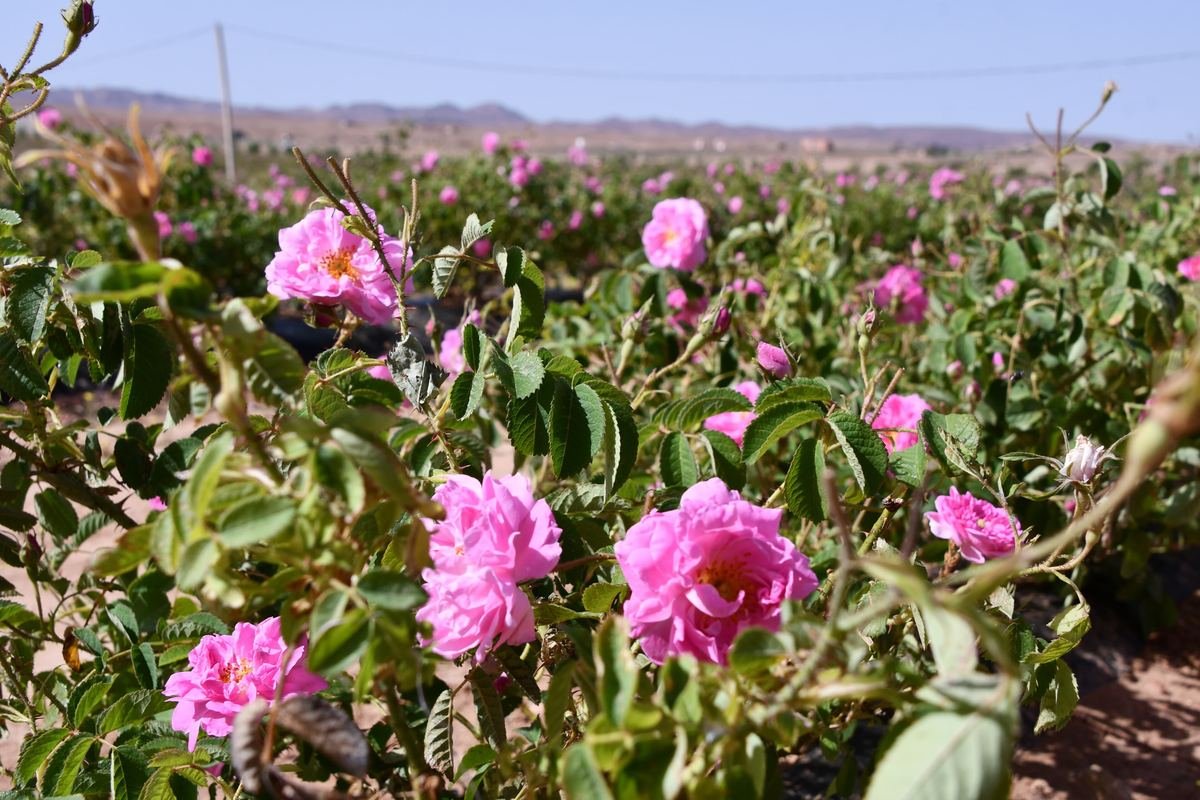
If you have time on the way out, the palm grove of Skoura and Kasbah Amridil makes a good first stop. In spring, a coffee in Kelaat M'Gouna and the Valley of Roses fits naturally into the same day. On a day trip, though, keep these stops short, or you will reach the gorges at midday in the harshest light.
Boumalne sits on a plateau above the river at about 1,560 m. Fill the tank here and buy water and snacks: up in the gorge there are small cafés and guesthouses, but fewer services than in town. The gorge road leaves the N10 in Boumalne and is signposted for the Gorges du Dadès and Msemrir.
Without a car, grands taxis run from Ouarzazate to Boumalne, and shared taxis or minibuses go from Boumalne up the valley, but they are slow and do not stop at viewpoints. For most visitors a rental car or a driver for the day is far more practical; see our guide to car hire and driving from Ouarzazate.
The Dades gorge road, stop by stop
The order below is the order you meet things driving north from Boumalne. On the way back you see everything again from the other direction, often in better light, so do not feel you must stop everywhere on the way up.
Aït Arbi and the lower valley kasbahs
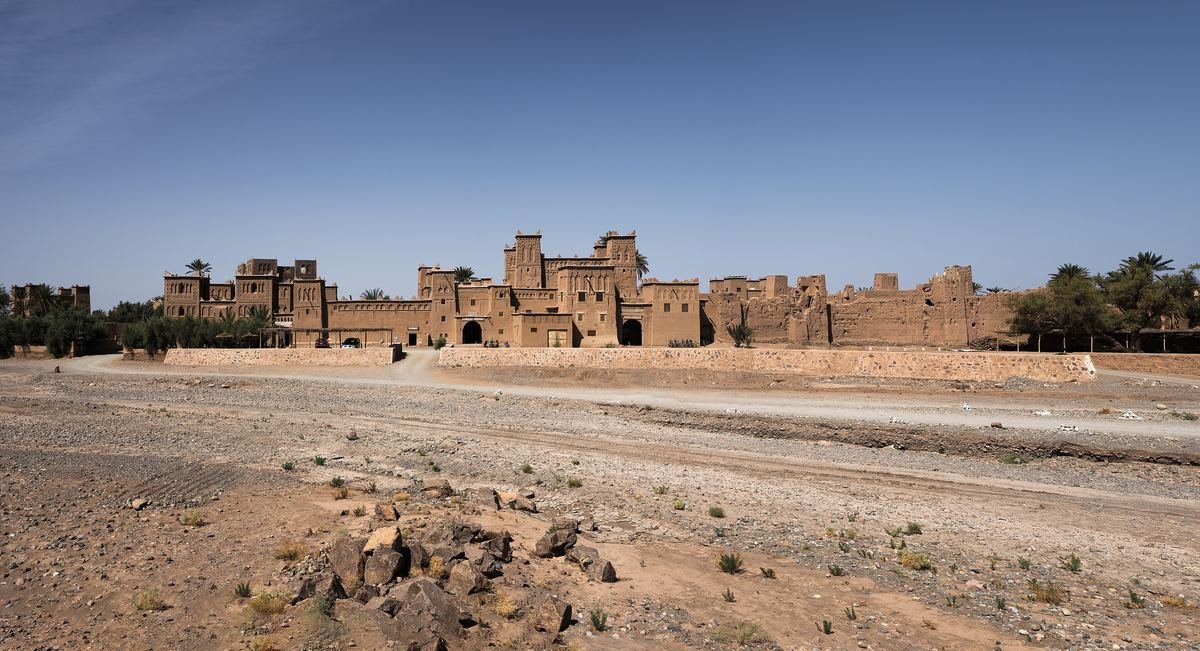
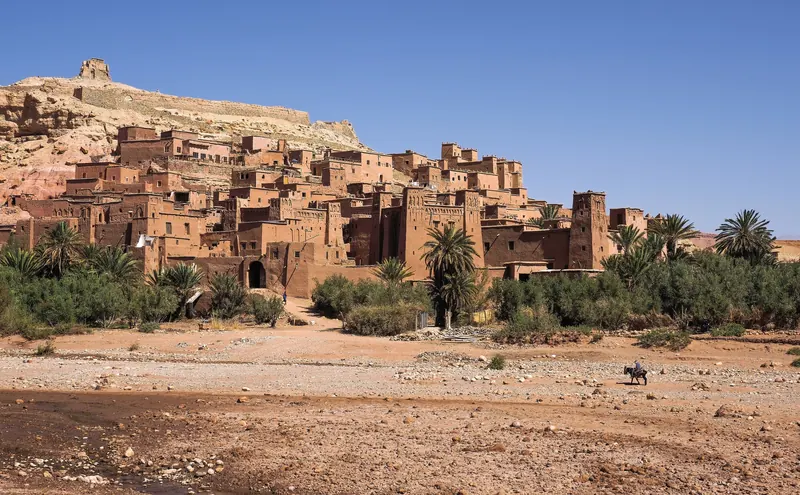
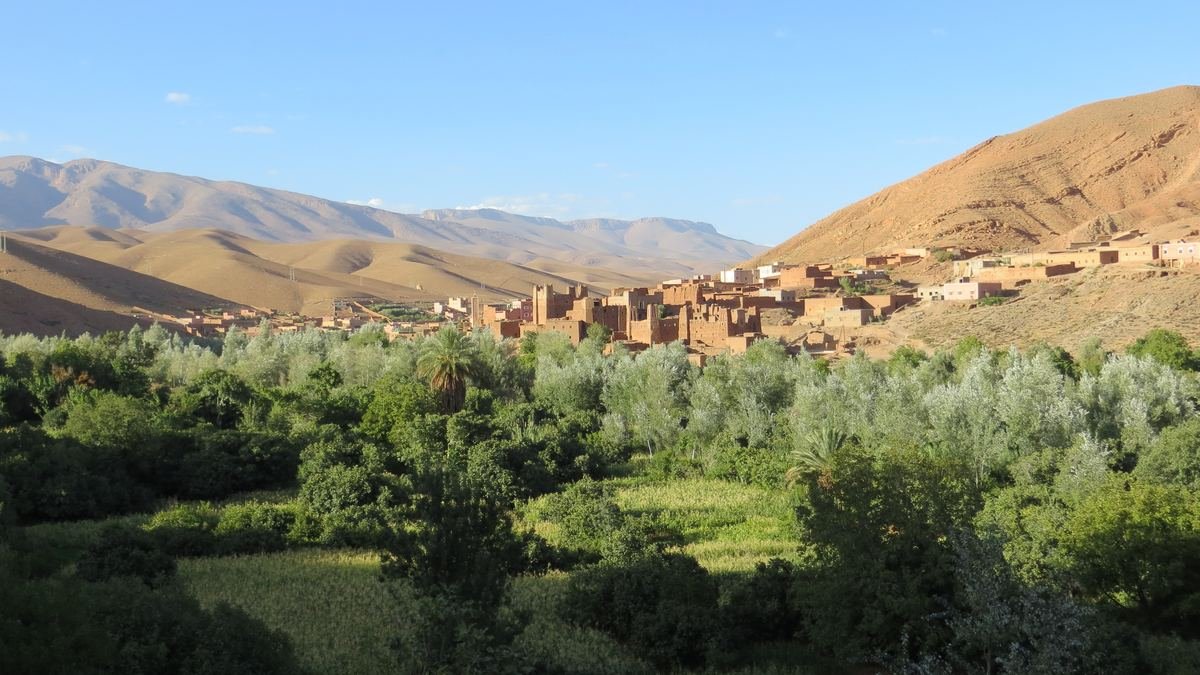
Within a few kilometres of Boumalne the valley floor turns green: walnut and fig trees, small wheat and barley plots, poplars along the river. Above the fields stand groups of earthen kasbahs and fortified houses, some still lived in, many slowly crumbling. The group around Aït Arbi, perched on a rocky spur above the road, is the one most people photograph. Pull over only where the shoulder is wide, as this stretch carries local traffic and minibuses.
Tamellalt and the monkey fingers
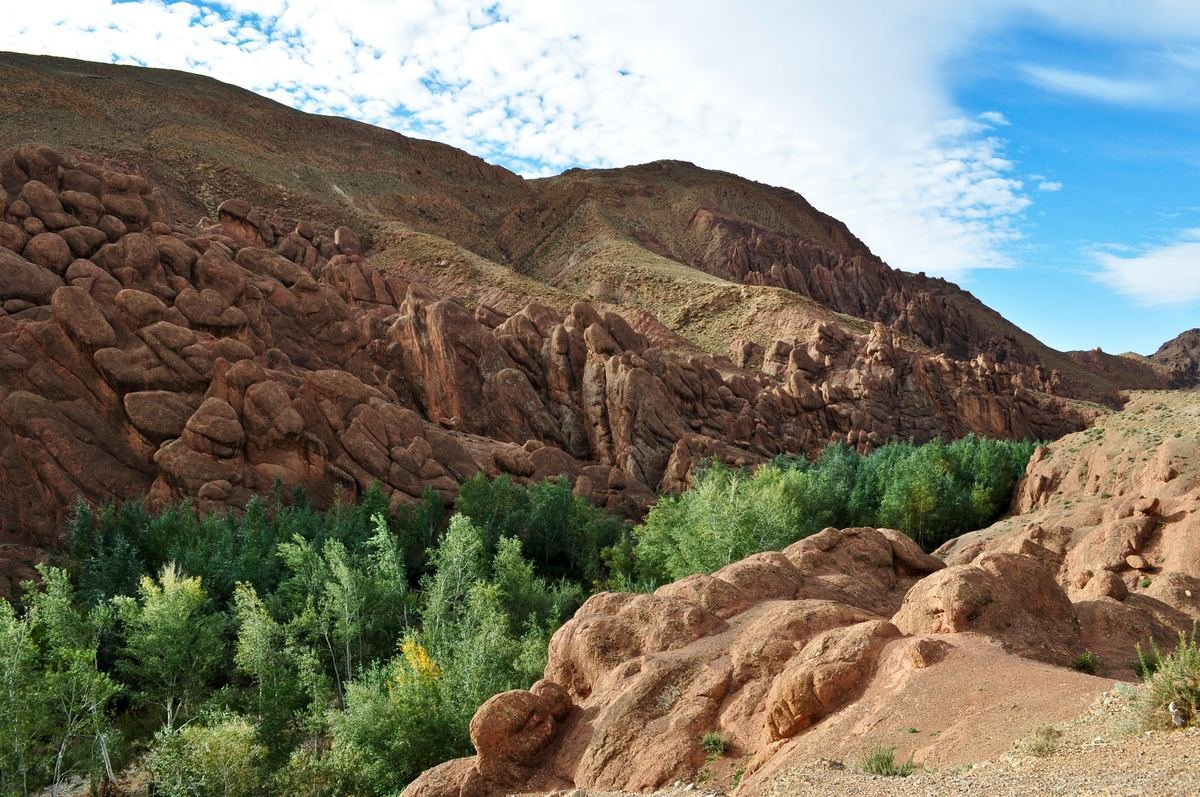
Around Tamellalt (also written Tamlalt) the far side of the valley turns into a wall of rounded, deeply fluted red rock. Locals call the formations the monkey fingers, in French the Doigts de singe, because the rounded pillars look like knuckles pressed together. Nearby, a stretch of smooth, folded hills is sometimes nicknamed the Atlas brain. These are eroded conglomerate and sedimentary layers, shaped by water and wind over a very long time.
You get a good view from the road. To go in among the rocks you cross the river and follow a dry side canyon on foot, which is the most popular walk in the valley (see below).
Aït Oudinar and the narrows
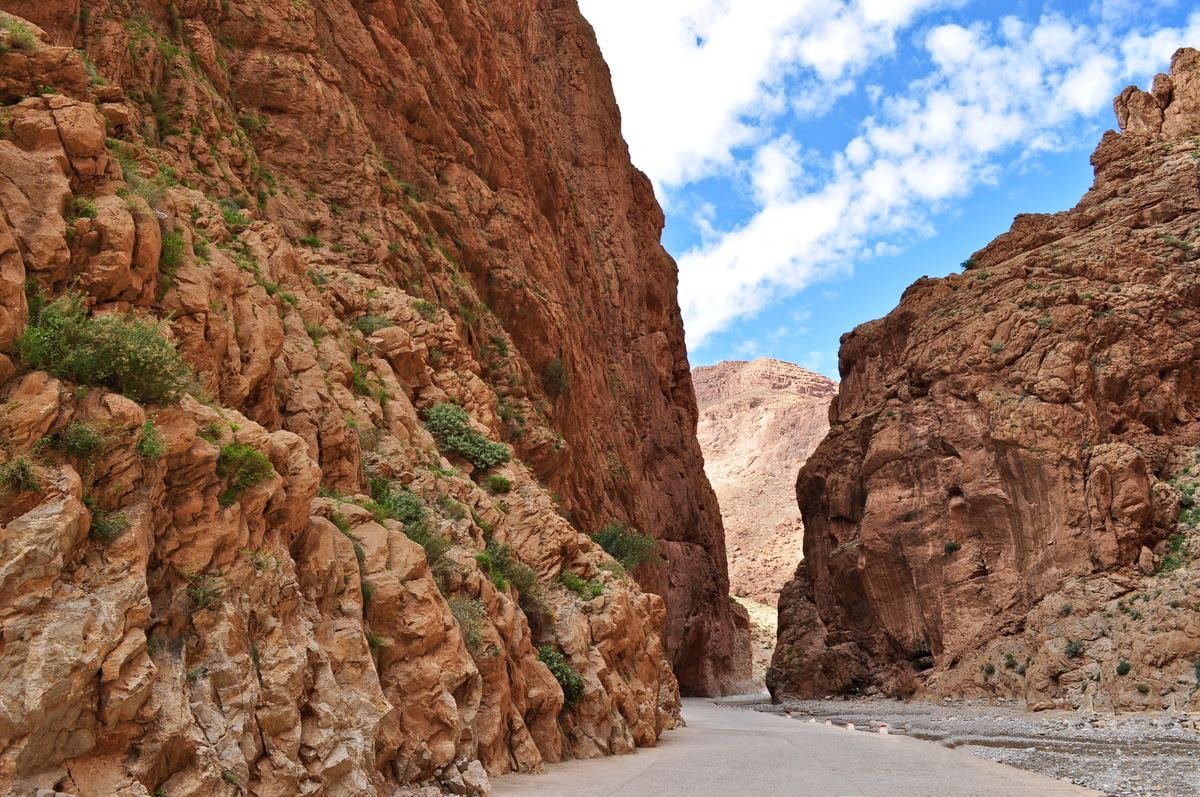
About 25 km from Boumalne, near Aït Oudinar, the valley suddenly closes in. The road squeezes between vertical limestone walls with the river right beside it, and for a few hundred metres the gorge feels like a corridor. This is the true gorge section, and it is worth parking just before or after it and walking through rather than driving straight on. The cliffs in this part of the Dades rise roughly 200 to 500 m.
The Tissadrine hairpin bends
Just above the narrows, the road leaves the river and climbs the side of the gorge in a tight series of switchbacks. Seen from above, this short stretch of zigzags is the picture of the Dades gorges that appears on postcards and travel posters. Drive up through the bends, then stop at the top, where a few cafés with terraces look straight down onto the road. A mint tea there, watching cars and the occasional bus inch up the curves, is the classic end point of a day trip.
The bends are short but steep and tight. Use a low gear on the way down, keep to your side and expect cars stopped on the bends for photos.
Beyond the hairpins: the upper Dades and Msemrir
Most visitors turn back at the hairpins. If you have a night in the gorge or simply an early start, continue north: the valley opens and closes again, with more villages, terraced fields and further narrow sections before Msemrir, about 60 km from Boumalne. The upper valley is quieter and greener in spring, and in autumn the poplars and walnut trees turn yellow.
From Msemrir, a mountain road crosses to Tamtattouchte above the Todra gorge. Recent traveller reports say this link is now paved, which makes a loop from the Dades to the Todra possible in an ordinary car, but it is a long, high mountain road with few services. Check its current state locally before committing, and do not try it in winter or after storms. Beyond Msemrir towards Agoudal, the R704 becomes an unpaved track that needs a 4x4 and experience. For the canyon itself, see our guide to the Todra gorge from Ouarzazate.
Walks and hiking in the Dades gorges
Driving gives you the views, but walking is how you really see the gorges. You do not need to be a mountaineer for the shorter walks, just good shoes, water and a hat.
The monkey fingers canyon walk
The best known walk starts near Tamellalt. You cross the river (usually by stepping stones or a small bridge, sometimes with wet feet), then follow a dry side canyon that winds between the rounded red walls, with a few narrow passages and short scrambles. The usual loop takes about 2 to 3 hours. Paths branch and are not marked, so most people go with a local guide; guesthouses in the valley can arrange one. Do not enter the side canyons if rain is forecast.
Walking the narrows at Aït Oudinar
The easiest walk of all: leave the car near Aït Oudinar and stroll through the narrowest section on foot, then down to the river. It is flat, takes 30 to 45 minutes there and back, and suits children and older travellers. Watch for traffic in the tightest part.
Along the river between Aït Oudinar and Tamellalt
For a half day on foot, local guides lead a walk down the valley from Aït Oudinar through Aït Arbi towards the monkey fingers, on paths between fields, villages and the river. It is often quoted at around 3 and a half hours. Arrange a car or taxi to pick you up at the end.
Longer hikes
The Dades is also a starting point for multi-day trekking in the central High Atlas and on Jbel Saghro to the south. These need a qualified guide, proper equipment and, in spring and autumn, warm layers. Our guide to hiking near Ouarzazate covers the main options.
Day trip or overnight
A realistic day trip from Ouarzazate
- 8:00: leave Ouarzazate with a full tank. Short coffee stop in Skoura or Kelaat M'Gouna.
- 10:00: Boumalne Dades. Take the gorge road north.
- 10:30 to 12:30: stops at Aït Arbi and the monkey fingers viewpoint, then the narrows at Aït Oudinar on foot.
- 12:30: up through the Tissadrine hairpins, lunch on a terrace above the bends.
- 14:30: drive back down, with the afternoon light on the lower valley kasbahs.
- 17:30 to 18:30: back in Ouarzazate.
That is about 5 hours of driving in total. It works, but it is tiring, and there is no time for the monkey fingers walk. If several people can drive, or you hire a driver, the day becomes much more pleasant.
Why staying a night works better
The valley is at its best early and late in the day, when the red rock glows and the road is empty. Sleeping in the gorge lets you walk in the morning cool, see the hairpins without traffic and drive back without rushing. The guesthouses along the road range from simple auberges to more comfortable hotels with river views; book ahead in spring and autumn.
A night in the Dades also makes sense if you are heading on east. Many travellers sleep in the gorge, see the Todra the next morning and continue to the dunes, as described in our Merzouga guide.
Best time to visit the Dades gorges
- Spring (March to May): green fields, almond blossom early in the season, roses in the lower valley in late April and May. The most pleasant season for walking.
- Autumn (September to November): clear light, harvest season and yellow poplars later in the season. Also very good.
- Summer (June to August): hot in the lower valley in the middle of the day, though the gorge is cooler than Ouarzazate. Walk early.
- Winter (December to February): sunny days but cold mornings and evenings, and snow is possible on the upper valley and the mountain roads. Fine for a day drive, less so for camping.
Whatever the season, avoid the gorge during and just after heavy storms. The river can rise very fast, side canyons flood, and rockfalls occur on the road. For month by month conditions in the region, read our guide to the best time to visit Ouarzazate.
Driving and practical tips
- Drive in daylight. The gorge road is unlit, narrow in places and used by pedestrians, donkeys and herds.
- Take the bends slowly. Sound your horn briefly before blind corners in the narrows and on the hairpins, as local drivers do.
- Park sensibly. Stop only where you are fully off the road, never on a bend.
- Car sickness. The hairpins and the curves above them can upset children; have remedies and plan stops.
- Cash. Bring dirhams for cafés, guides and small purchases. Do not count on card payment in the gorge.
- Unofficial guides. At viewpoints you may be offered a walk or a visit. A local guide is a good idea for the canyon walks, but agree the route, duration and price before you set off.
- Photos and respect. These are working villages. Ask before photographing people, and dress modestly in the villages.
Using Ouarzazate as your base
Because the gorges are about 2 hours away, Ouarzazate works well as a base if you want to see the Dades as one day among several others, such as Aït Ben Haddou, the film studios or the Fint oasis. You leave early, come back in the evening, and do not have to pack up and move hotel.
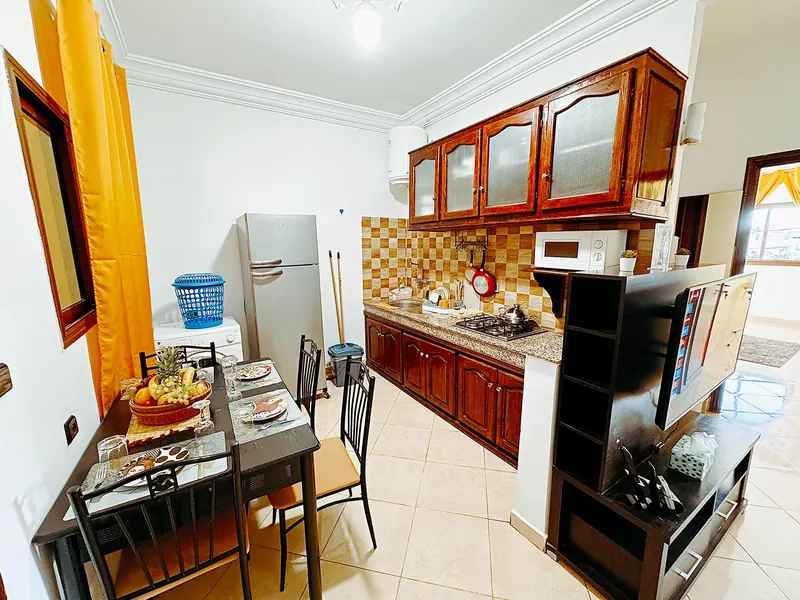
At Residence Chay, the two-bedroom apartments come with an equipped kitchen for an early breakfast or a packed lunch, air conditioning for a hot afternoon back in town, and free private guarded parking, which makes early departures easy. The reception can also help arrange a driver for the day if you prefer not to drive the gorge road yourself.
Questions travellers ask
Can you visit the Dades gorges in a day from Ouarzazate?
Yes. Leave around 8:00, reach Boumalne after about 2 hours, spend 3 to 4 hours on the gorge road and be back in Ouarzazate by early evening. It is a long day of driving, so share the wheel or hire a driver.
Do I need a 4x4 for the Dades gorges?
No. The road from Boumalne through the gorges, the hairpins and on to Msemrir is paved and fine in a normal car. A 4x4 only matters if you continue beyond Msemrir on the unpaved mountain tracks towards Agoudal.
Where are the monkey fingers in the Dades valley?
The rounded, finger-like rock formations rise on the west side of the valley around Tamellalt (also spelled Tamlalt), in the first 15 km or so north of Boumalne. You see them from the road, and a walk through the small canyon behind them takes 2 to 3 hours.
Which is better, the Dades gorges or the Todra gorge?
They are different. Dades is a long scenic drive with kasbahs, rock formations and the famous hairpin road, best enjoyed by car with stops. Todra is a short, very narrow canyon you walk through in half an hour. If you have time, see both.
Is the Dades gorge road dangerous?
Not in daylight and dry weather if you drive slowly. The road is narrow in places, with blind bends and parked cars near viewpoints. Avoid it after heavy rain, when the river can rise quickly and rocks can fall.