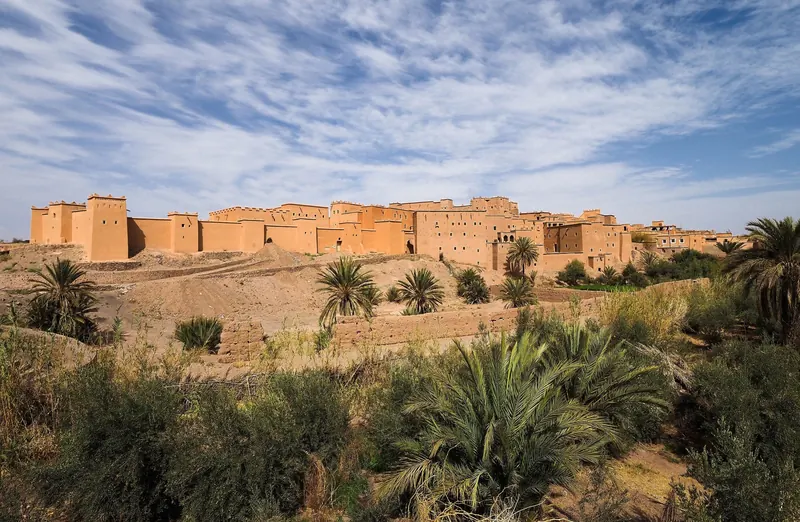
Visiting Aït Ben Haddou from Ouarzazate
The UNESCO-listed ksar is 30 km from Ouarzazate. How to get there, when the light is best, what to see at the top and how to combine it with Tamdaght or Telouet.
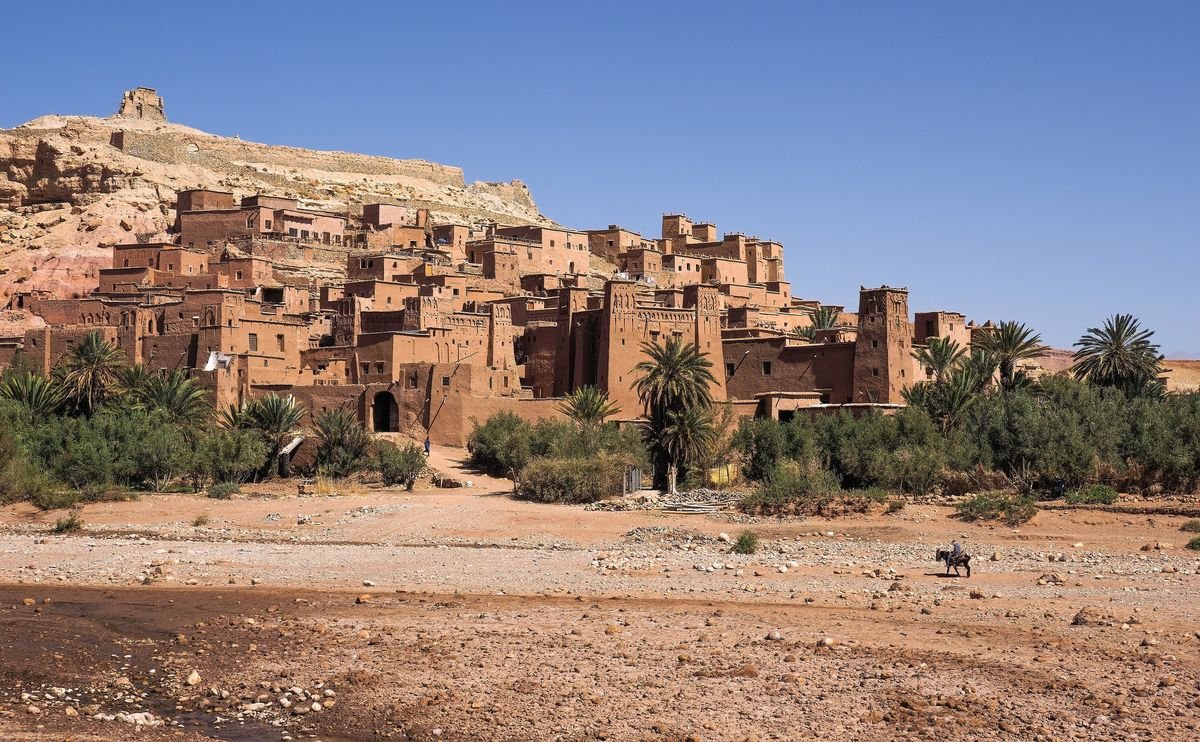
Aït Ben Haddou is the most famous ksar (fortified village) in Morocco, a UNESCO World Heritage Site since 1987, and it lies only about 30 km from Ouarzazate. From Residence Chay the drive takes about 35 minutes, which means you can be there for the soft morning light, long before the day-trippers from Marrakech arrive, and be back in town for lunch. This guide covers how to get there, how to cross the river, what to see, when to go and how to make a full day of it.
What Aït Ben Haddou is, and why it matters
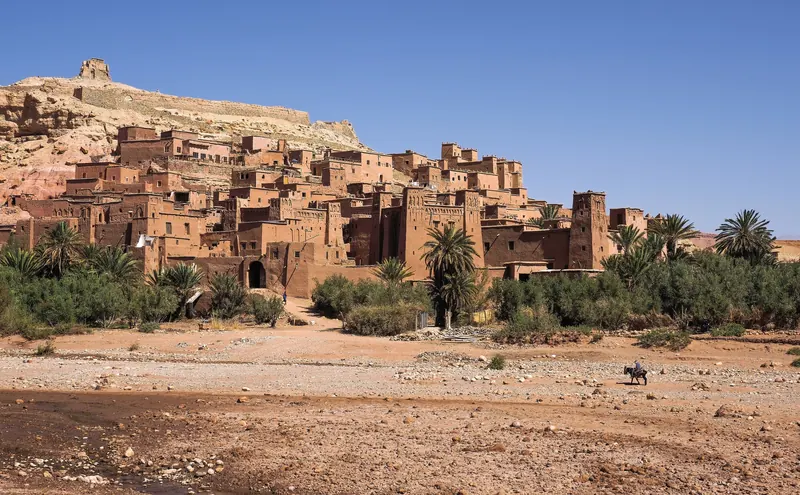
A ksar is a fortified village built by a community rather than a single family, with houses, stables, a mosque, communal spaces and a granary packed inside defensive walls. Aït Ben Haddou climbs a hill above the Ounila river, a stop on the old caravan route that linked the Sahara to Marrakech over the High Atlas. Its tight cluster of earthen houses, towers and gateways is one of the best-preserved examples of southern Moroccan earthen architecture, which is why UNESCO listed it.
The buildings you see today are mostly not as old as they look. Earth (pisé, or rammed earth, and mud brick) needs constant maintenance, and the oldest structures are thought to date from around the 17th century. Most families moved to the newer village across the river during the 20th century, so only a handful of households still live inside the ksar. The rest of the houses have become shops, small museums and family-run cafés.
How to get to Aït Ben Haddou from Ouarzazate
The route is simple: take the N9 west towards Marrakech, then turn right at Tabourahte onto the road signposted for Aït Ben Haddou. The road is paved all the way.
| Option | Time from Ouarzazate | Good for |
|---|---|---|
| Rental or own car | about 35 minutes | Total flexibility, sunrise or sunset visits |
| Private grand taxi (half or full day) | about 35 minutes | No driving, waiting time included if agreed |
| Shared grand taxi | longer, depends on filling the car | Budget travellers, daytime only |
| Organised tour or guide | about 35 minutes | History and context, combined itineraries |
By car
Driving yourself is the easiest way to see the ksar at its best, early or late. There are paid parking areas near the restaurants on the new-village side. Leave nothing visible in the car.
By grand taxi
You can hire a grand taxi for a half day, with the driver waiting while you visit. Agree on the price, the waiting time and any extra stops (Tamdaght, for example) before you leave. Shared grand taxis also run towards Tamdaght and the Ounila valley, but they leave when full and are less predictable for the return.
With a tour or guide
A local guide adds a lot here: the history of the families who lived in the ksar, the way the houses and granary worked, and the stories of the film shoots. Many tours combine Aït Ben Haddou with Atlas Studios or Telouet. If you are staying at Residence Chay, the reception can help you arrange a driver or a guide.
Crossing the Ounila river
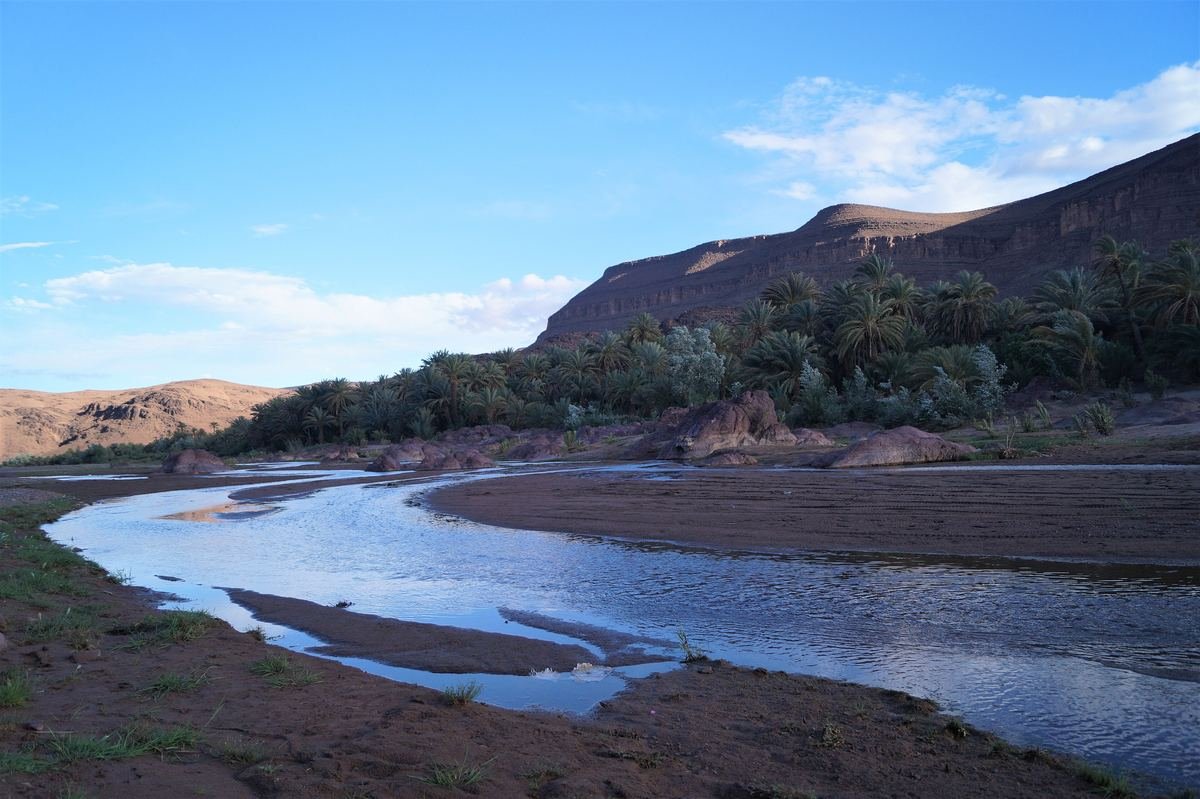
The ksar sits on one bank and the modern village, with its hotels, parking and cafés, on the other. Most visitors cross on the footbridge, which makes the visit possible year-round. When the river is low, you can also cross further down on stepping stones or sandbags, which is a nice way to arrive and gives you the classic view of the ksar reflected in the water. After rain or snowmelt in spring, the river can rise quickly: use the bridge.
Once across, follow the main lane uphill. Several entrances and houses have people at the door who will invite you in. Using the main paths is the simplest way to avoid confusion about where you are expected to pay.
What to see inside the ksar
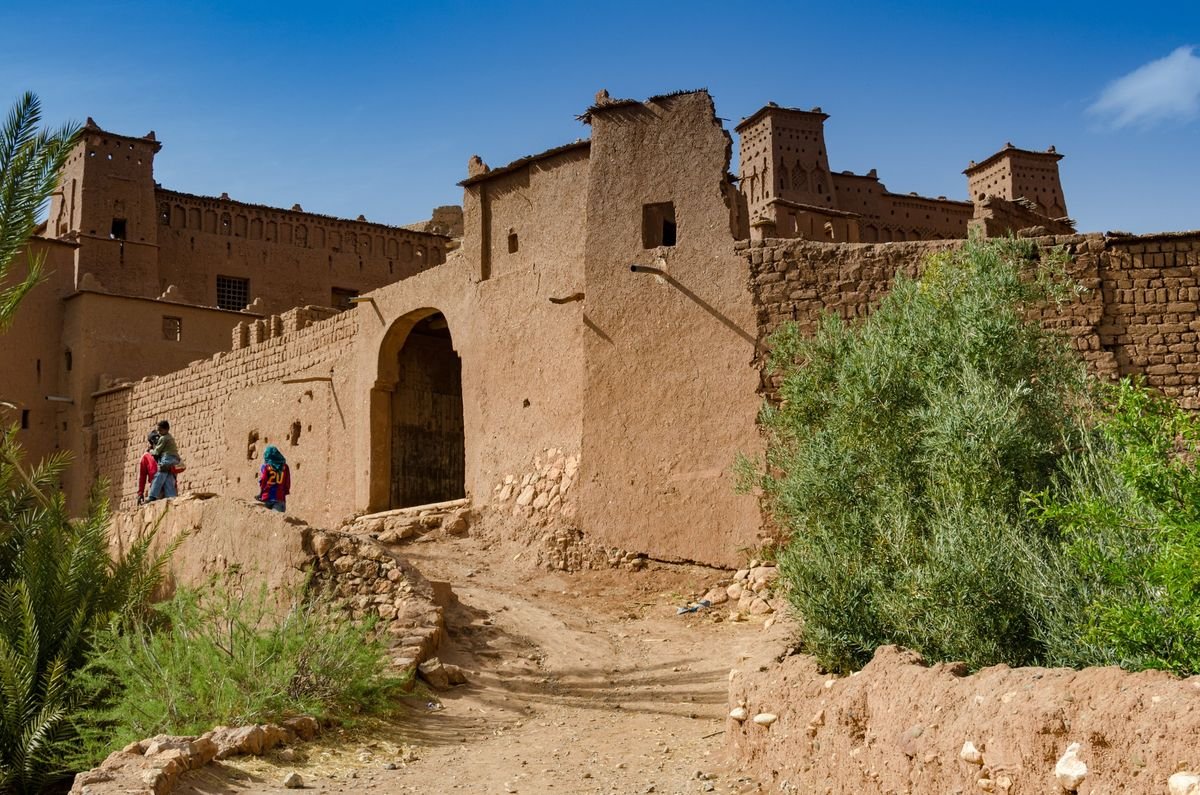
- The lanes and covered passages: the most enjoyable part is simply walking the narrow, stepped streets, with their dark tunnels and sudden views over the valley.
- A family house: some inhabitants open their homes as small museums, with old kitchens, storage rooms and roof terraces. It is the best way to understand how a ksar house was organised around light and coolness.
- Artists and craft stalls: painters here sometimes use tea, saffron and heat to make their pictures appear, a local speciality worth watching.
- The agadir (granary) at the top: the ruined fortified granary crowns the hill. The climb takes about 15 to 20 minutes at an easy pace on uneven steps.
The view from the granary
The top of the hill is the reason most people make the climb, and it is worth every step. You look down over the tiers of earthen roofs, the green strip of the river, the new village opposite, and in clear weather the snow-capped High Atlas to the north. There is little shade up here, so bring water and a hat.
The best time to visit
Time of day
Low sun is what makes earthen architecture come alive: in the early morning the walls turn pale gold, and in the late afternoon the tones become warmer and softer, with long shadows across the lanes and the valley. Tour groups from Marrakech usually arrive between late morning and mid-afternoon. Staying in Ouarzazate gives you the advantage: arrive around 8:00 or after 16:30 and you will often have the lanes almost to yourself.
Season
Spring (March to May) and autumn (September to November) are the best seasons, with mild days and clear skies. Summer days are very hot, so visit at the ends of the day only. Winter mornings are cold but bright, and the Atlas behind the ksar is often white with snow. Our guide to the best time to visit Ouarzazate goes into more detail.
Films and series shot at Aït Ben Haddou
Aït Ben Haddou has been a film set for more than sixty years, and you may recognise it even if you have never been to Morocco. Productions that used the ksar or its immediate surroundings include:
- Lawrence of Arabia (1962)
- Jesus of Nazareth (1977)
- The Jewel of the Nile (1985)
- The Mummy (1999)
- Gladiator (2000), where the ksar stood in for the province of Zucchabar, where Maximus fights his first bouts
- Kingdom of Heaven (2005)
- Prince of Persia: The Sands of Time (2010)
- Game of Thrones, as the slaver city of Yunkai
For a closer look at how these productions work, the sets at Atlas Studios in Ouarzazate make a natural companion to this visit.
Fees, etiquette and practical tips
- Money: there is no official entrance ticket, but some residents ask a small fee to pass through their property or visit their house, and that money helps maintain earthen buildings. Keep small notes and coins, and agree on any fee or guide price beforehand.
- Photos: always ask before photographing people. A polite "no" is common and should be respected.
- Dress: the ksar is still a village with a mosque. Shoulders and knees covered is respectful and practical against the sun.
- Shoes: wear closed shoes with grip. The steps are uneven and can be slippery with dust.
- Walls: do not climb on walls or roofs that are not clearly part of the path. Earthen structures are fragile.
- Food: several cafés on both sides of the river serve tagines and drinks, many with terraces facing the ksar.
Combining Aït Ben Haddou with Tamdaght or Telouet
Aït Ben Haddou sits at the bottom of the Ounila valley, one of the most beautiful drives in southern Morocco, and it is easy to extend your visit.
Tamdaght
Just a few kilometres further up the valley, the village of Tamdaght has an old Glaoui kasbah, partly in ruins, with towers that still stand above the palm trees. It is quiet and makes a good short add-on, about 15 minutes beyond Aït Ben Haddou.
Telouet and the Ounila valley
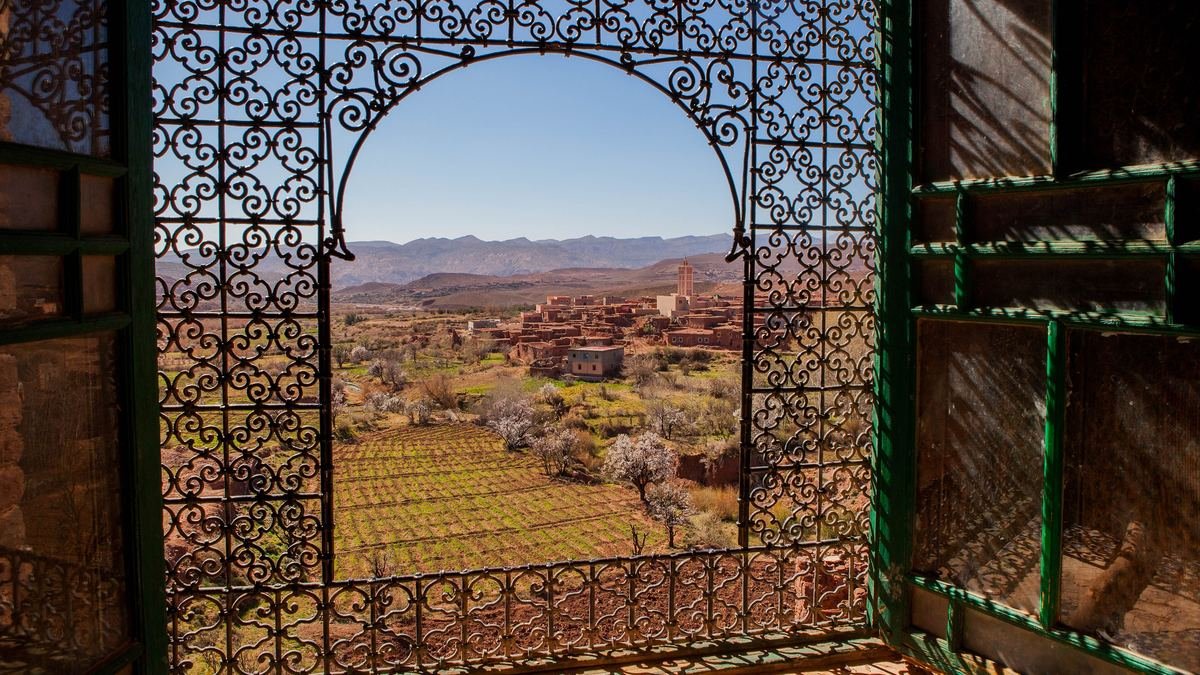
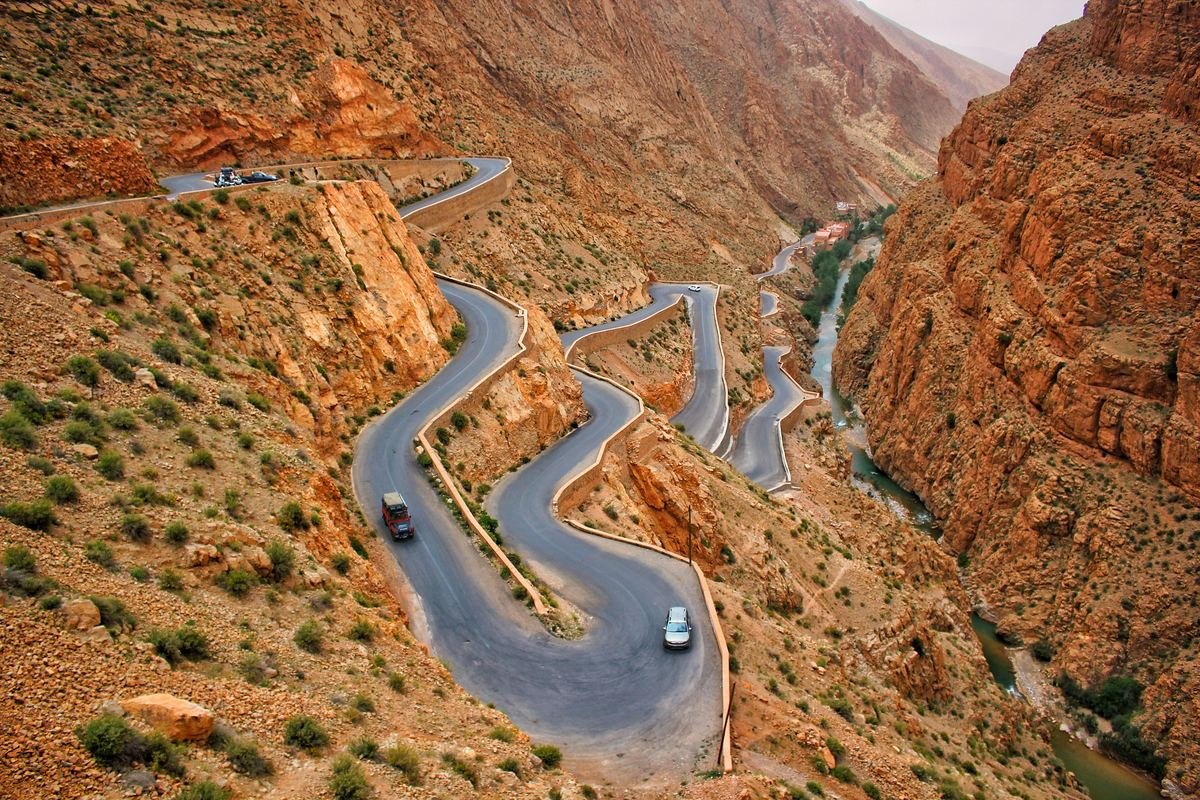
Continue up the paved valley road, through Anmiter and past red cliffs, terraced fields and earthen villages, and you reach Telouet, the cradle of the Glaoui family. Its kasbah has some of the most lavish painted and tiled rooms in Morocco, in a building otherwise crumbling into the mountain. Allow about an hour and a half of driving from Aït Ben Haddou to Telouet. From there you can either return the same way or take the road up to the Tizi n'Tichka and come back to Ouarzazate on the N9, which turns the outing into a full-day loop.
For more ideas, see our guide to the best things to do in Ouarzazate.
Staying in Ouarzazate for an early start
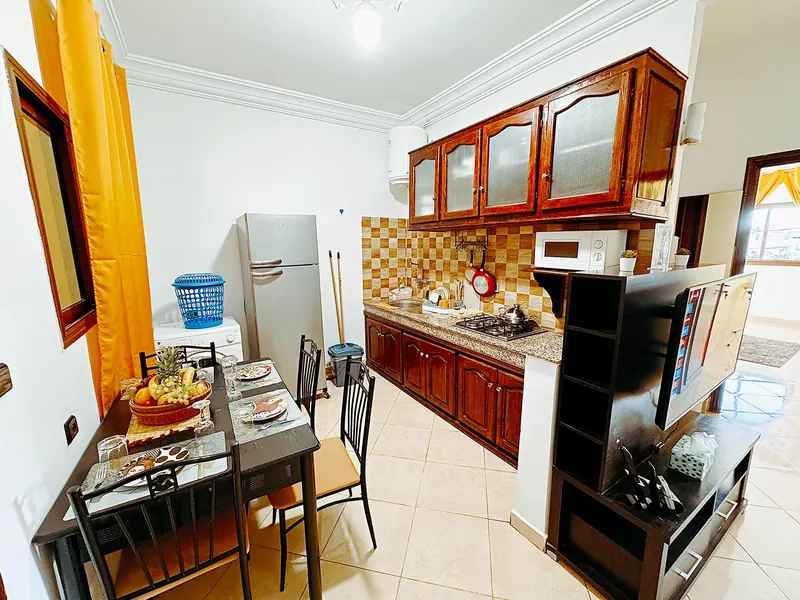
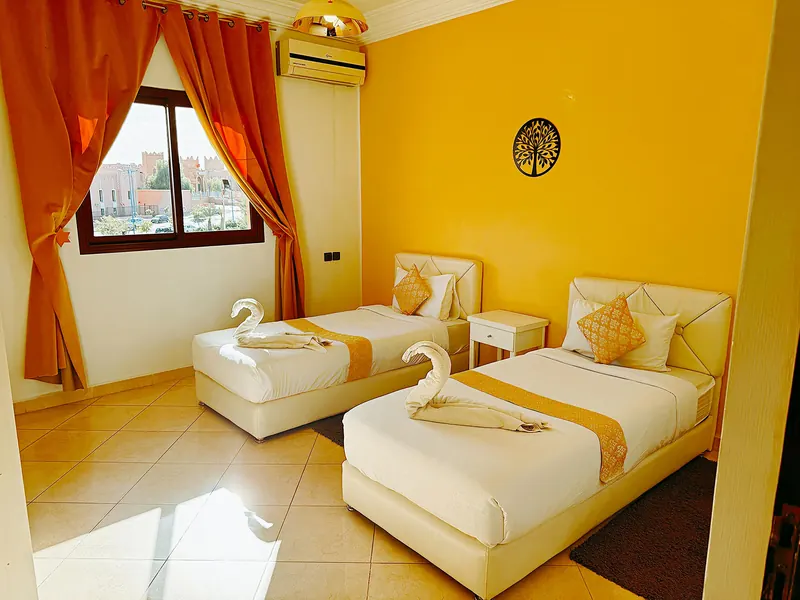
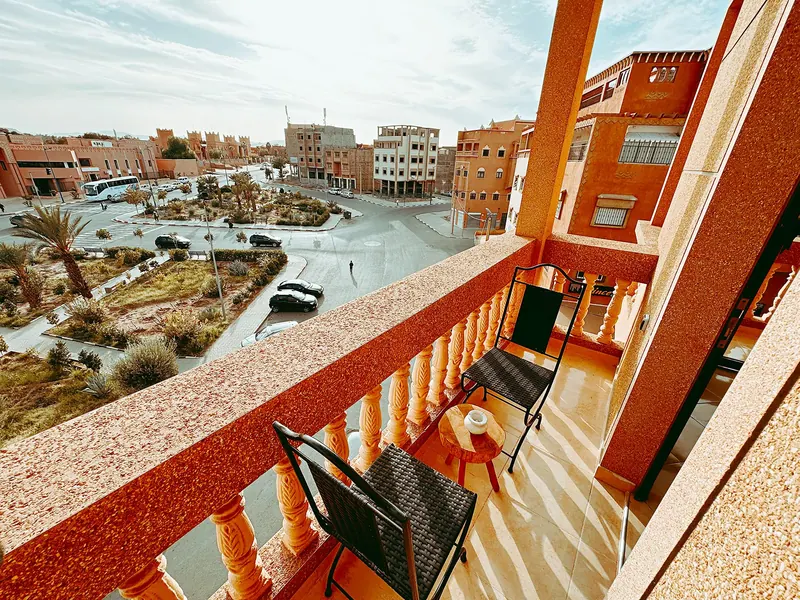
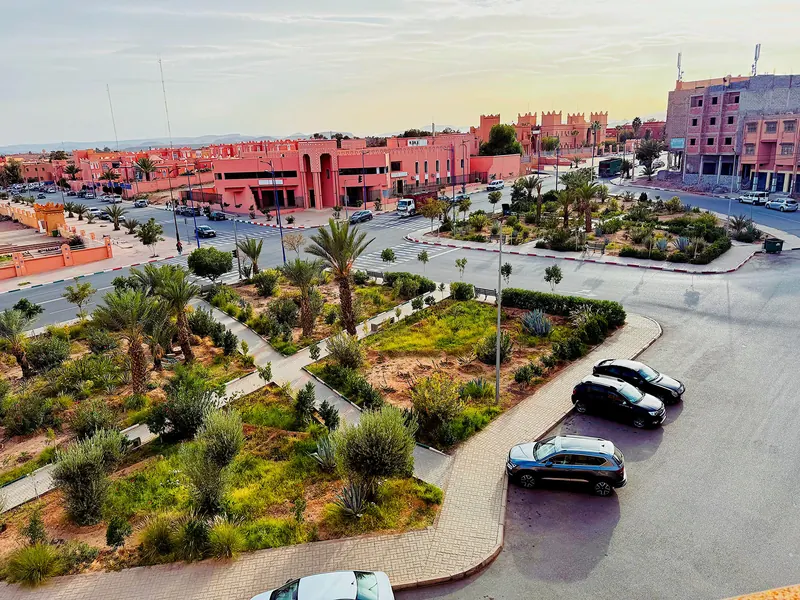
Most visitors see Aït Ben Haddou in the middle of the day as one stop on a long bus ride from Marrakech. Sleeping in Ouarzazate changes that: you can be on the bridge for the first light and then spend the rest of the day on the town's kasbahs and studios. Residence Chay is about 35 minutes from the ksar, with free private parking guarded at night and apartments with a full kitchen where you can make an early coffee before the drive.
Questions travellers ask
How far is Aït Ben Haddou from Ouarzazate?
About 30 km, which is roughly 35 minutes by car on a paved road. You drive west on the Marrakech road (N9) and turn off at Tabourahte towards the village.
Do you have to pay to enter Aït Ben Haddou?
There is no official ticket to walk through the ksar. Some inhabitants ask a small fee to pass through or visit their house, and guides charge for their time. Carry small change in dirhams and agree on any price before you go in.
How long do you need at Aït Ben Haddou?
Allow two to three hours on site: enough to cross the river, walk the lanes, climb to the granary at the top and have a drink with a view. Add travel time of about 35 minutes each way from Ouarzazate.
What films were shot at Aït Ben Haddou?
The ksar and its surroundings have appeared in Lawrence of Arabia, Jesus of Nazareth, The Jewel of the Nile, The Mummy, Gladiator, Kingdom of Heaven, Prince of Persia and Game of Thrones, where it stood in for the city of Yunkai.
When is the best time of day to visit Aït Ben Haddou?
Early morning and late afternoon. The light is warm and low, the earthen walls glow, and you avoid the tour groups that arrive from Marrakech around midday.