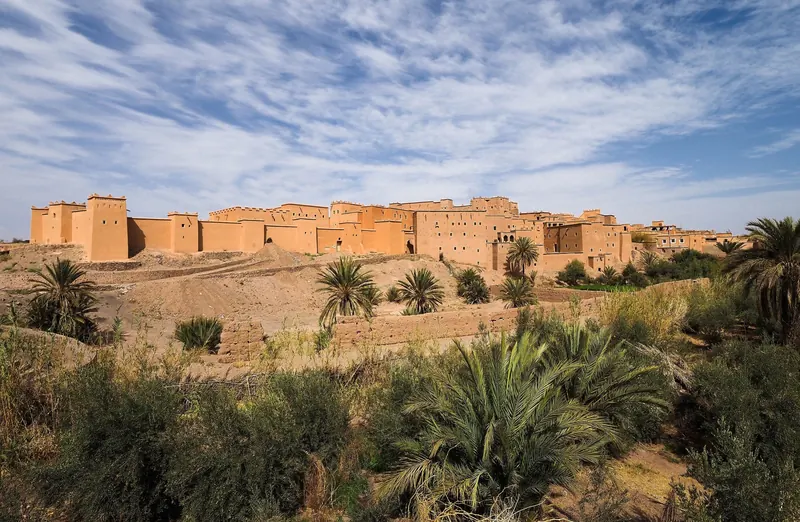
Ouarzazate to Merzouga, the Road to the Sahara Stop by Stop
About 360 km and 6 to 7 hours of driving separate Ouarzazate from the dunes of Erg Chebbi. Here is how to split the road, where to stop and how to prepare for a night in the desert.
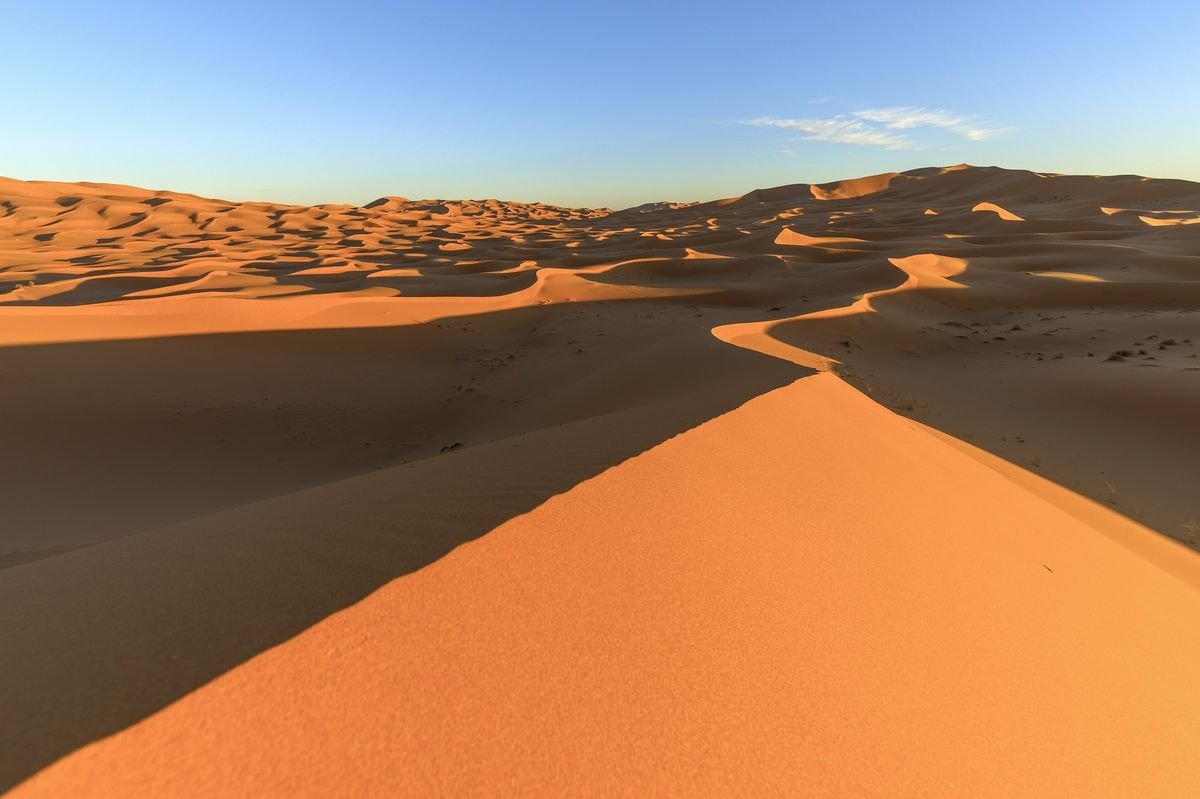
Ouarzazate is the natural gateway to the Moroccan Sahara. From here, the dunes of Erg Chebbi near Merzouga are about 360 km away, roughly 6 to 7 hours of driving on a paved road that follows the Dades valley, crosses the oasis town of Tinghir and runs down through Erfoud and Rissani to the edge of the sand. You can do it in one long day, but the road is so rich in kasbahs, gorges and palm groves that most travellers enjoy it more over two days.
This guide walks you through the route stop by stop, explains when it makes sense to sleep on the way, compares self-drive and organised tours, and covers the quieter alternative of Zagora and Erg Chigaga through the Draa valley. It ends with practical advice on desert camps, packing and road safety.
The route at a glance
The classic itinerary uses the N10 east from Ouarzazate, then the N13 and R702 south towards the dunes. All distances below are approximate, measured from Ouarzazate.
| Stop | Approx. distance from Ouarzazate | Why stop |
|---|---|---|
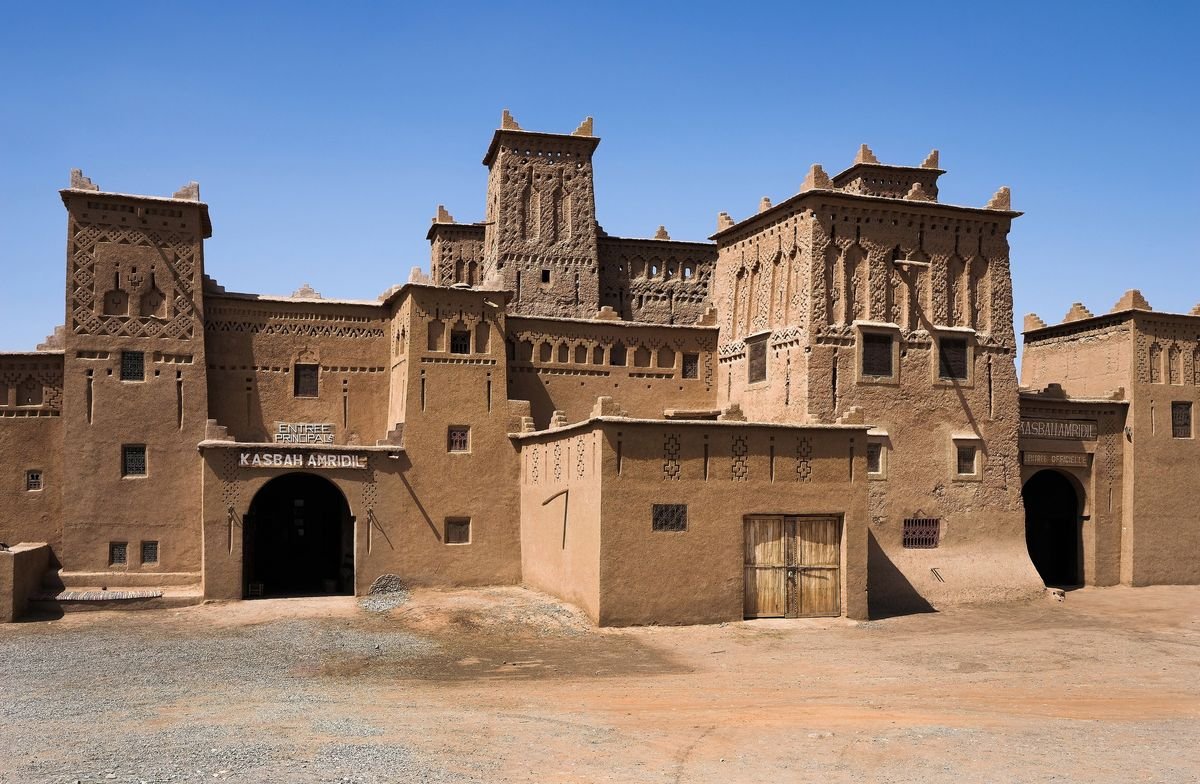
| Skoura | about 40 km | Palm grove and old kasbahs, including Amridil |
| Kelaat M'Gouna | about 90 km | Valley of Roses, rose water and rose products |
| Boumalne Dades | about 115 km | Entrance to the Dades gorges |
| Tinghir and Todra gorge | about 170 km | Long palm grove and a narrow canyon walk |
| Erfoud | about 300 km | Fossil workshops, date palms |
| Rissani | about 320 km | Historic market town of the Tafilalet |
| Merzouga and Erg Chebbi | about 360 km | The dunes, camel treks and desert camps |
Fuel is easy to find in Skoura, Kelaat M'Gouna, Boumalne, Tinghir, Tinejdad, Erfoud and Rissani. Still, fill up before long empty stretches, particularly between Tinghir and Erfoud.
Stops along the way
Skoura, the first palm grove
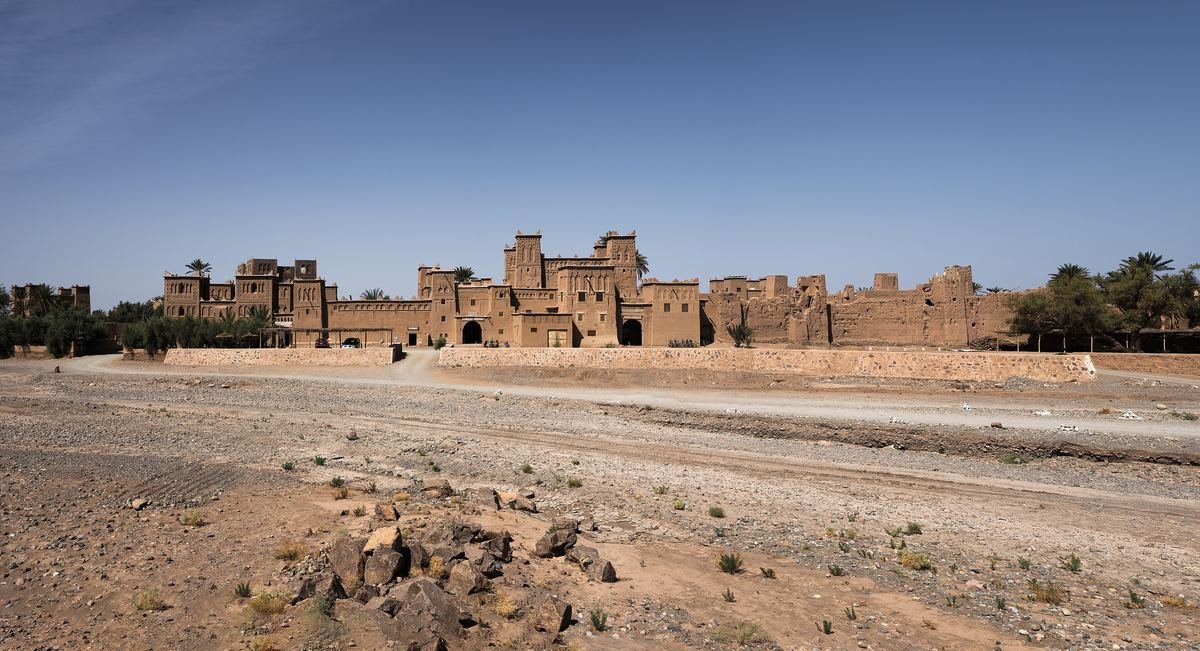
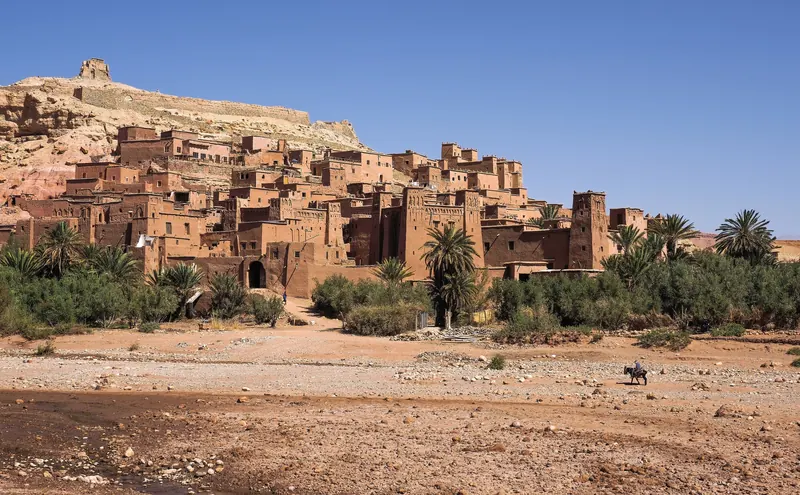
Less than an hour from Ouarzazate, Skoura is a wide palmeraie dotted with earthen kasbahs. Kasbah Amridil, still owned by the same family and partly set up as a small museum, is the classic visit. If you leave Ouarzazate early, it is a good place for a first coffee while the light is still soft.
Kelaat M'Gouna and the Valley of Roses
The town is known for the small pink Damask roses grown in hedges along the fields. Shops on the main road sell rose water, soaps and creams. The flowers are harvested in spring, and the town holds its rose festival around May each year (dates vary with the bloom). Outside that season, a short drive into the valley north of town is still worth it for the views of the kasbahs and green terraces.
Boumalne Dades and the Dades gorges
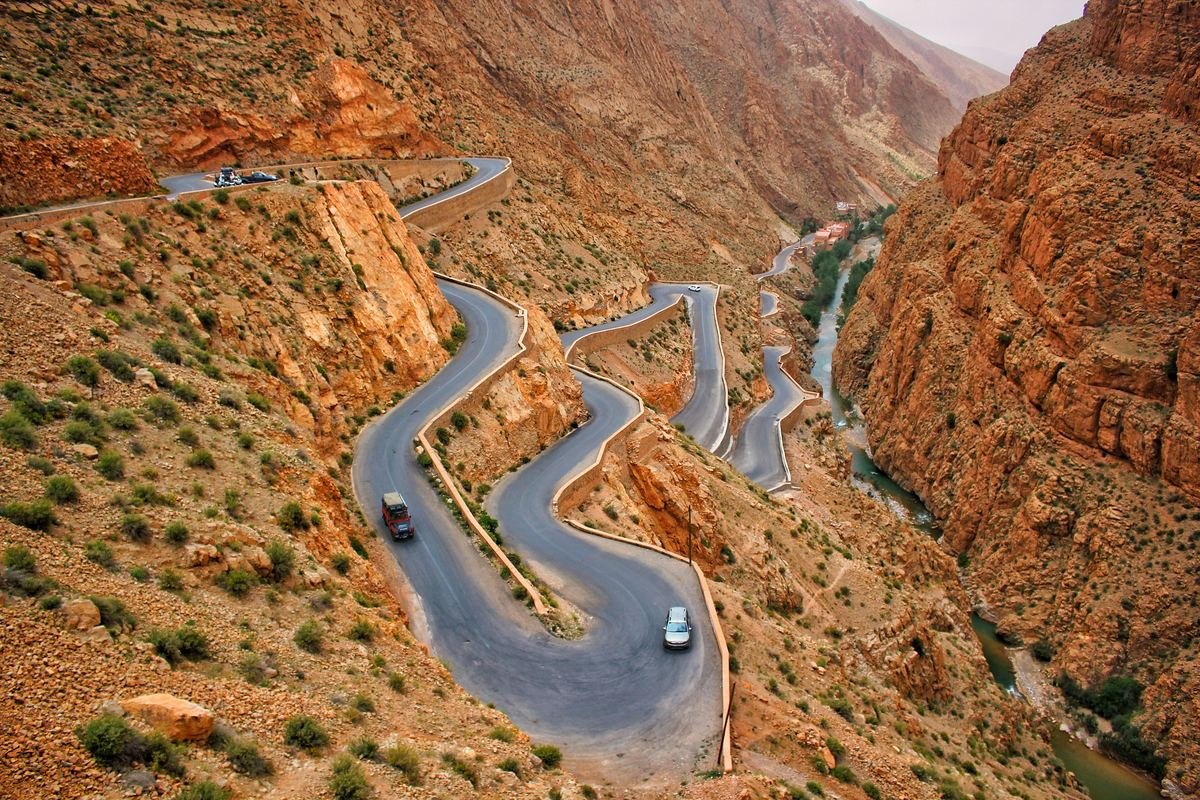
At Boumalne, a side road heads north into the Dades gorges. Going as far as the famous Tissadrine switchbacks, above the Aït Oudinar narrows, adds about 25 to 30 km each way, so allow at least an hour and a half for the detour. The red rock formations nicknamed "monkey fingers" and the winding road are among the most photographed sights in southern Morocco.
Tinghir and the Todra gorge
Tinghir sits above a long ribbon of palms. About 15 km north of town, the Todra gorge narrows to a corridor with walls around 300 m high and a river running along the road. The best part is a short, flat walk of a few hundred metres, easy for all ages. It is the classic lunch stop on the way to the desert.
Erfoud and Rissani
After Tinghir the landscape opens up into stony plains. Erfoud is known for its fossil workshops, where marble full of ammonites and orthoceras is cut and polished. Rissani, a little further south, is the historic heart of the Tafilalet region; its market days are lively and it is a good place to buy dates. From Rissani, Merzouga is only about 35 to 40 km away and the first dunes appear on the horizon.
One day or two, and where to stop overnight
Driving the whole way in a day is perfectly feasible if you start around 7:00 or 8:00, limit yourself to two or three short stops and arrive in Merzouga in the afternoon. Many camps start camel treks around sunset, so aim to arrive by about 16:00 or 17:00.
A night on the way makes more sense if:
- you want to see both the Dades and Todra gorges properly, not through a car window;
- you are travelling with children or older relatives who tire on long drives;
- you arrived in Ouarzazate the same morning, for example after crossing the Tizi n'Tichka pass from Marrakech;
- you are travelling in summer, when midday heat makes long drives tiring.
The usual overnight stops are the Dades gorges (for the scenery), Tinghir (for the Todra gorge early the next morning) or Erfoud (to arrive fresh at the dunes). Avoid driving after dark: rural roads are not lit and you will meet donkeys, sheep, cyclists and unlit carts.
Self-drive or organised tour?
Self-drive
Renting a car in Ouarzazate gives you complete control over stops and timing. The road is paved and generally in good condition, traffic is light outside towns, and signage is in Arabic and French. The main challenges are fatigue, police checkpoints (slow down, have your papers ready, it is routine) and strict speed limits, often 60 km/h or less when entering villages, enforced with radar. You will leave the car at your camp's meeting point in Merzouga, usually a guarded car park at a guesthouse.
Tour with a driver
A private driver or small-group tour handles the road and the camp booking, and drivers know good lunch stops. It is the more restful choice for families, for travellers who do not want to drive several hours a day, or if you plan to continue on to Fes after the desert rather than returning to Ouarzazate. At Residence Chay, the reception can help you arrange a desert excursion with a bivouac night; mention it when you book so options can be discussed before you arrive.
The other way, through Zagora, M'Hamid and Erg Chigaga
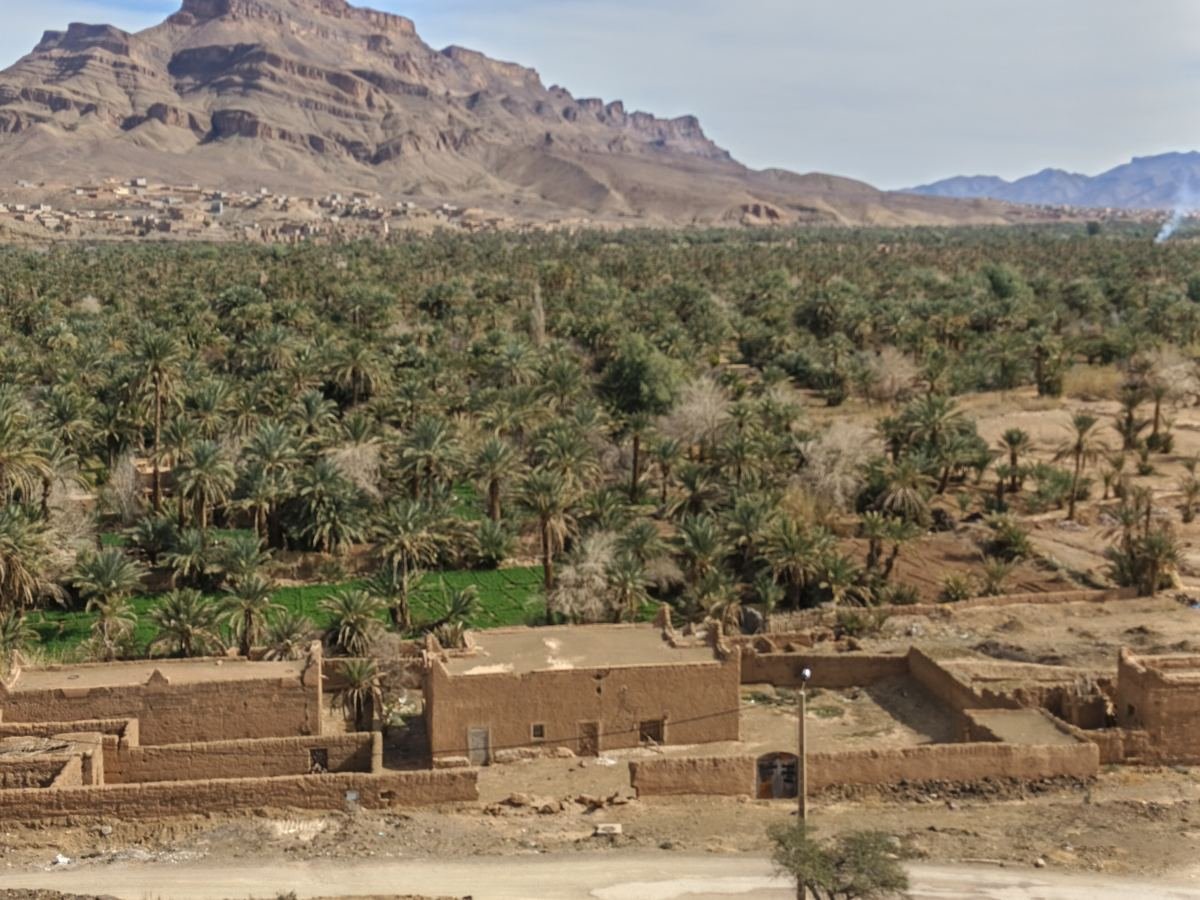
If Merzouga feels too far or too busy, the Draa valley offers a different desert to the south. The N9 crosses the Tizi n'Tinififft pass to Agdz, then follows one of the longest palm groves in Morocco to Zagora, about 165 km and 3 hours from Ouarzazate. The small dunes near Zagora are fine for a camel ride and a first night under the stars, but they are modest.

For big dunes, continue to M'Hamid El Ghizlane, where the tarmac ends. From there, Erg Chigaga is reached by a desert track that takes roughly 1.5 to 2 hours by 4x4. It is more remote and much quieter than Erg Chebbi, with camps spread far apart. That remoteness is exactly the point, but it also means you need an experienced driver who knows the tracks: do not attempt it in a rental car. A 3-day round trip from Ouarzazate is the comfortable minimum.
In short: choose Merzouga for easy access, more camp choice and the classic tall dunes; choose Erg Chigaga for solitude and a sense of real wilderness.
Desert camp tips
- Know what you are booking. Camps range from simple tents with shared facilities to comfortable camps with private bathrooms. Ask about toilets, showers, heating in winter and how luggage gets to camp.
- Pack a small overnight bag. Camels carry people, not suitcases. Leave the big luggage in the car or at the guesthouse.
- Time the camel ride. Sunset and sunrise are the magic hours on the dunes. The ride itself usually lasts between one and two hours each way; if you are not comfortable on a camel, many camps also offer a 4x4 transfer.
- Climb a dune. Walking up a high dune at dawn is tiring but worth it. Go slowly and take water.
- Respect the silence. Keep music low and lights off after dinner. The night sky is one of the best things you will see.
What to pack for the Sahara
Desert temperatures swing hard between day and night. Even after a hot afternoon, nights in the dunes can get properly cold from November to March, sometimes close to freezing.
- a warm layer (fleece or down jacket) and a hat for the evening, all year except high summer;
- a scarf or cheche to protect your face from sun and blowing sand;
- sunglasses, high SPF sunscreen and lip balm;
- closed shoes or sandals you do not mind filling with sand;
- a headlamp or small torch;
- a reusable water bottle and snacks for the road;
- a zip bag to protect your phone and camera from fine sand;
- cash, as cards are not always accepted in small towns and camps.
For seasonal details, read our guide on the best time to visit Ouarzazate: spring and autumn are the most comfortable months for the desert, while summer afternoons in Merzouga can be extremely hot.
Road safety on the way to the desert
- Drive in daylight only, and leave early.
- Respect speed limits strictly, especially entering villages, where radar checks are common.
- Watch for animals, children and slow vehicles on the shoulders.
- Overtake only with a long clear view; trucks and grands taxis are common on the N10.
- Keep extra water in the car, especially in summer.
- Strong wind can raise sand on the road near Erfoud and Merzouga; slow down and use headlights if visibility drops.
- Do not follow strangers who offer to "guide" you to a camp. Agree on a meeting point with your camp in advance.
Using Ouarzazate as your base before and after
Most Sahara trips start and end in Ouarzazate, and it pays to plan the nights on either side. Before the desert, a day or two here lets you visit Aït Ben Haddou and the film studios, rest after the mountain road from Marrakech and set off early with a full tank. After the desert, you will want a proper shower, a washing machine for sandy clothes and a quiet night before the next leg.
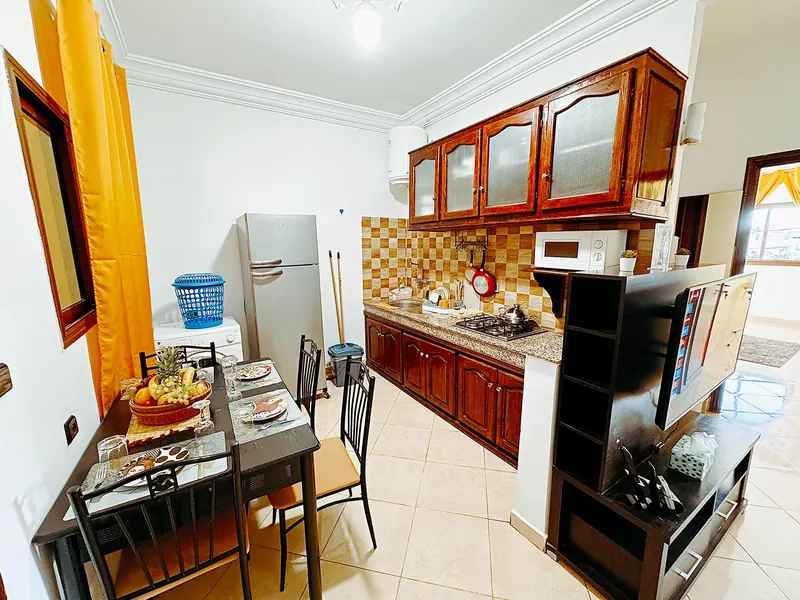
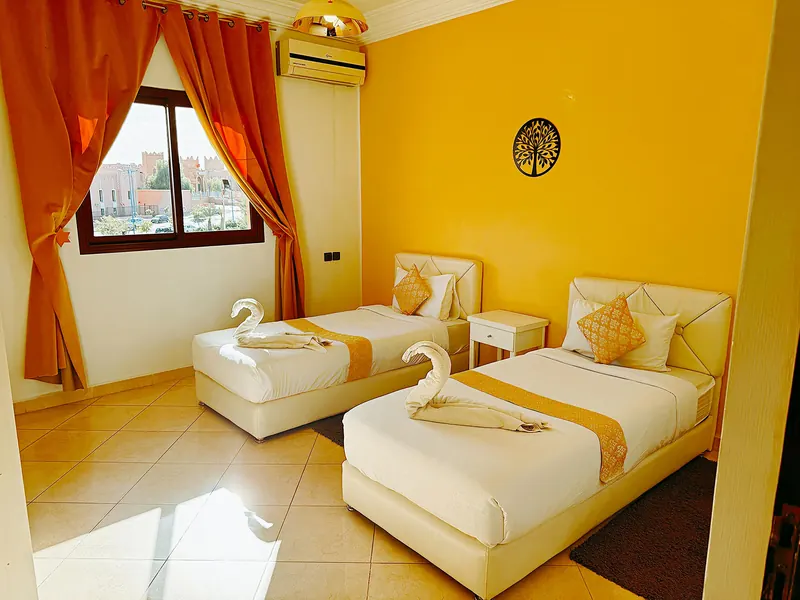
That is where an apartment works well. At Residence Chay, the two-bedroom apartments each have an equipped kitchen, a washing machine and air conditioning, and there is free private parking with a night guard, which makes an early departure simple. The residence is about 2 minutes from Ouarzazate airport and about 3 minutes from downtown (see our location page). For ideas on how to fill the days around your desert trip, see our two or three day Ouarzazate itinerary.
Questions travellers ask
How long does it take to drive from Ouarzazate to Merzouga?
The road is about 360 km and takes roughly 6 to 7 hours at the wheel without long stops. With photo stops, lunch and a short walk in the Todra gorge, plan a full day, or split the drive with a night in the Dades valley or Tinghir.
Do I need a 4x4 to reach Merzouga?
No. The road from Ouarzazate to Merzouga is paved all the way and a normal car is fine. Most desert camps are reached by camel or by a short 4x4 transfer organised by the camp, and you leave your car at a guarded parking area in Merzouga.
Is it better to drive myself or take a tour to the Sahara?
Self-drive gives you freedom over stops and timing, and the road is straightforward in daylight. A tour with a driver removes the fatigue of long distances and handles the camp logistics. Families and first-time visitors who do not want to drive 7 hours often prefer a driver.
Should I go to Merzouga or Erg Chigaga from Ouarzazate?
Merzouga (Erg Chebbi) is reached by tarmac, has more camps and suits most travellers. Erg Chigaga, beyond M'Hamid in the Draa valley, is wilder and quieter but requires a 4x4 track of about 1.5 to 2 hours with an experienced driver, so it works best on a 3-day trip.