Car Rental in Ouarzazate: Hiring a Car and Driving the South
Ouarzazate is one of the easiest places in Morocco to pick up a hire car. What to book, what the rules are, and how long the drives to the kasbahs, gorges and desert really take.
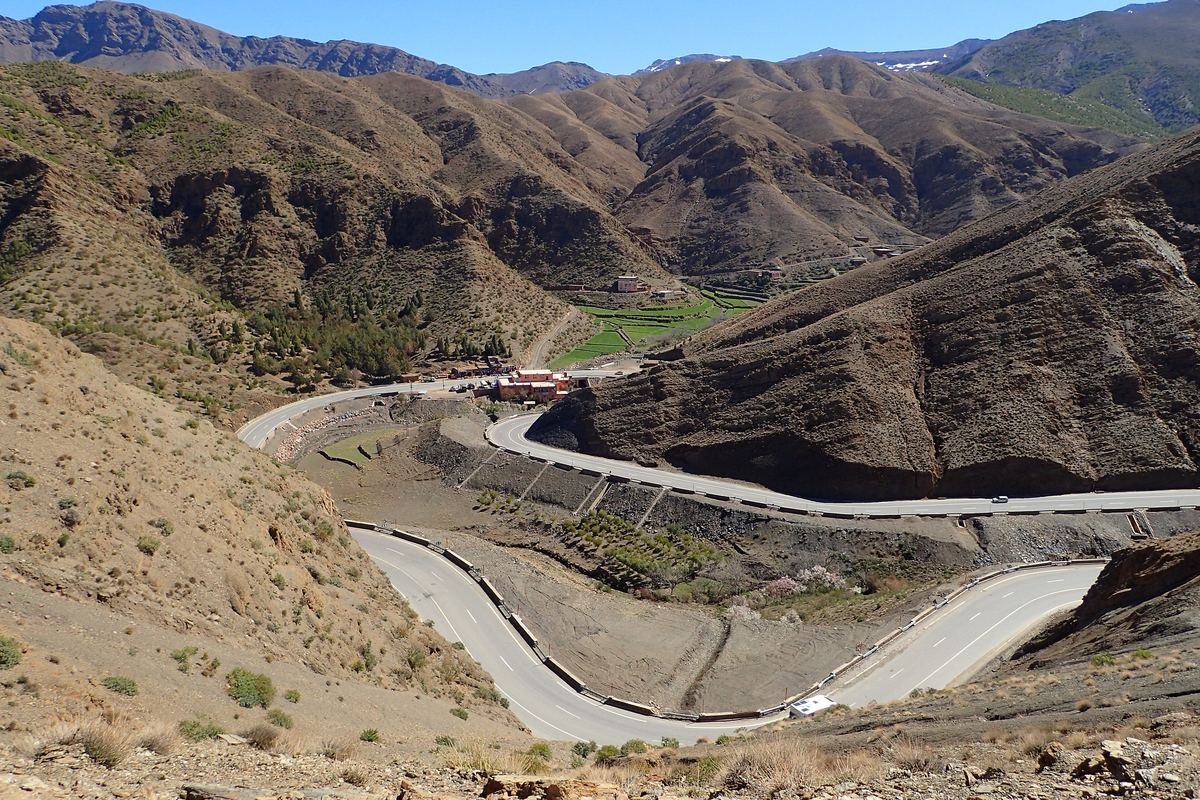
Car rental in Ouarzazate is straightforward, and for most visitors it is the best way to see the region. The town has rental desks at the airport and in the centre, traffic is light, and the main roads to Aït Ben Haddou, Skoura, the Dades valley, Zagora and Merzouga are all paved. A normal car is enough for nearly every trip; what matters more is knowing the rules, the distances and the habits of the road.
This guide covers where to hire, which car to choose, what papers you need, Moroccan speed limits and police checks, fuel and parking, and a table of realistic drive times from Ouarzazate. It also looks honestly at when a car with a driver is the better choice.
Why car rental in Ouarzazate makes sense
Ouarzazate sits at a crossroads. The N9 runs north over the High Atlas to Marrakech and south through the Draa valley to Zagora, and the N10 runs east towards Skoura, the Dades valley and Tinghir, and southwest towards Taznakht and Agadir. Almost every place visitors want to see lies within half a day of town on one of those roads.
Public transport covers the towns but not the sights. Coaches and shared grand taxis will take you to Tinghir or Zagora, yet they will not stop at a kasbah, wait while you walk into a gorge, or take you down a side road to a palm grove. A rental car turns those places into easy day trips and lets you travel early, before the heat and the tour groups. If you only want to move between towns, our guide to taxis and buses in Ouarzazate explains the alternatives.
Car hire at Ouarzazate Airport or in town
At the airport
Ouarzazate Airport (OZZ) is small, and several international brands and Moroccan agencies have desks in or near the arrivals hall. Some local companies do not staff a desk at all times and instead meet you with the car when your flight lands. Picking up at the airport is the simplest option if you fly in, and the town is only minutes away. Our airport arrival guide covers the terminal itself and the other ways into town.
In town
Many agencies have offices in the centre of Ouarzazate, and a lot of them will deliver the car to your accommodation and collect it at the end. This works well if you arrive by coach from Marrakech or want a car for only part of your stay, for example two days of excursions in the middle of a longer visit.
Booking ahead
In spring, autumn and the main European holidays, automatic cars, larger family cars and 4x4s can run short. Booking a few weeks ahead secures the category you want. Whichever company you use, ask for the full rental conditions in writing before you pay, not at the counter.
Which car to choose, and do you need a 4x4
For the classic trips from Ouarzazate, you do not need a 4x4. The roads to Aït Ben Haddou, Skoura, Kelaat M'Gouna, the Dades gorges as far as the famous hairpins, the Todra gorge, Agdz, Zagora, Marrakech and Merzouga are all asphalt. A small or compact car is cheaper to run, easier to park in villages and perfectly comfortable on these roads.
A higher car or a 4x4 is worth considering if:
- you plan to drive gravel tracks, such as the last stretch to the Fint oasis, which a careful driver can manage in a normal car in dry weather but which is more relaxed with extra ground clearance;
- you want to explore the high mountain tracks above the Dades and Todra gorges, where surfaces change after storms and local advice is essential;
- you are travelling as a large family with luggage for a long loop.
One exception deserves a clear warning. The crossing from M'Hamid to the dunes of Erg Chegaga is a desert track that requires a 4x4 and, above all, a driver who knows the route. Do not attempt it alone in a rental car. Our guide to Erg Chegaga from Ouarzazate explains how those trips are organised. Merzouga, by contrast, is tarmac all the way, and desert camps collect you from a car park.
Manual gearboxes are the norm in Morocco. If you need an automatic, say so clearly when you book and confirm it again before you travel.
Licence, permit, insurance and deposit
Driving licence and international driving permit
According to the French foreign ministry, visitors may drive in Morocco with a valid foreign licence for up to one year. Some governments are stricter in their advice: the UK travel advice for Morocco tells British drivers to carry the 1968 international driving permit together with their licence. Rental companies also set their own rules, and some ask for an IDP. If your licence is not in Latin script, or your government recommends a permit, get one before you leave home; it is cheap and avoids discussion at the counter or at a checkpoint.
Companies usually set a minimum age and a minimum number of years since you passed your test, and young drivers may pay a surcharge. Check these conditions before booking, along with any fee for a second driver.
Insurance and deposit
Third party insurance is included in Moroccan rentals, but the damage cover varies a lot between companies. Read three things carefully:
- The excess. This is the amount you pay if the car is damaged. Companies offer extra cover to reduce it.
- Exclusions. Tyres, windscreen, underbody and damage on unpaved roads are often excluded from the basic cover. That matters in the south.
- The deposit. Most companies block a deposit on a credit card in the main driver's name. Check the amount, whether a debit card is accepted, and how long the release takes after you return the car.
At pickup
Walk around the car with the agent and photograph every scratch, the tyres, the spare wheel and the fuel gauge. Check that the jack and warning triangle are in the boot, that the air conditioning works, and that the registration papers and insurance certificate are in the glovebox. Ask what to do and whom to call in case of a breakdown or accident. In an accident, Moroccan practice is to fill in a joint accident report (constat amiable) signed by both drivers; call your rental company before moving the car if anyone is injured or the other party disputes what happened.
Driving in southern Morocco: the rules
Morocco's highway code sets the general speed limits below. Signs always take priority, and in practice you will see many lower limits on approaches to villages, bends and bridges.
| Road type | General limit |
|---|---|
| Built-up areas | 60 km/h, lower where signed |
| Major through roads inside built-up areas | 80 km/h where signed |
| Roads outside built-up areas, including expressways | 100 km/h |
| Motorways (none near Ouarzazate) | 120 km/h |
Other rules to know:
- Alcohol: Morocco applies zero tolerance. Any alcohol in your system at a test can bring a fine and possible imprisonment. Do not drink at all if you are driving.
- Seat belts: compulsory in the front and, outside towns, in the back. Fasten everyone in, every time.
- Children: young children may not travel in the front seat. Rental companies can supply child seats, but book them in advance and check them at pickup.
- Phones: using a hand-held phone while driving is forbidden. Set your navigation before you leave.
- Stop signs mean a full stop with the wheels still, even when the road looks empty.
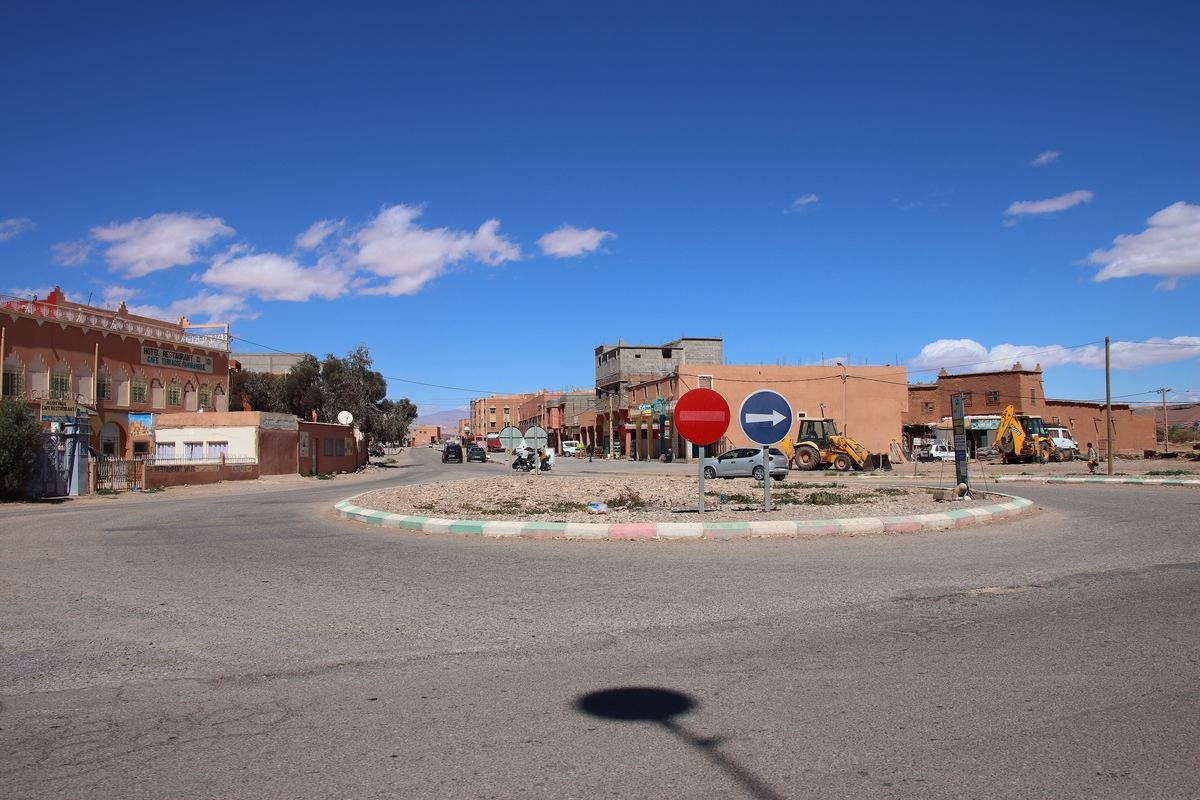
- Priority: at unmarked junctions, traffic from the right has priority. At roundabouts, follow the signs and markings, and watch the other drivers rather than assuming they will give way.
Police checkpoints and speed checks
Checkpoints are a normal part of driving in Morocco. Inside towns they are run by the police, outside towns by the Royal Gendarmerie, and you will pass several on any long day, typically at the entrance and exit of towns. Slow down as you approach, stop at the line if you are waved over, greet the officer and hand over what is asked: licence, passport, rental contract and car papers. Most of the time you will simply be waved through.
Radar checks are frequent, often just after a speed limit sign at the entrance to a village, where the limit can drop quickly from 100 to 60 km/h or lower. Fines are issued on the spot. Ask for the official receipt, and if you are unsure about a fine, call your rental company. The simplest strategy is to slow down early at every village sign.
Driving distances and times from Ouarzazate
These are approximate distances by road and driving times without stops, in good conditions. Add time for photos, lunch, slow trucks on mountain roads and village speed limits; on a real day out, most trips take noticeably longer than the figures suggest.
| Destination | Distance | Driving time | Road and notes |
|---|---|---|---|
| Fint oasis | about 12 km | 30 to 45 minutes | Last section is an unpaved track |
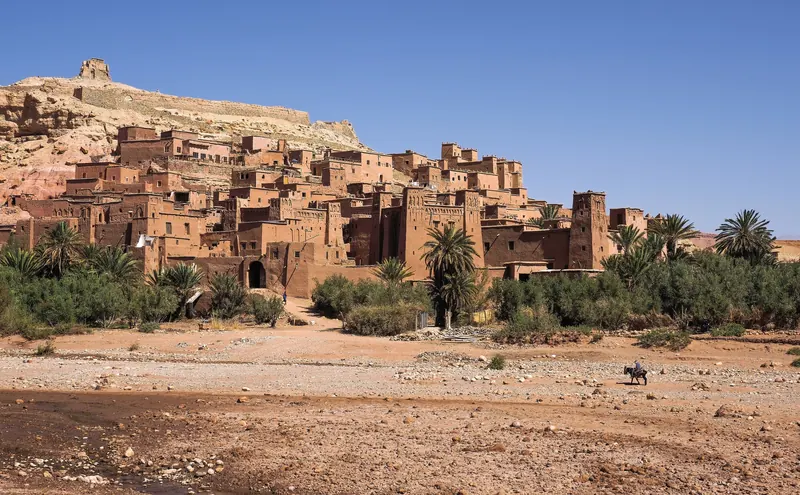
| Aït Ben Haddou | about 30 km | about 35 minutes | N9 west, turn off at Tabourahte |
| Skoura | about 40 km | about 45 minutes | N10 east |
| Agdz | about 70 km | about 1 hour 15 minutes | N9 south over the Tizi n'Tinififft pass |
| Taznakht | about 85 km | about 1 hour 30 minutes | N10 southwest, road to Agadir |
| Kelaat M'Gouna | about 90 km | about 1 hour 30 minutes | N10 east |
| Telouet | about 100 to 120 km | about 2 hours | Via Aït Ben Haddou and the Ounila valley, or via the N9 |
| Dades gorges | about 130 km | about 2 hours | N10 to Boumalne Dades, then up the valley |
| Zagora | about 165 km | about 3 hours | N9 south through the Draa valley |
| Tinghir and the Todra gorge | about 170 km | about 3 hours | N10 east |
| Marrakech | about 200 km | around 4 hours | N9 over the Tizi n'Tichka pass |
| Merzouga | about 360 km | 6 to 7 hours | Via Tinghir, Erfoud and Rissani |
For route details and stops, see our guides to Aït Ben Haddou from Ouarzazate, the Dades gorges, the Tizi n'Tichka road to Marrakech and the drive to Merzouga.
Road conditions and hazards
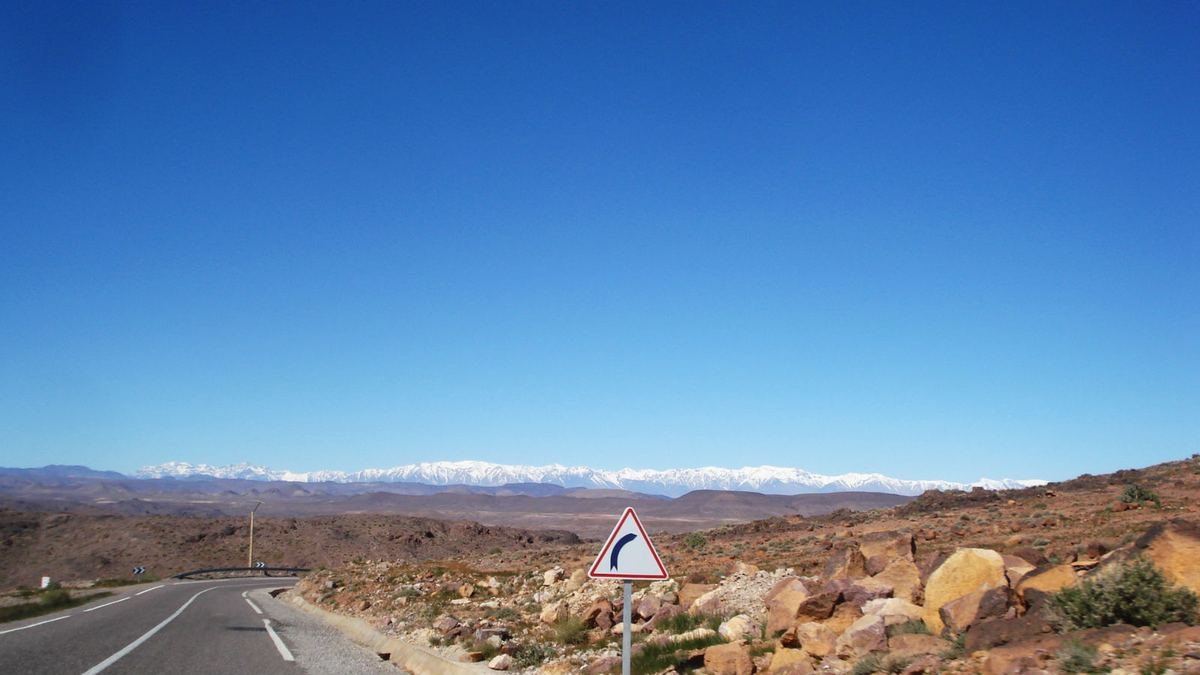
The main roads around Ouarzazate are generally in good condition, with clear signs in Arabic and French. The challenges are less about the surface and more about what shares it with you.
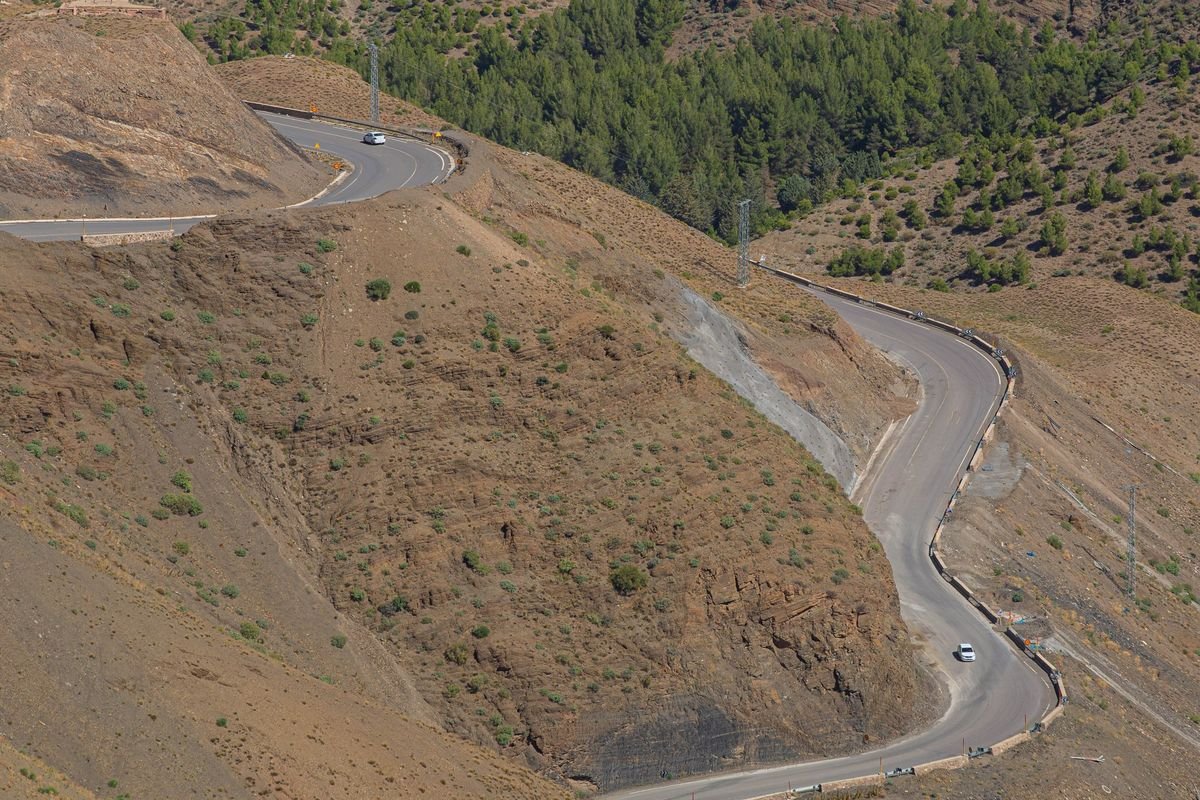
- Mountain sections. The Tizi n'Tichka north of town and the Tizi n'Tinififft on the way to Agdz are long series of bends. Trucks climb slowly, and overtaking should wait for a clear straight. Local drivers sometimes flash their indicator to show the road ahead is free, but make your own judgement.
- Villages. Expect pedestrians, children walking to school, bicycles, mopeds, donkeys and speed bumps that are not always marked.
- Night. Rural roads are unlit, and carts, animals and cyclists often have no lights. Plan to reach your destination before dark.
- Weather. Winter snow can close the Tizi n'Tichka for a few hours or more. After heavy rain, which is rare but sudden, dry riverbeds can flood fords and wash gravel onto the road; never drive into moving water.
- Heat. In summer, carry plenty of water in the car, check the tyre pressures and avoid long drives in the middle of the afternoon. Spring and autumn are the most comfortable seasons for long drives.
Fuel stations, cash and parking
Fuel
Ouarzazate has plenty of fuel stations, and so do the towns along the main roads: Skoura, Kelaat M'Gouna, Boumalne Dades, Tinghir, Agdz and Zagora. Diesel is sold as gasoil, petrol as sans plomb; check which one your car takes before the first fill. An attendant usually fills the tank for you. Larger stations of the main brands often accept cards, but terminals can be out of order, so keep enough cash in dirhams for a full tank. Fill up before long empty stretches, especially beyond Zagora towards M'Hamid and between Tinghir and Erfoud.
Parking
In Moroccan towns, informal parking attendants in high-visibility vests watch the cars along many streets and car parks, and drivers give them a small tip when they leave. Red and white kerbs mean no parking. At sights such as Aït Ben Haddou, use the guarded car parks rather than leaving the car on the roadside, and never leave bags or valuables visible.
At your accommodation, ask about parking before you book. At Residence Chay, there is free private guarded parking on site, so the car stays off the street at night, and the residence is about 2 minutes from the airport, which makes an early return before a flight easy.
Renting a car with a driver instead
Self-drive is not right for everyone. A car with a driver costs more, but it makes sense when:
- you do not want to drive mountain roads or long distances yourself;
- you are heading for the desert tracks of Erg Chegaga or other routes off the tarmac;
- you would rather look out of the window than at the road, or you want a driver who can explain what you are seeing;
- you are travelling with several generations and want a larger vehicle without the responsibility.
You can hire a driver for a single day trip, such as Aït Ben Haddou and Telouet, or for a multi-day loop through the valleys and the desert. Agree in writing on the route, the stops, the hours per day and what the price includes (fuel, the driver's meals and lodging on overnight trips). The reception at our residence can help arrange a driver or a guide if you mention it when you book.
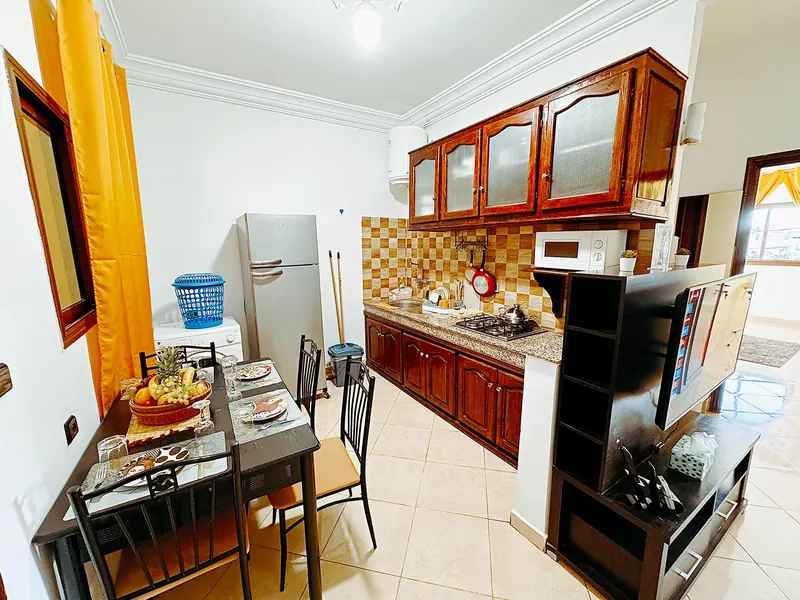
Whether you drive yourself or not, Ouarzazate works well as a base: you come back each evening to the same apartment, with a kitchen, washing machine and parking, and set off in a different direction the next morning.
A short checklist before you set off
- Licence, passport, international driving permit if needed, rental contract and the car's papers in the glovebox.
- Photos of the car taken at pickup, and the rental company's emergency number saved in your phone.
- Offline maps downloaded, as signal can drop in the mountains and gorges.
- Cash in small notes for fuel, parking attendants and village cafés.
- Water, sun protection and a warm layer, even in summer if you cross the High Atlas.
- A plan to arrive before dark, with time to spare for the unexpected.
Questions travellers ask
Do I need a 4x4 to drive around Ouarzazate?
No. The main roads to Aït Ben Haddou, Skoura, the Dades and Todra valleys, Zagora, Marrakech and Merzouga are paved, and a normal car handles them well. A 4x4 only makes sense for mountain or desert tracks, and the desert crossing to Erg Chegaga should be left to an experienced local driver.
Is an international driving permit required in Morocco?
Morocco accepts a valid foreign licence for visitors, but some governments, including the UK, tell their citizens to carry an international driving permit as well, and some rental companies ask for one. If your licence is not in Latin script, get an IDP before you travel.
Can I pick up a rental car at Ouarzazate Airport?
Yes. Several international and Moroccan companies have desks in or near the arrivals hall, and others deliver the car to the airport or to your accommodation. Confirm the meeting point when you book, especially for evening flights.
Is it safe to drive in southern Morocco at night?
It is best avoided outside towns. Rural roads are unlit, and you will meet pedestrians, cyclists, animals and carts without lights. Plan long drives so that you arrive before dark.
Are there toll roads near Ouarzazate?
No. The roads around Ouarzazate, including the N9 over the Tizi n'Tichka to Marrakech, are national roads without tolls. The nearest motorway starts at Marrakech.