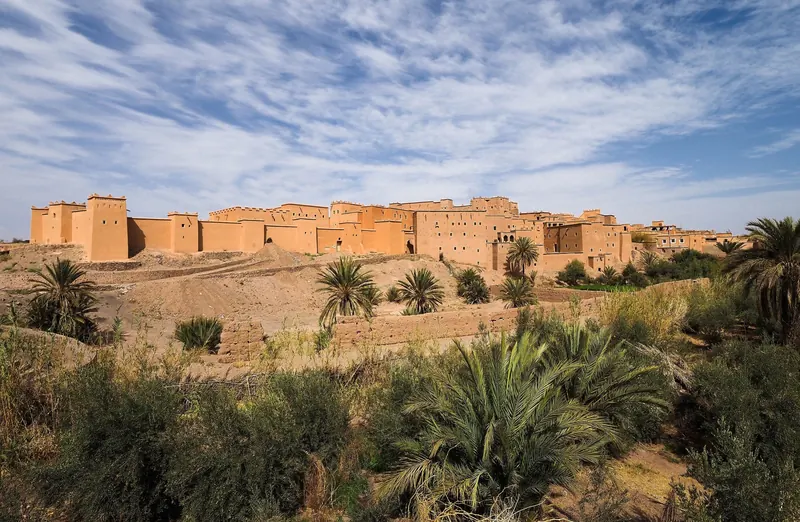
Kasbah Taourirt in Ouarzazate, Its History and How to Visit
The great earthen kasbah of the Glaoui family stands in the middle of Ouarzazate. Its history, how it was built, what you see inside and how to make the most of a visit.
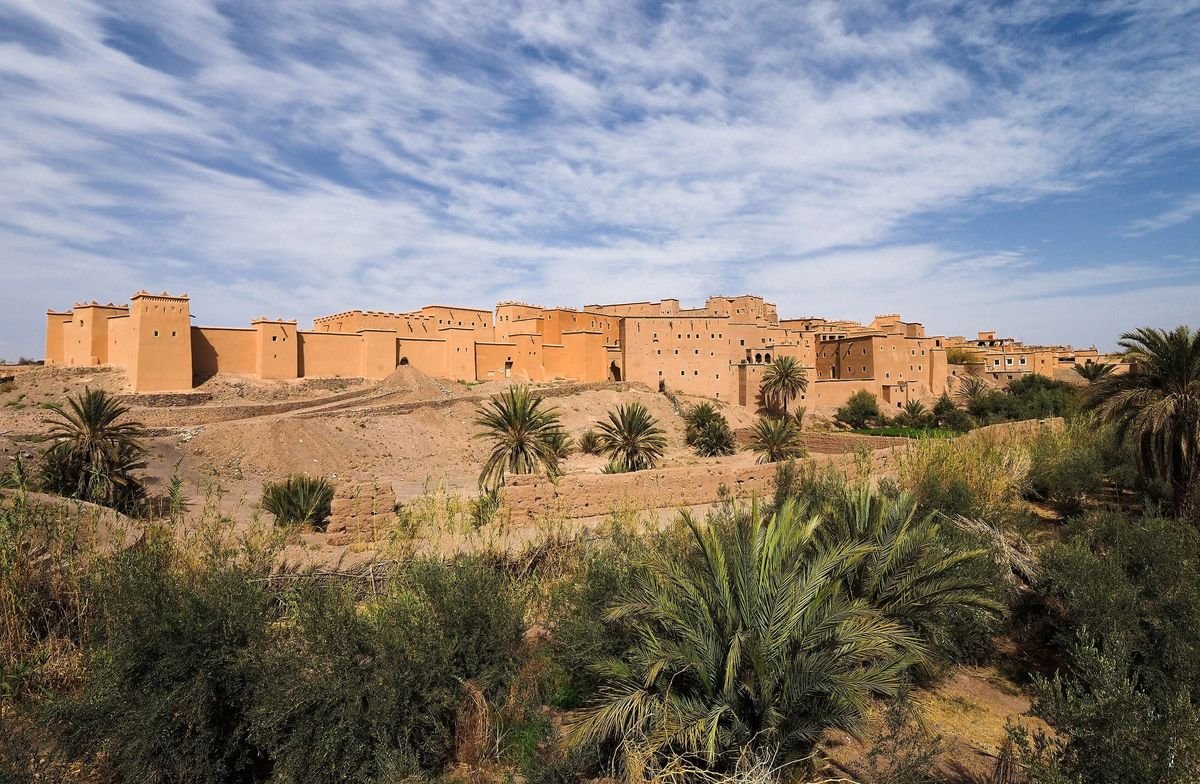
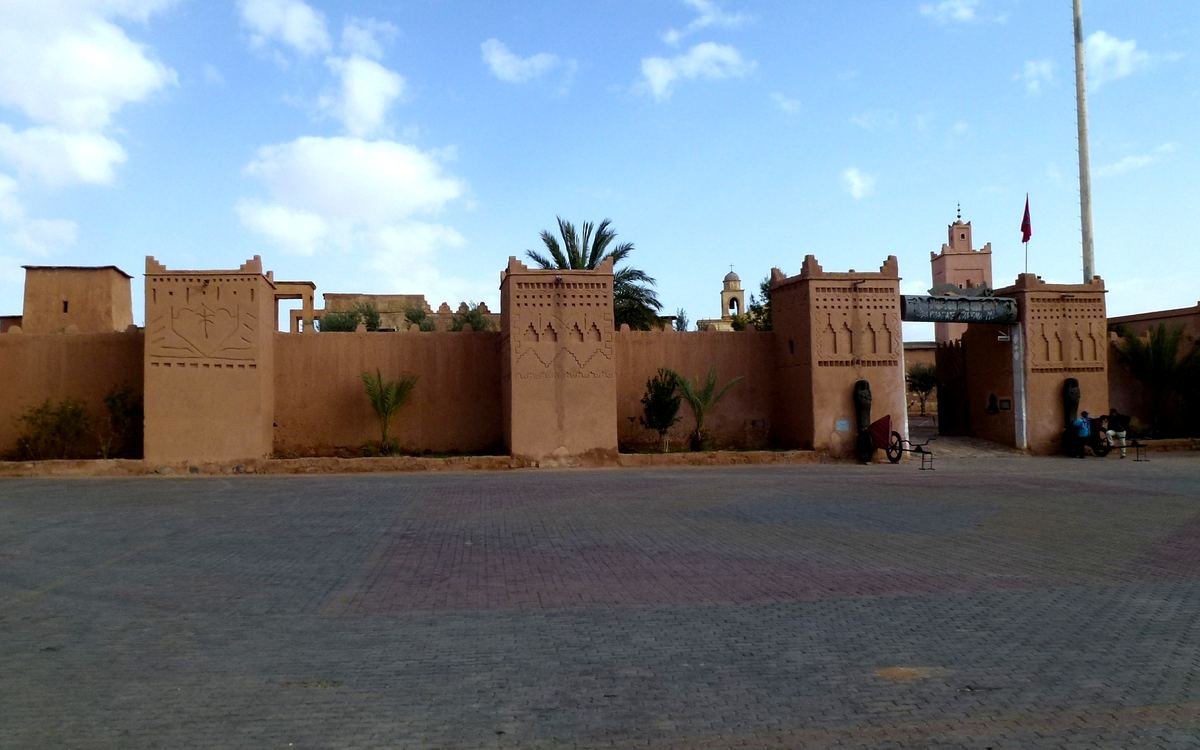
Kasbah Taourirt is the historic heart of Ouarzazate: a vast earthen fortress-residence of towers, courtyards and painted reception rooms, built up by the Glaoui family, the lords of the southern Atlas. Part of it has been restored and is open to visitors, and an hour inside is enough to see the finest rooms and climb to the terraces. It sits on Avenue Mohammed V, at the eastern end of the town centre, about 5 minutes by car from Residence Chay.
A short history of Kasbah Taourirt
Before the Glaoui
Taourirt means "the hill" in Tamazight, the Berber language of the region, a reminder that the first fortified buildings stood on a rise above the Ouarzazate river. According to local tradition, a powerful family of the area built the first kasbah here around the 17th century. Ouarzazate itself was then a modest crossroads on the caravan routes linking the Sahara, the Draa valley and Marrakech.
The age of the Glaoui
In the 19th century the kasbah passed to the Glaoui, a family from Telouet in the High Atlas who controlled the mountain passes and grew enormously powerful. They expanded Taourirt into one of the largest kasbahs in southern Morocco, a small town in itself with family apartments, guest quarters, stores, stables and homes for servants, guards and craftsmen.
The most famous member of the family, Thami El Glaoui, was Pasha of Marrakech from 1912 to 1956 and one of the most influential men in Morocco under the French protectorate, nicknamed "the Lord of the Atlas". Taourirt was one of the family's strongholds in the south, a place from which they could watch the routes to the Draa and the Dades.
Decline and restoration
When Morocco became independent in 1956, the Glaoui lost their power and their properties. Parts of Taourirt were occupied by families, others slowly fell into ruin, as earthen buildings do without constant upkeep. In the late 1980s Morocco created a dedicated centre for the conservation of the kasbahs of the Atlas and the south (CERKAS), based in Ouarzazate, and in the 1990s a section of Taourirt was restored with the help of UNESCO. That restored section is what you visit today. The September 2023 earthquake caused some damage in the region, so certain areas may be closed for repairs when you visit.
Building with earth
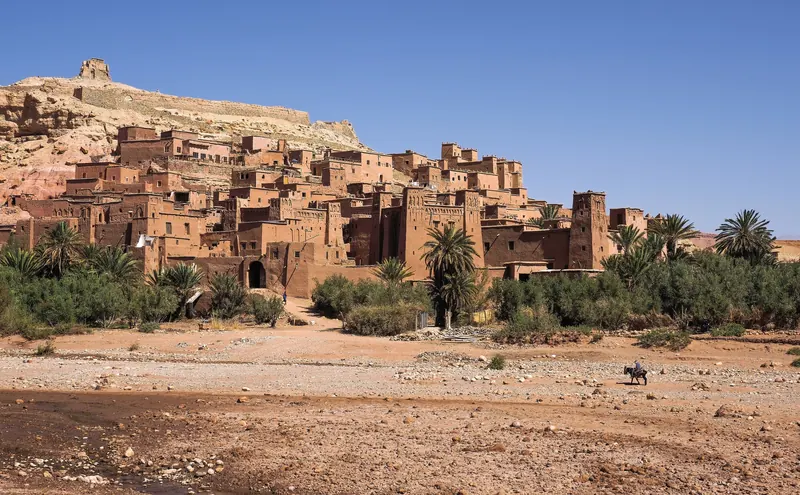
Like most kasbahs of southern Morocco, Taourirt is built mainly of earth. The lower walls are usually of pisé, or rammed earth: a mixture of earth, gravel and sometimes straw, compacted in layers between wooden shutters. The upper storeys use sun-dried mud bricks, which are lighter. Ceilings rest on beams of palm or poplar, covered with reed or oleander laths and a layer of earth.
This technique is perfectly suited to the climate. The thick walls keep rooms cool in summer and release warmth during cold winter nights. Its weakness is water: rain gradually erodes the surface, which is why these buildings need regular re-rendering, and why so many kasbahs in the region are in ruins.
Look closely at the towers and you will see geometric patterns cut into the upper walls: diamonds, chevrons and crenellations, a decorative language shared by kasbahs from the Draa to the Dades. They are as much a statement of status as of defence.
What you see inside
The visit follows a route through a maze of narrow staircases, low doorways and small courtyards. Rooms are mostly empty of furniture, so the interest lies in the spaces themselves and their decoration.
- The courtyards and light wells: the kasbah turns inwards, with rooms grouped around open courts that bring in light and air while keeping the outside world at a distance.
- The reception rooms: the restored salons on the upper floors are the highlight, with painted cedar ceilings, carved and painted plaster (stucco) and zellige tilework.
- The private apartments: smaller rooms with decorated window grilles from which the women of the household could look out without being seen.
- The terraces: from the upper levels you look out over the riverbed, the town and, on clear days, the High Atlas.
Outside the restored part, a residential quarter still clings to the walls of the kasbah. Some of its houses are inhabited, and you may be invited in to see a family home or a small shop. Be courteous and agree on any fee before entering.
Practical tips for your visit
| Practical point | What to know |
|---|---|
| Time needed | About 1 hour, more with a guide |
| Entrance fee | Small fee, recently around 20 to 30 dirhams; check on site, prices change |
| Opening hours | Generally daytime, every day; confirm locally before going |
| Guides | Official guides are usually available at the entrance |
| Best time | Morning or late afternoon, for the light and the cooler air |
| From Residence Chay | About 5 minutes by car |
- Watch your head: doorways are low and staircases narrow and steep.
- Bring a light: some passages are dim, and a phone torch helps on the stairs.
- Consider a guide: there is little signage inside, and a guide brings the Glaoui story and the function of each room to life.
- Photography: the play of light in the painted rooms is beautiful, but ask before photographing residents in the inhabited quarter.
The area around the kasbah
The craft complex across the road
Directly opposite the kasbah, the craft complex brings together workshops and shops selling carpets, pottery, woodwork, leather and silver jewellery. It is a calm place to browse and to watch some artisans at work, and a good spot to get a feel for quality and prices before you shop elsewhere.
The Cinema Museum
Also facing the kasbah, the small Cinema Museum displays cameras, costumes, props and a few sets from productions shot around Ouarzazate. A fire in June 2024 destroyed part of the sets and closed the museum for a time, so check at the gate that it is open; our cinema museum guide explains what we know. It takes 30 to 45 minutes and makes a good complement to the kasbah, especially if you plan to see Atlas Studios later.
Place Al Mouahidine and the town centre
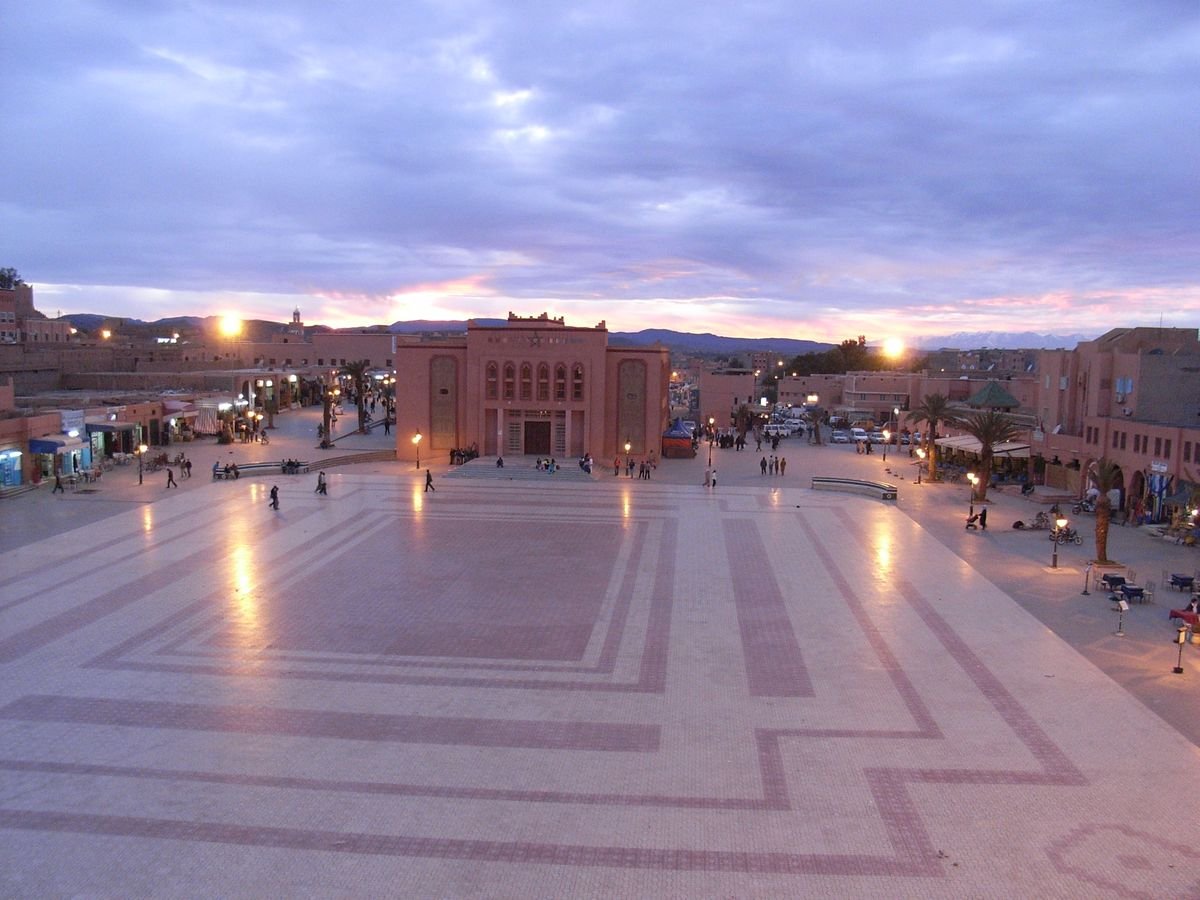
Walk west along Avenue Mohammed V and you reach Place Al Mouahidine, the main square of Ouarzazate, with cafés, shops and the evening life of the town. It is the place for a mint tea after your visit, and a good starting point for exploring the centre on foot.
A suggested half day around Taourirt
- Arrive at opening time, when the light in the courtyards is soft and the rooms are quiet, and spend about an hour in the kasbah.
- Cross the road to the Cinema Museum for 30 to 45 minutes of cameras, costumes and film sets.
- Browse the craft complex opposite the kasbah, without pressure to buy.
- Walk to Place Al Mouahidine for a mint tea or an early lunch in the centre.
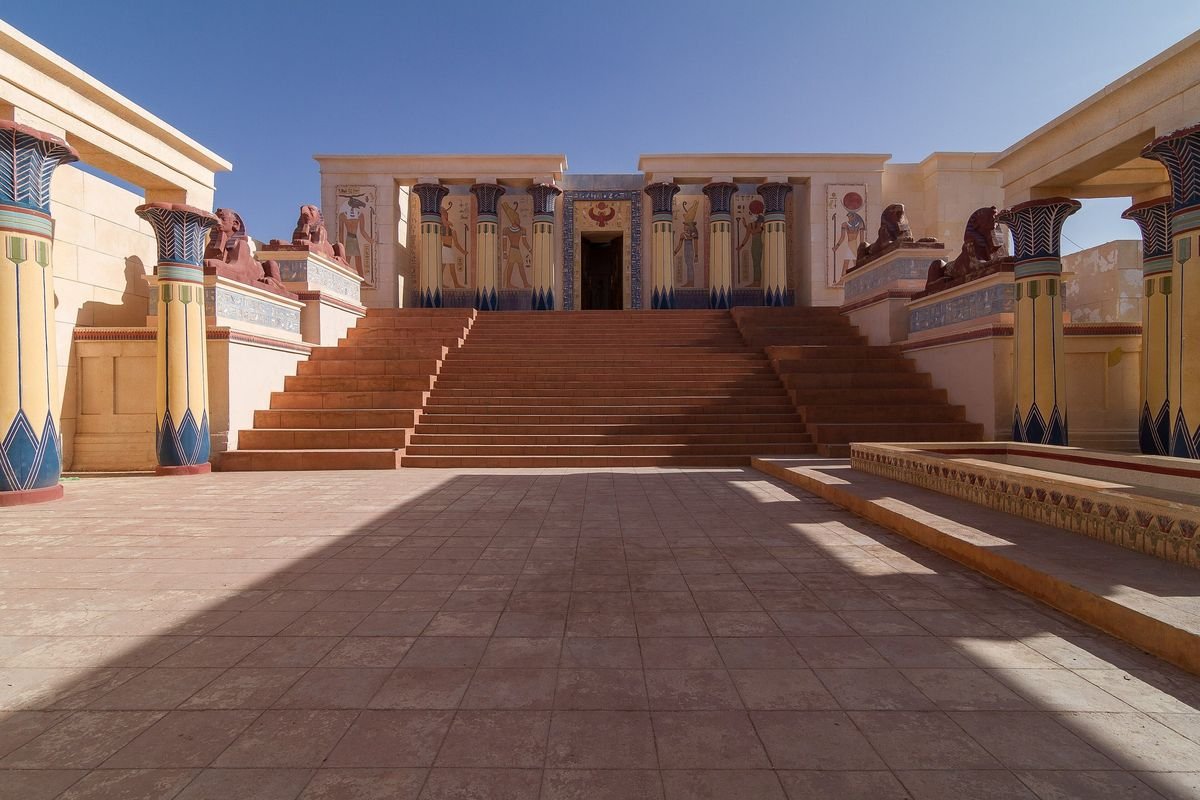
In the afternoon you can head west to Atlas Studios, about 10 minutes from the residence by car, or keep the kasbah theme going with a sunset visit to Kasbah Tifoultoute.
Other kasbahs to see near Ouarzazate
If Taourirt sparks your interest, the region is full of kasbahs, each with its own character:
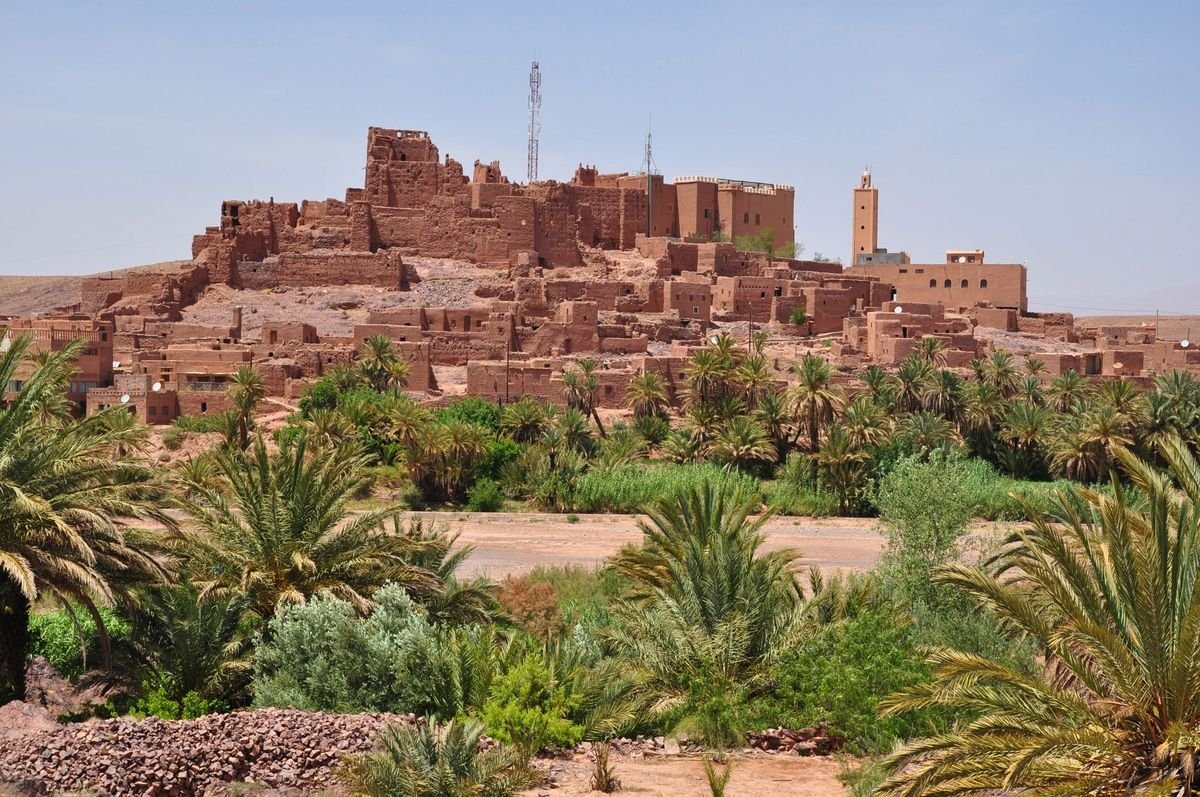
- Kasbah Tifoultoute, about 8 km west of town, another Glaoui property with a fine view over the palm grove.
- Aït Ben Haddou, about 30 km away, a fortified village rather than a single residence, and a UNESCO World Heritage Site. Read our Aït Ben Haddou guide.
- Kasbah Amridil in the Skoura palm grove, about 40 km east, partly restored and still owned by the family.
- Telouet, high in the Atlas, the original seat of the Glaoui, with the most lavish interiors of all.
For a wider overview, see our guide to the best things to do in Ouarzazate.
Staying close to the kasbah
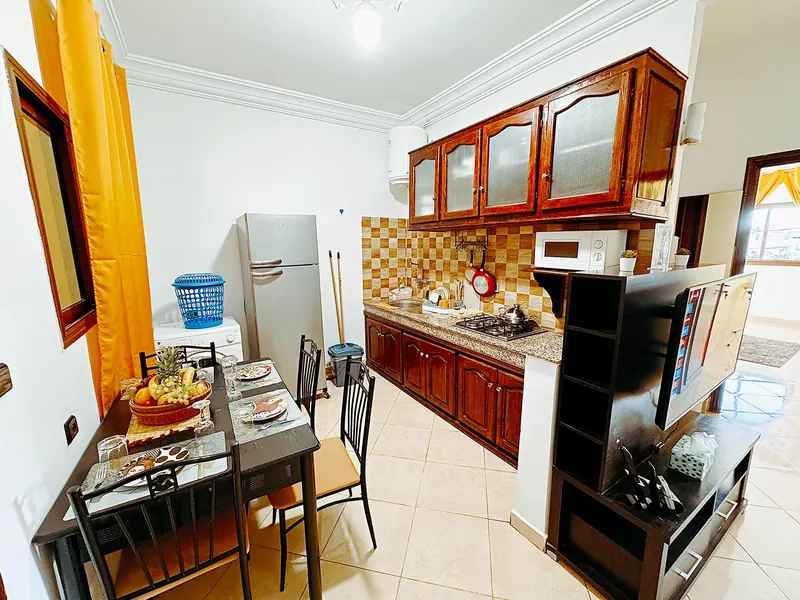
Kasbah Taourirt is a sight you can easily visit at the best time of day when you stay in town: early in the morning before it gets warm, or late in the afternoon when the walls turn golden. Residence Chay is about 5 minutes away by car, with free private parking, and our location page shows how it sits in relation to the centre, the airport and the main sights.
Questions travellers ask
Who built Kasbah Taourirt?
According to local tradition the first buildings date back to around the 17th century, but the kasbah took its present size in the 19th and early 20th centuries under the Glaoui family, whose most famous member, Thami El Glaoui, was Pasha of Marrakech from 1912 to 1956.
How long does it take to visit Kasbah Taourirt?
About an hour is enough for the restored rooms, the courtyards and the terraces. Add 30 to 45 minutes if you also visit the Cinema Museum across the road.
Is Kasbah Taourirt a UNESCO World Heritage Site?
Kasbah Taourirt is not itself on the World Heritage list (the nearby ksar of Aït Ben Haddou is), but part of it was restored in the 1990s with UNESCO support, and it is one of the most important historic monuments in southern Morocco.
Is there an entrance fee at Kasbah Taourirt?
Yes, a small entrance fee is charged for the restored section, recently in the range of 20 to 30 dirhams. Prices and opening hours change, so check on site.
Do I need a guide for Kasbah Taourirt?
It is not required, but the restored rooms have little signage, so an official guide (available at the entrance) makes the history of the Glaoui and the use of each room much clearer.