Skoura Oasis and Kasbah Amridil: A Day Trip from Ouarzazate
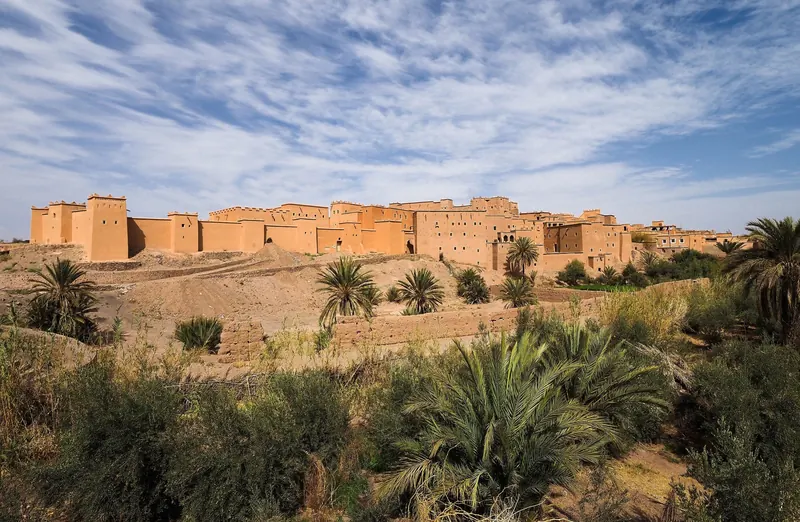
A vast palm grove 40 km east of Ouarzazate, with the kasbah from the old 50 dirham note at its centre. How to get there, what to see, where to walk and how to plan the day.
The Skoura oasis is a wide palm grove about 40 km east of Ouarzazate, dotted with earthen kasbahs, olive trees and small walled gardens. It is an easy half day from town: 40 to 45 minutes on the N10, an hour or so inside Kasbah Amridil, then a slow walk or bike ride along the shaded paths. This guide explains how to get there, what to see, when the light is best and how to fit Skoura into a longer day towards the Valley of Roses or the lake.
Skoura is often treated as a quick photo stop on the road to the desert, and that undersells it. Few places in the south show so clearly how people lived in the oases before the road and the town of Ouarzazate existed.
What the Skoura palmeraie is
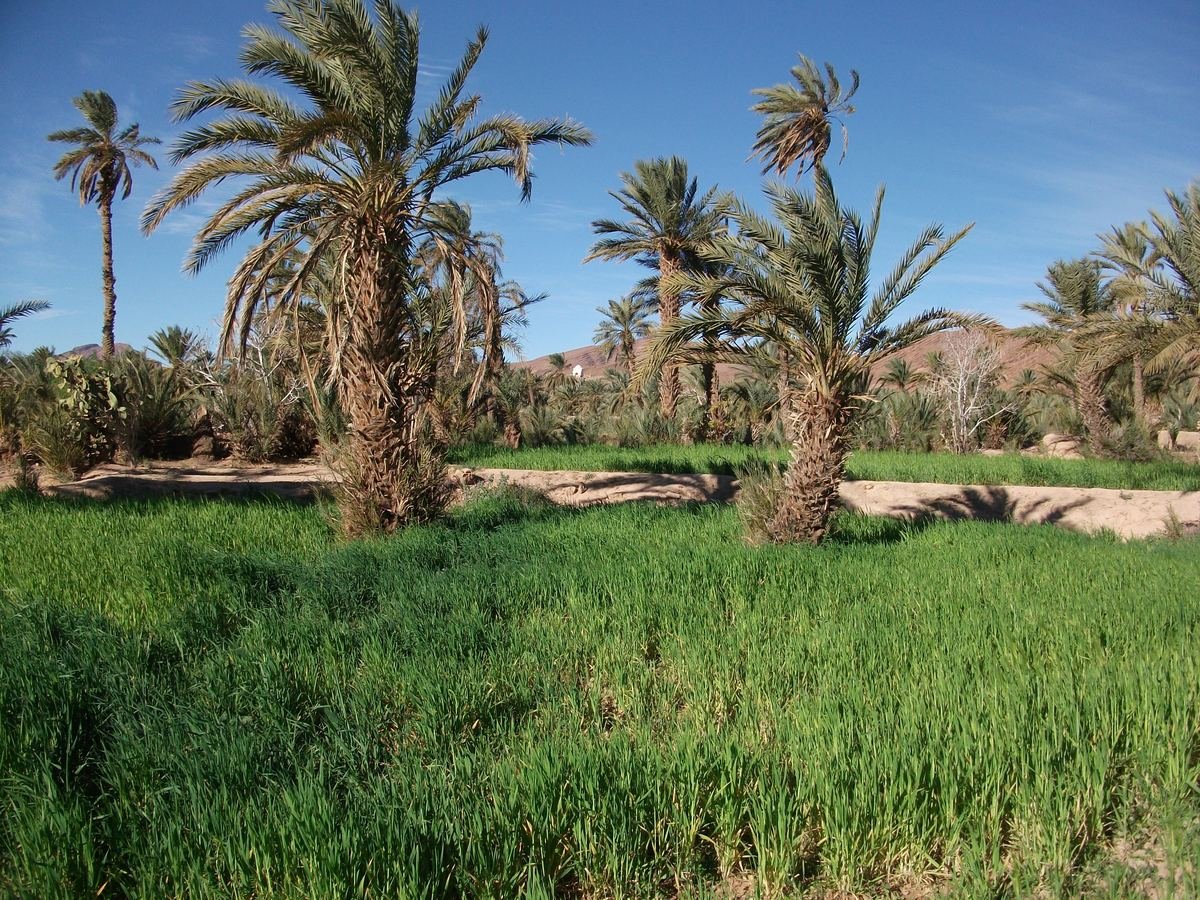
Skoura sits on a plain at the foot of the High Atlas, where several streams coming down from the mountains, including the Oued el Hajjaj, spread out before joining the Dades river further south. For centuries the inhabitants have captured that water and shared it between gardens through a network of open channels (seguias) and underground galleries called khettaras, which draw water from the water table and carry it by gravity to the fields.
The result is a dense green layer in the middle of a bare, stony landscape. Date palms form the high canopy. Under them grow olive, almond, fig and pomegranate trees, and on the ground small plots of wheat, barley, alfalfa and vegetables, divided by low earthen walls. In spring the fields are bright green; in autumn the dates ripen and are harvested.
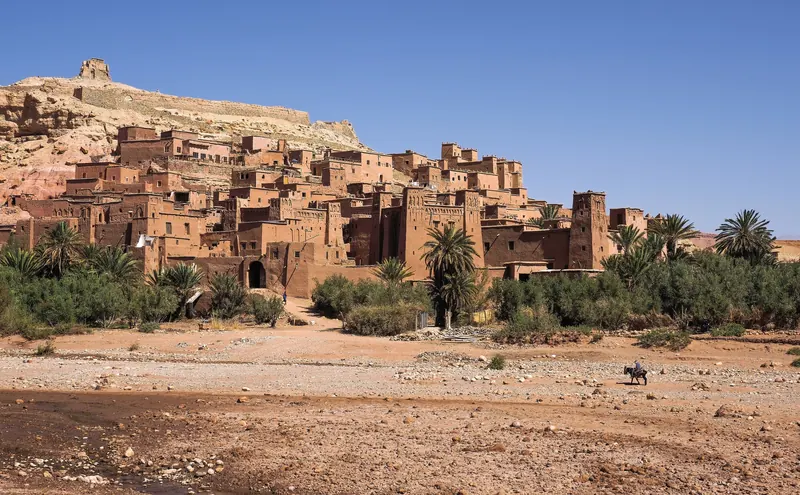
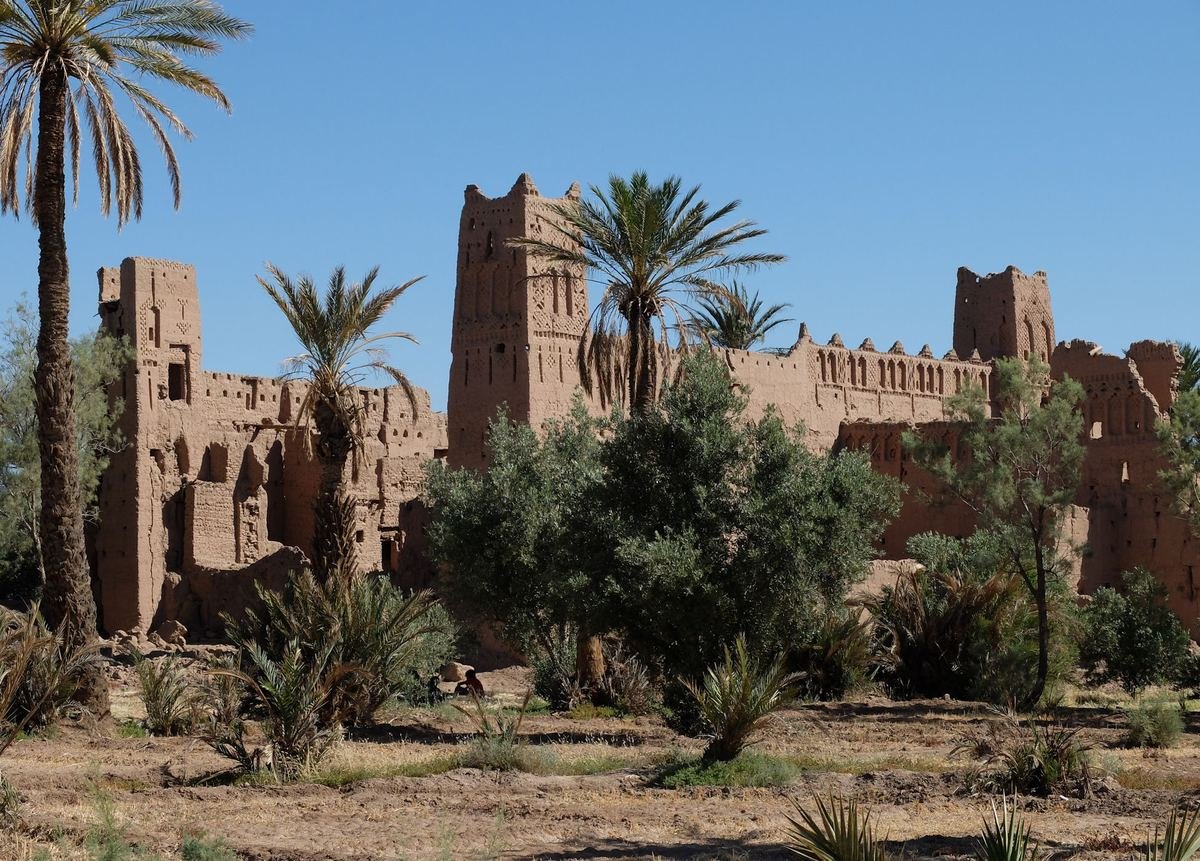
Scattered through the gardens are dozens of kasbahs and fortified family houses, built in rammed earth (pisé) and mud brick. Some have been restored as homes or guesthouses. Many others are slowly melting back into the ground, which is part of what makes a walk here so striking: you see every stage, from a lived-in house to a ruin with only its corner towers left standing.
Getting to Skoura from Ouarzazate
Leave Ouarzazate eastwards on the N10, the road signposted for Skoura, Kelaat M'Gouna and Tinghir. The road is paved and in good condition. After the last suburbs you cross an open plateau and pass close to the El Mansour Eddahbi reservoir before the first palms of Skoura appear.
| Option | Time from Ouarzazate | Good to know |
|---|---|---|
| Rental or own car | 40 to 45 minutes | Most flexible; the last stretch to Kasbah Amridil is a short, partly rough side road |
| Private grand taxi or driver | 40 to 45 minutes | Agree on waiting time and extra stops before you leave |
| Shared grand taxi | longer, the car leaves when full | Drops you in Skoura village, not at the kasbahs |
| Bus on the N10 | longer, depends on the service | Buses towards Tinghir and Errachidia stop in Skoura; check times on the day |
| Organised tour | 40 to 45 minutes | Often combined with the Dades or Kelaat M'Gouna |
By car
Kasbah Amridil is signposted from the main road. The turn-off leads about 2 km into the palm grove on a narrow road that is unpaved in places and crosses a usually dry riverbed. A normal car manages it at low speed in dry weather; after rare heavy rain, ask locally before you cross. If you need a car for this and other trips, our guide to car hire and driving from Ouarzazate covers what to check.
Without a car
Shared grand taxis and buses get you to Skoura village, on the main road. From there the kasbahs and palm grove are a walk away, but it is easy to get lost in the lanes, so many visitors take a local guide from the village. Hiring a grand taxi privately for half a day is simpler and keeps the return under your control. Our guide to taxis and buses in Ouarzazate explains how both work.
Visiting Kasbah Amridil
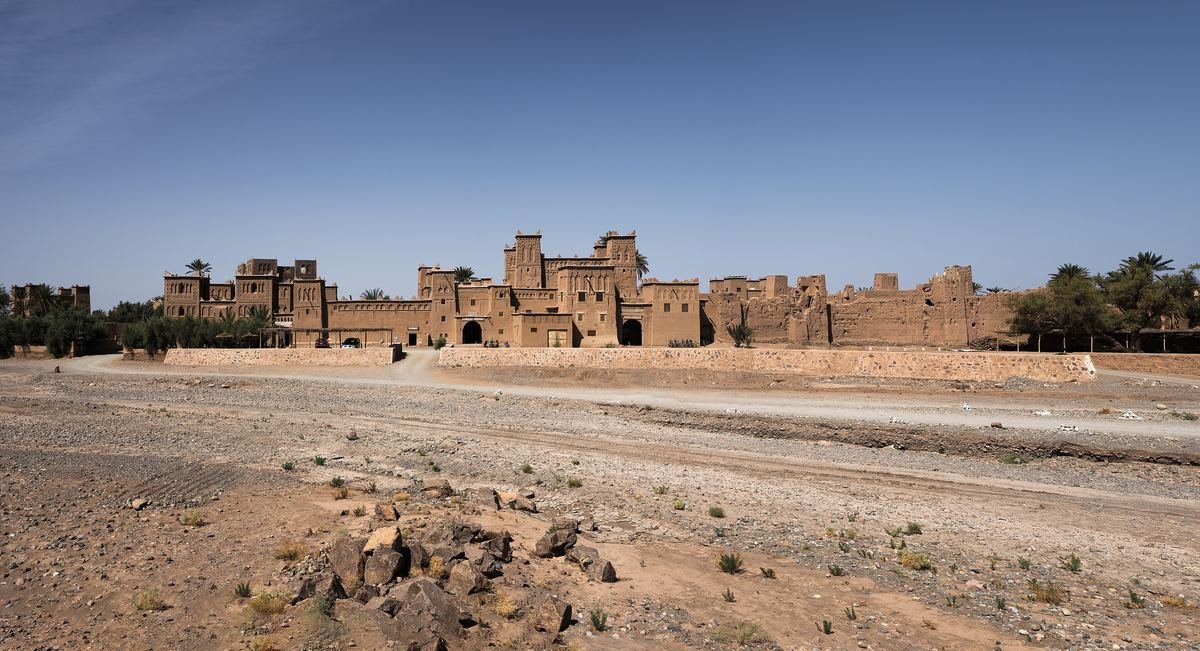
Kasbah Amridil is the best known building in Skoura and among the most photographed kasbahs in Morocco. If its silhouette looks familiar, that is because it appeared on the old 50 dirham banknote. It also features in film history: the kasbah is listed among the locations of Lawrence of Arabia (1962).
A short history
The site began as a fortified village (ksar) in the 17th century. In the late 19th century it was turned into a kasbah, a fortified residence, for M'hamed Ben Brahim Nasiri, a scholar from a prominent local family. Descendants of the Nasiri family still own it today: part of the building is lived in, and part is open to visitors as a private museum. The Wikipedia article on Kasbah Amridil summarises its history and architecture.
What you see inside
The main house rises over four levels around a central courtyard, with square corner towers decorated with geometric patterns carved into the earth. Each level had its role, and the visit follows that logic from the bottom up:
- Ground level: storage and space for animals, with thick walls that keep the temperature steady.
- Working rooms: kitchens, food stores, a traditional bread oven, a well and an old olive press, the kind of equipment that made a family self-sufficient.
- Living quarters: reception and family rooms, with ceilings of palm trunks, reeds and tamarisk branches, and a collection of everyday objects, tools, locks and household items.
- The roof terraces: the best part for many visitors, with a view over the palm grove, the other kasbahs and, on clear days, the High Atlas.
The visit takes about 30 to 45 minutes on your own, closer to an hour with a guide. Stairs are steep, narrow and dim in places, so take care with young children and wear closed shoes.
Fees and guides
There is an entrance fee, paid on site, and an optional guided tour at an extra cost. Figures published online differ and prices change, so we do not quote one here: ask at the door and carry small notes in dirhams. A guide is worth it if you want the stories behind the rooms, how water was shared, how the family lived, why the towers were built as they were.
Other kasbahs in the Skoura palm grove
Amridil is the only kasbah in Skoura set up for regular visits, but it is far from the only one worth seeing. Many are private homes or ruins, so admire them from the paths and do not climb on walls.
- Dar Aït Sidi El Mati: a large kasbah with four towers and fine decorative patterns, further along the usually dry riverbed from Amridil. It is not organised for visits and shows its age, but its outline among the palms is one of the most photogenic in the oasis. It is best reached on foot or by bike, ideally with someone who knows the way.
- Kasbah Aït Ben Moro: an old kasbah near the main road on the Ouarzazate side of Skoura, restored and now run as a hotel. It shows what careful restoration of earthen architecture can look like.
- Kasbah Aït Abou: one of the largest kasbahs in Skoura, north of the main palm grove towards the mountains, worth a look if you are exploring by car.
- Ruined kasbahs and granaries: on almost any walk you pass towers and walls of abandoned houses. They are the most honest picture of how fragile pisé is when nobody maintains it.
Walking and cycling in the palm grove
Once you have seen Amridil, the best thing to do in Skoura is simply to walk. The paths follow the irrigation channels between walled gardens, so you are in the shade most of the time and the air is noticeably cooler than on the road.
On foot
A loop of one to two hours from Kasbah Amridil along the riverbed and back through the gardens gives a good feel for the oasis. You will pass farmers at work, channels being opened and closed to water each plot in turn, and ruined towers rising above the palms. Paths are flat but uneven and they branch constantly; it is easy to lose your bearings. Download an offline map before you go, or take a local guide, which also gives you a chance to see a khettara and understand how the water rota works.
By bike
A bike lets you cover more ground, including the stretch to Dar Aït Sidi El Mati. Some guesthouses in the palm grove and local guides offer bikes or guided rides; availability changes, so ask in advance, or ask your accommodation in Ouarzazate to arrange it. Expect sandy patches and sections where you push.
Respect in the gardens
- The gardens are private farmland. Stay on the paths, close any gates behind you and never pick fruit or dates.
- Do not step into or dam the irrigation channels: each family has a precise turn for the water.
- Ask before photographing people, especially women working in the fields.
- Children may ask for sweets or pens. It is kinder not to hand them out; if you want to help, buy from local shops or use a local guide.
The best time to visit Skoura
Time of day
Go early. In the morning the light is soft on the earthen walls, the palm grove is cool and the farmers are at work. By late morning in the warm months the heat builds quickly, and in summer it can be fiercely hot by midday. Late afternoon is the other good window: the kasbahs turn a warmer orange and the shadows lengthen under the palms. The middle of the day is better spent on the roof of a café or on the road.
Season
October to May is the most comfortable period. Spring brings green fields and blossom, and the rose harvest further east around Kelaat M'Gouna. Autumn is date harvest time. Winter days are bright and mild but mornings are cold, and the High Atlas behind the oasis is often white with snow. In summer, plan only the early morning. For month by month details, see our guide to the best time to visit Ouarzazate.
Market day
Skoura's weekly souk is held on Monday. Farmers and traders from the surrounding villages come in early to sell vegetables, fruit, spices, household goods and livestock. It is a working market rather than a tourist one, best seen in the morning. Market days can shift around holidays, so confirm locally.
A half day plan from Ouarzazate
| Time | What to do |
|---|---|
| 8:00 | Leave Ouarzazate on the N10, with water and a hat |
| 8:45 | Arrive at Kasbah Amridil, visit before the tour groups |
| 9:45 | Walk or cycle in the palm grove, towards Dar Aït Sidi El Mati |
| 11:30 | Mint tea or an early lunch in Skoura |
| 12:30 | Drive back to Ouarzazate before the hottest hours |
This leaves the afternoon free for a rest and a sight in town, such as Kasbah Taourirt, the Glaoui kasbah in the centre, which makes an interesting comparison with Amridil: a powerful clan's stronghold against a family's working house. Our 2 or 3 day Ouarzazate itinerary shows how Skoura fits into a longer stay.
Combining Skoura with Kelaat M'Gouna or the lake
Skoura and the Valley of Roses
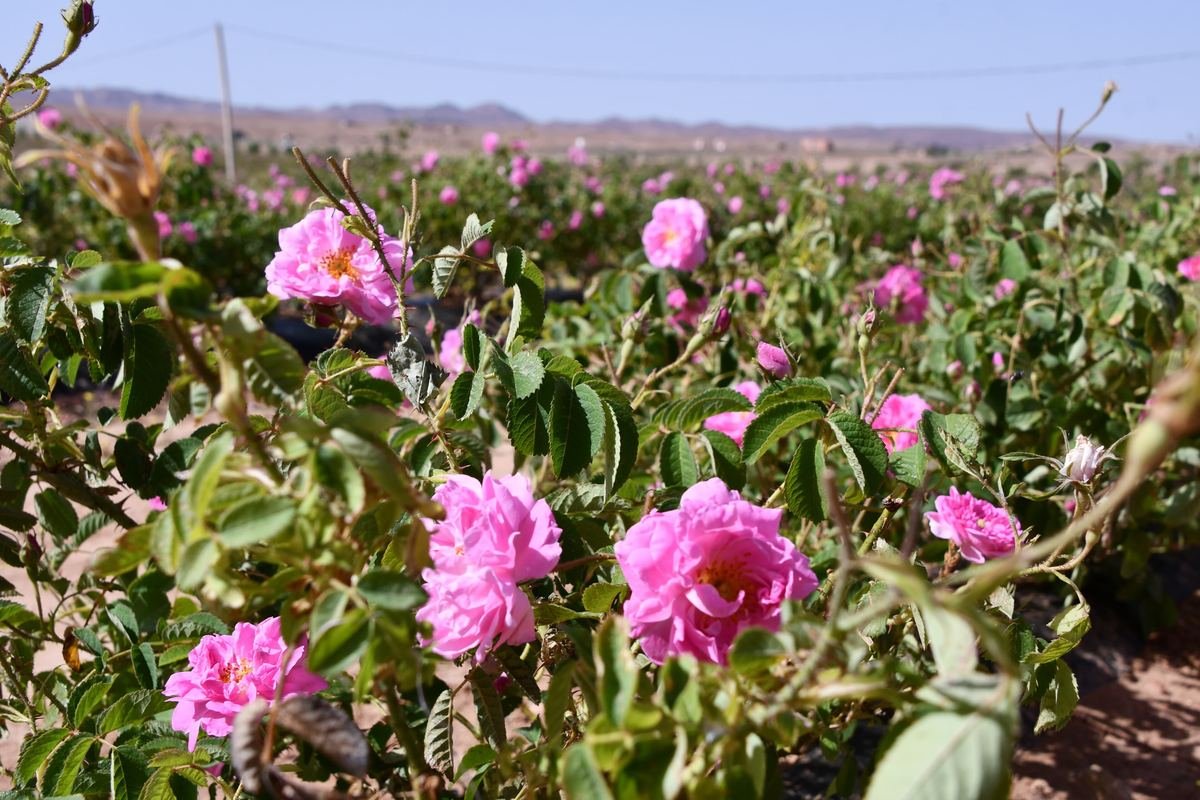
Kelaat M'Gouna lies about 50 km further east on the same road, about 90 km from Ouarzazate in total. Visit Amridil and the palm grove in the morning, continue to Kelaat M'Gouna for lunch, then drive a short way into the valley north of town for the views of terraced fields and kasbahs. The town is known for its pink Damask roses, harvested in spring, and for its rose festival around May. Our guide to Kelaat M'Gouna and the Valley of Roses has the details. Expect to be back in Ouarzazate in the late afternoon.
Skoura and the Dades gorges
If you are happy with a long day in the car, Skoura is the natural first stop on the way to the Dades. Keep it short in the morning, push on to the gorges, and return in the evening. See our guide to the Dades gorges from Ouarzazate for timings.
Skoura and the El Mansour Eddahbi lake
For a gentler day, combine a morning in Skoura with a late afternoon stop by the El Mansour Eddahbi reservoir on the way back. The water and bare hills are at their best in the low evening light, and it is a quiet spot to finish the day before dinner in town.
If you are crossing to the Sahara rather than coming back, Skoura is also the first stop on our Ouarzazate to Merzouga route.
Practical tips
- Cash: bring dirhams in small notes for the entrance, a guide, parking attendants and cafés. Skoura has a few shops and fuel stations on the main road, but do not count on paying by card in the palm grove.
- Water and sun: carry at least 1.5 litres per person, a hat and sunscreen, even in winter.
- Shoes: closed shoes with grip for the kasbah stairs and the dusty paths.
- Dress: Skoura is a conservative rural area. Covered shoulders and knees are respectful and protect you from the sun.
- Food: cafés on the main road serve tea, omelettes and tagines. Guesthouses in the palm grove may serve lunch if you call ahead.
- Offers on the road: people may offer to guide you or show you a kasbah. A polite, clear answer is enough; if you do accept, agree on the price first.
Using Ouarzazate as your base
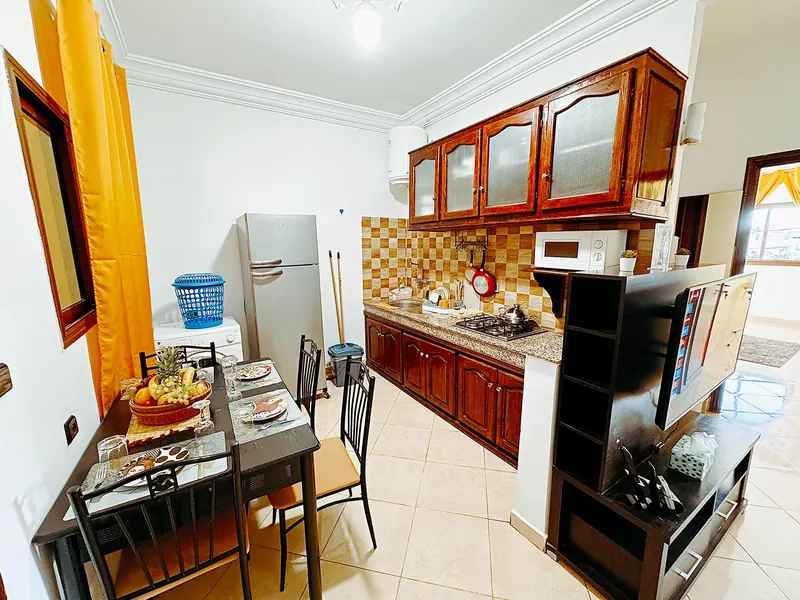
Skoura is close enough to Ouarzazate that most visitors do not need to move hotels to see it. Staying in town means you can leave at 8:00, have the kasbah almost to yourself, and be back for lunch or a siesta, then head west to Aït Ben Haddou the next day without packing a bag. Residence Chay is in a calm residential district about 2 minutes from the airport and 3 minutes from the centre, with free guarded parking and two-bedroom apartments with a kitchen. The reception can help arrange a driver or a guide for Skoura if you prefer not to drive.
Questions travellers ask
How far is Skoura from Ouarzazate?
About 40 km east on the N10, the road towards Kelaat M'Gouna and the Dades valley. Allow 40 to 45 minutes by car, a little more by grand taxi or bus.
Is Kasbah Amridil worth visiting?
Yes, if you want to understand how a fortified family house in the oases actually worked. It is still owned by the family that built it, and the rooms, olive press, bread ovens and roof terrace make it far more concrete than a view from outside.
How much is the entrance to Kasbah Amridil?
There is a modest entrance fee paid on site, with an optional guided tour on top. Published figures vary and change over time, so check the price at the entrance and carry cash in dirhams.
Can you visit Skoura without a guide?
Yes. Kasbah Amridil can be visited with or without a guide, and the main palm grove paths are easy to follow. For the inner lanes, the irrigation channels and the lesser known kasbahs, a local guide saves time and explains what you are looking at.
Is Skoura worth an overnight stay?
It is a quiet place to sleep, with guesthouses inside the palm grove, but most visitors see it well in half a day from Ouarzazate, where shops, restaurants and the airport are close at hand.