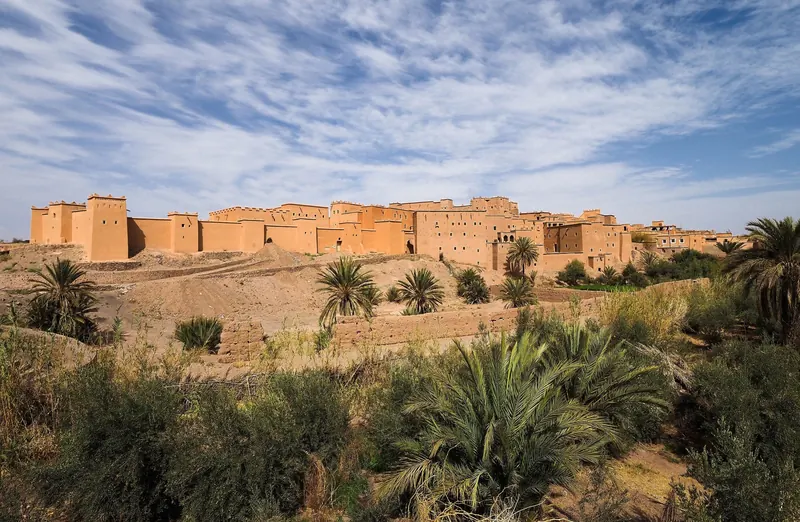
Shopping in Ouarzazate: Souks, Crafts, Carpets and Groceries
Ouarzazate has no maze of a medina, which makes shopping calmer than in Marrakech. Where to buy carpets and crafts, how the weekly souk works, how to bargain and where to stock up on groceries.
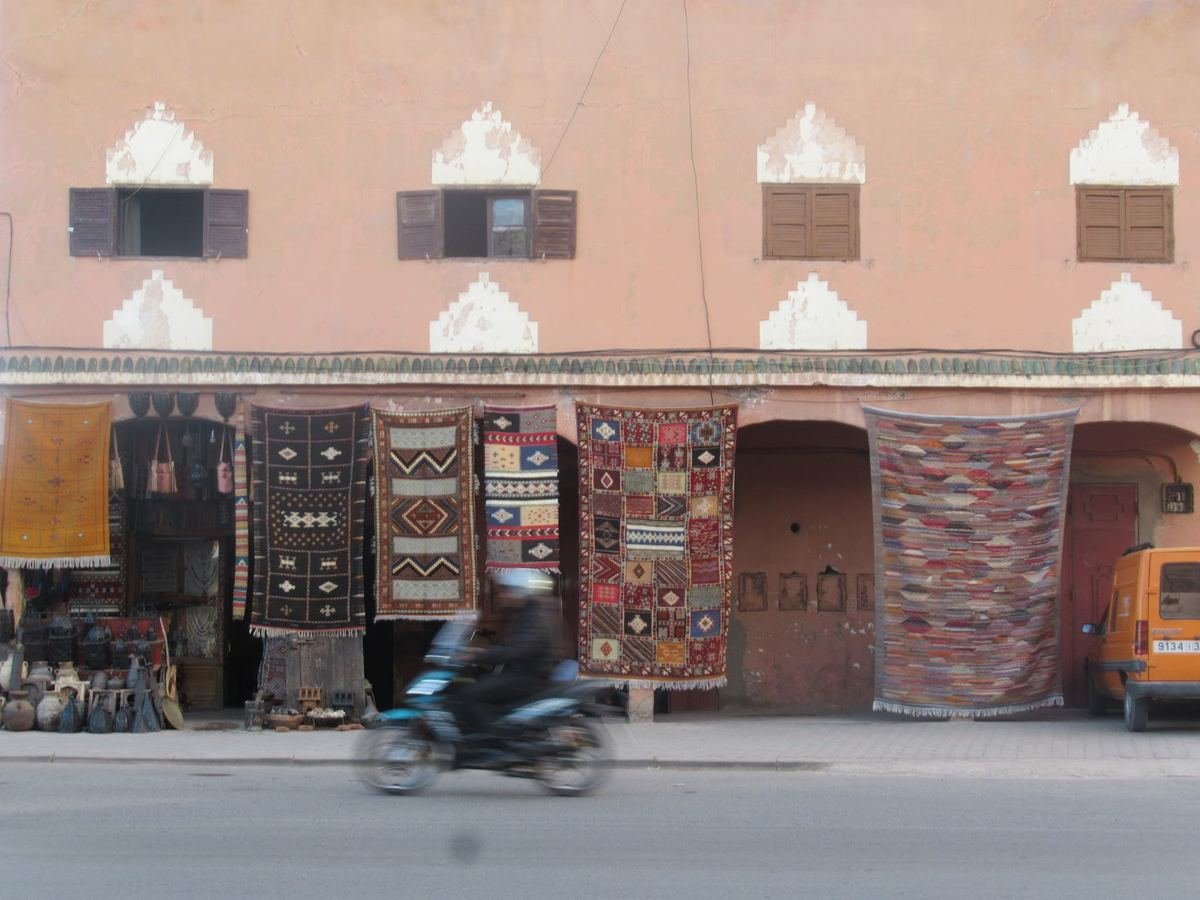
Shopping in Ouarzazate is relaxed compared with Marrakech or Fez. There is no labyrinthine medina, and most buying happens in three places: the craft complex opposite Kasbah Taourirt, the shops and covered market around the town centre, and the weekly souk. The region is known above all for carpets, but you will also find pottery, silver jewellery, rose and argan products, dates and spices. This guide covers where to go, what is worth buying, how to bargain and where to shop for groceries during your stay.
Where to shop in Ouarzazate
The craft complex opposite Kasbah Taourirt
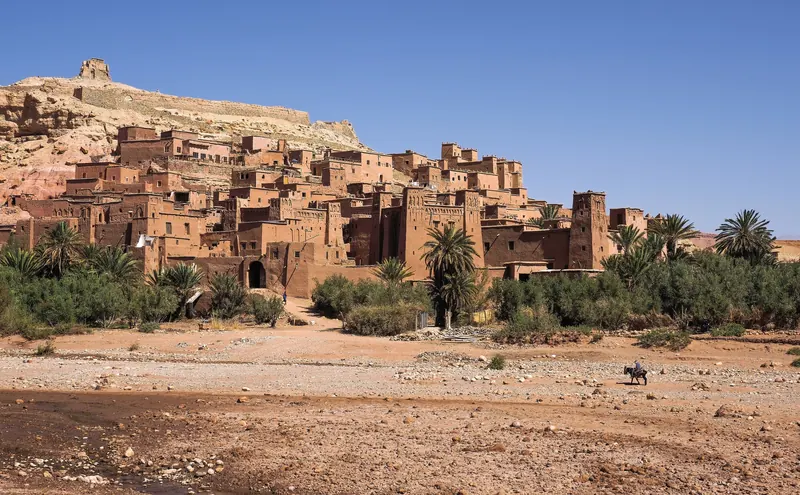
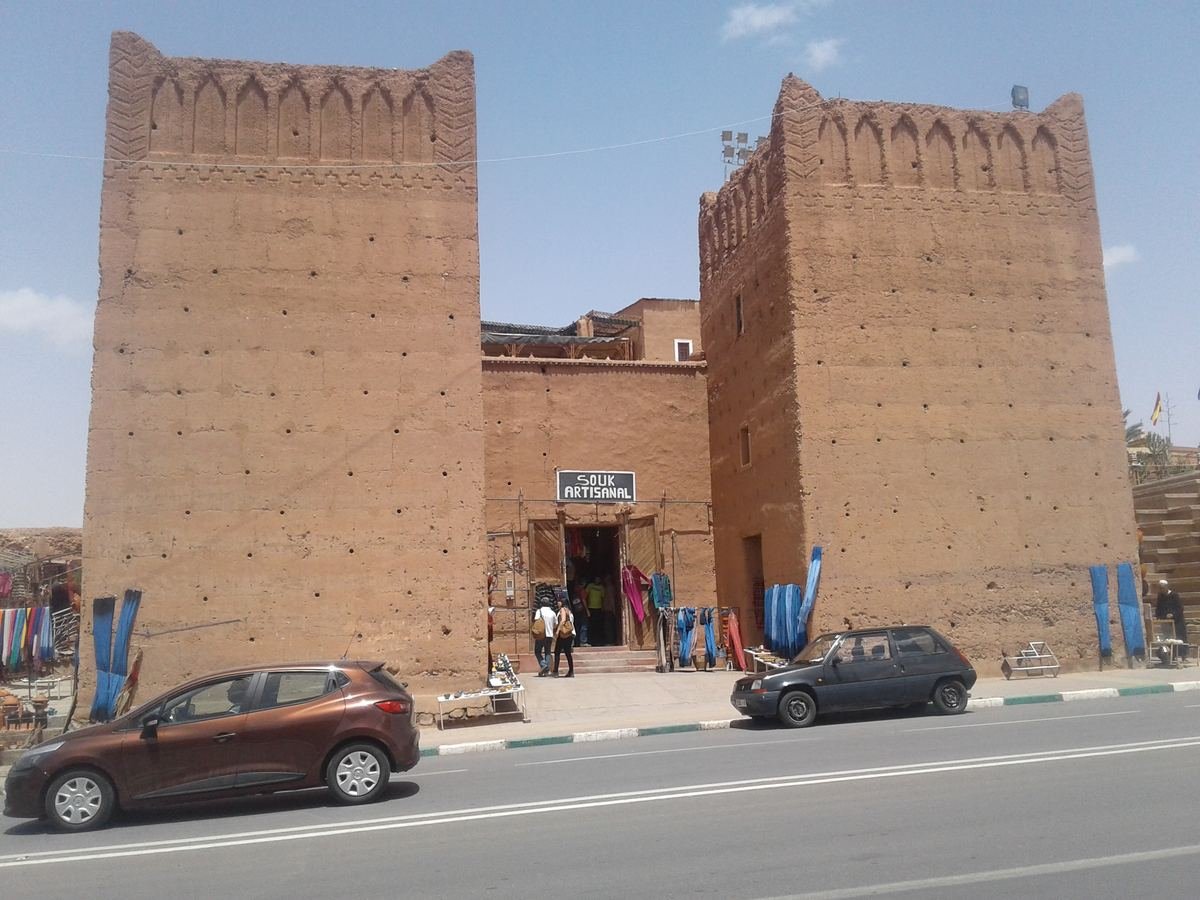
Across Avenue Mohammed V from Kasbah Taourirt, the Ensemble Artisanal (also signposted as the souk artisanal) groups workshops and shops in earthen buildings: carpets, pottery, woodwork, leather, lamps and silver jewellery. It is calm, nobody chases you down the street, and it is the best place to get a feel for quality and prices before you shop elsewhere.
Inside the complex, the women's carpet cooperative (Coopérative la Kasbah de tissage des tapis et hanbels) has been working since 1988. Its members, all from Ouarzazate, weave knotted carpets and finer hanbel pieces, and some dye with plants such as henna, onion skins and marigold. The cooperative carries the national Morocco Handmade label. Buying here means the money goes directly to the weavers, and they are happy to explain the motifs.
The town centre and the covered souk
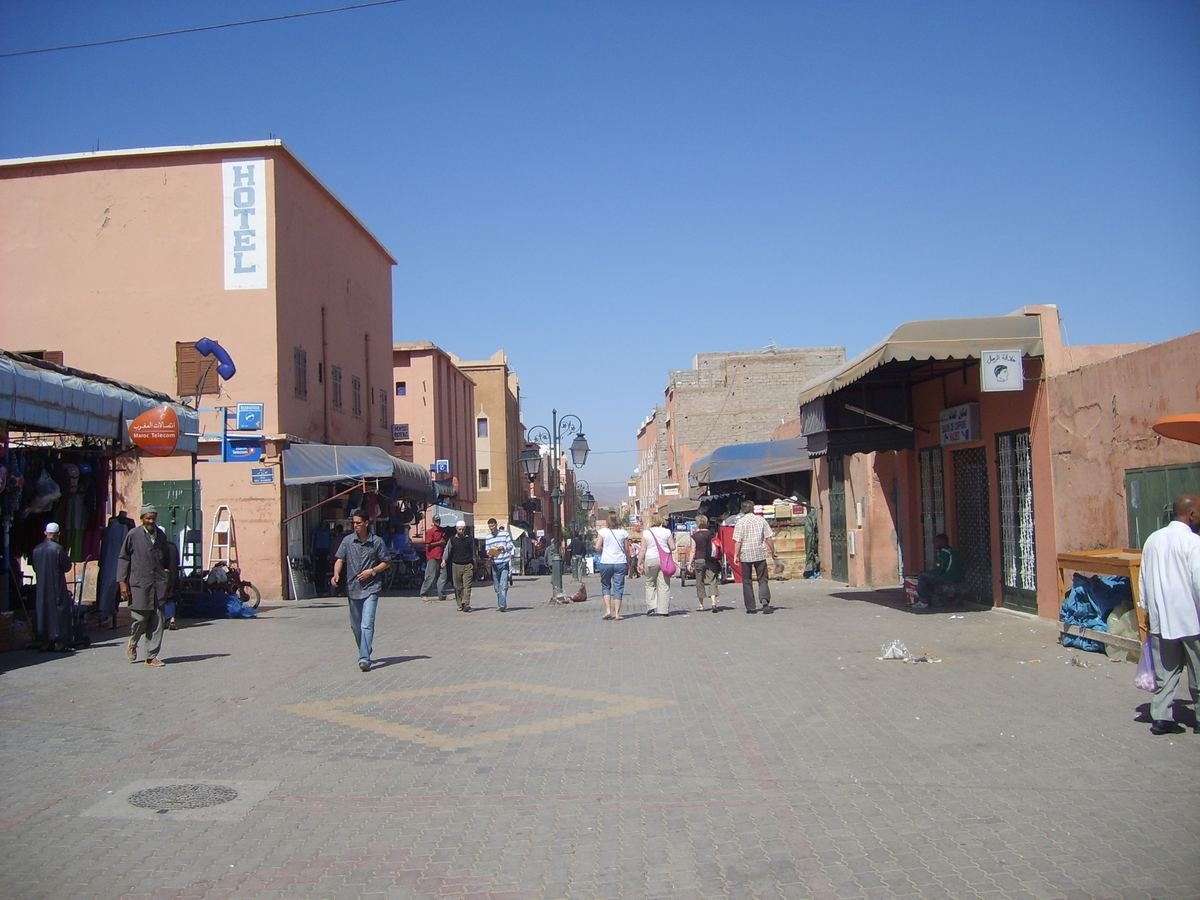
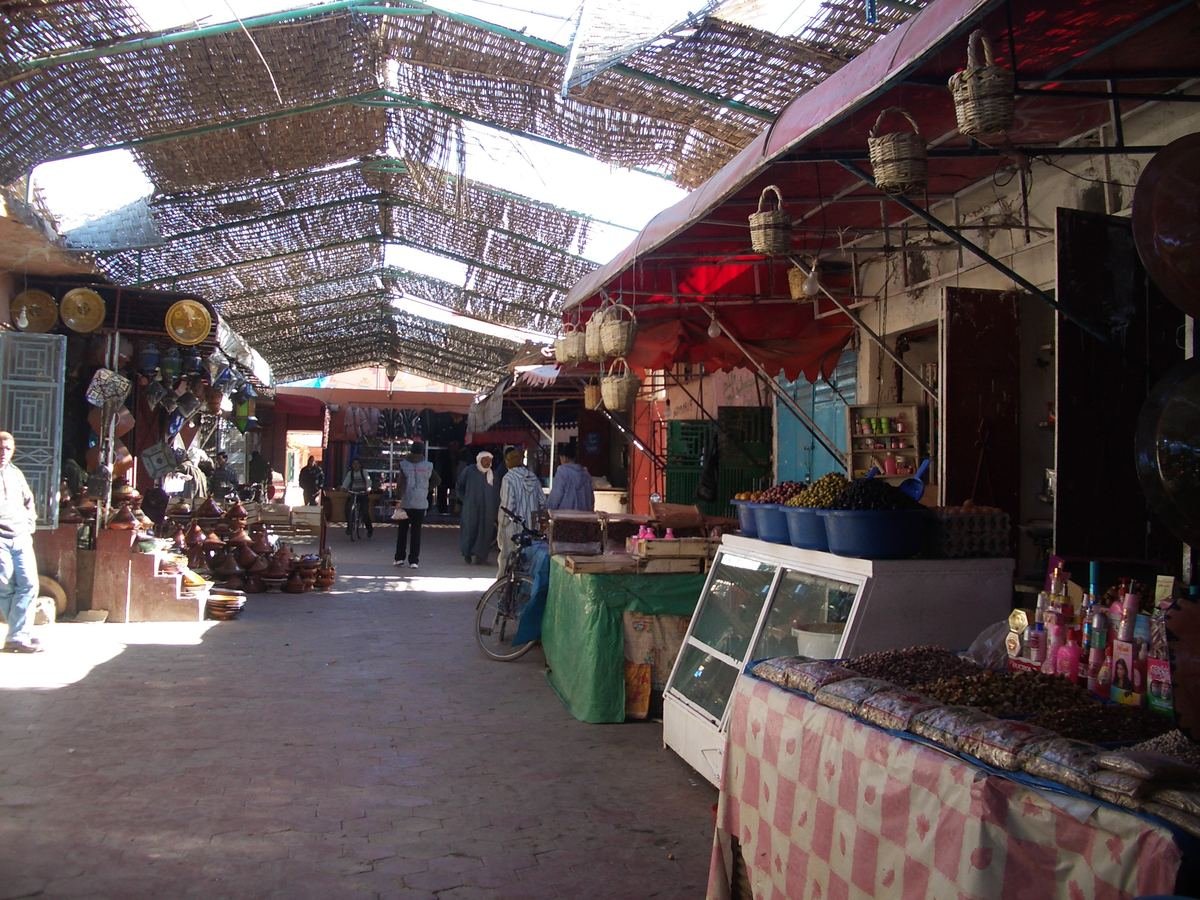
Around Place Al Mouahidine, the main square, and the streets nearby you will find souvenir and carpet shops, spice sellers and a small covered souk with stalls of olives, dates, baskets, tagine pots and household goods. It is where locals shop too, so it is a good place to see everyday prices and pick up small gifts.
Shops on the road
Large carpet and craft showrooms line the roads to Aït Ben Haddou, Skoura and Zagora. Some are excellent, some are tour bus stops with high opening prices. Drivers and guides sometimes earn a commission there, so feel free to say you only want to look.
The weekly souk in Ouarzazate
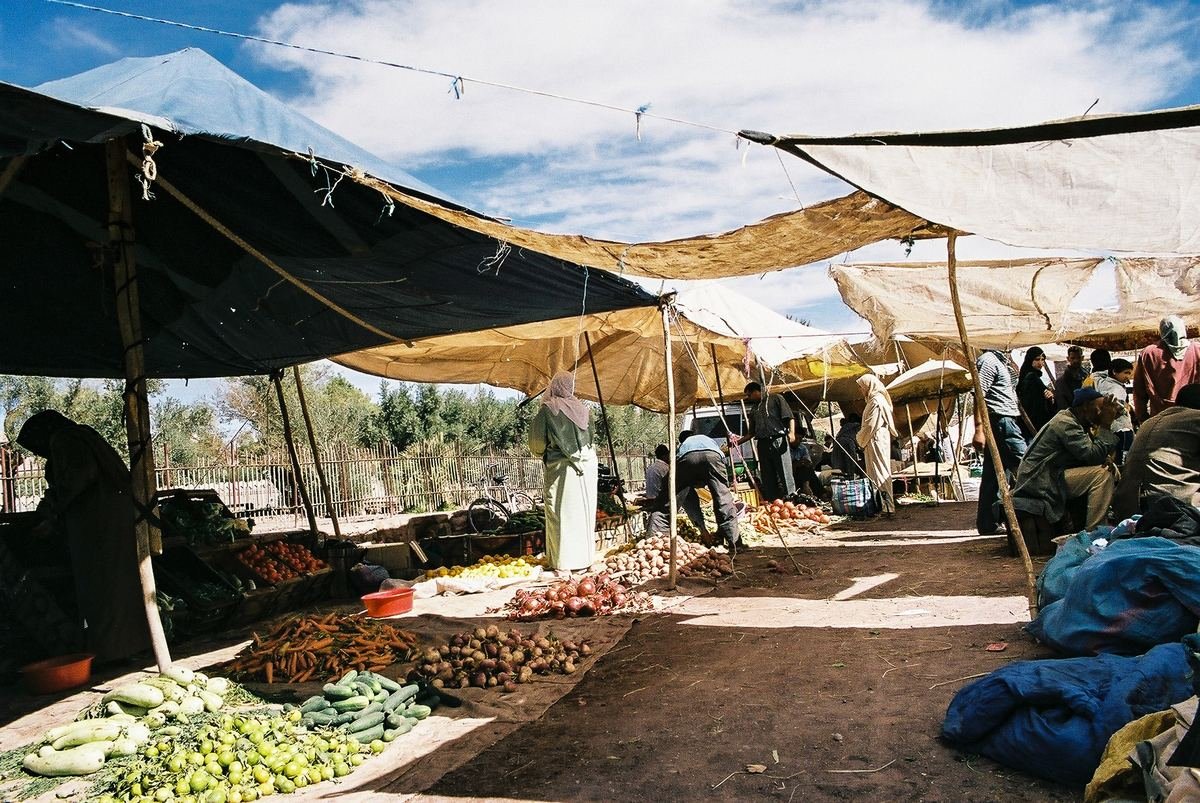
Like every town in southern Morocco, Ouarzazate has weekly markets where farmers and traders from the surrounding villages come to sell. The one most often recommended to visitors is held on Sunday morning, a large open market with fruit and vegetables, spices, clothing, household goods, second-hand items and sometimes carpets. Other weekly markets take place in the town's districts and in Tabounte, across the river, but sources disagree on their days, so ask at your accommodation the day before.
- Go early: the souk is busiest and freshest in the morning and winds down around midday.
- It is not a souvenir market: it is where people buy their week's food and tools. Come to watch everyday life, buy fruit, olives and spices, and enjoy a mint tea.
- Photos: ask before photographing people or their stalls, and accept a refusal.
- Pickpockets: keep your phone and wallet in a front pocket, as in any crowded market.
Nearby towns have their own weekly souks, such as Skoura on Monday. If you are planning a day trip, ask whether your day coincides with a market along the way.
What to buy in and around Ouarzazate
| Item | Where it comes from | What to check |
|---|---|---|
| Carpets and kilims | Ouzguita villages around Taznakht, the High Atlas, Ouarzazate cooperatives | Wool quality, density of knots, even edges, natural or chemical dyes |
| Green glazed pottery | Tamegroute, in the Draa valley near Zagora | Cracks, chips, and whether it is for decoration or food use |
| Silver jewellery | Amazigh silversmiths across the south | Weight, hallmark or the seller's statement on silver content |
| Rose water and creams | Kelaat M'Gouna and the Dades valley | Ingredient list, sealed bottles, made by a cooperative |
| Argan oil and cosmetics | The Souss region in the southwest | Sealed bottles with a label, cooperative name, cosmetic or culinary grade |
| Saffron | Taliouine, on the road to Agadir | Deep red threads, sold by weight in small sealed containers |
| Dates | The Draa and Tafilalet oases | Best fresh after the autumn harvest; taste before you buy |
| Fossils | Erfoud and the Tafilalet | Many pieces are partly carved or restored; buy for looks, not as rarities |
For rose products, the shops in Kelaat M'Gouna have the widest choice; see our guide to the Valley of Roses. Tamegroute pottery is easy to find in Ouarzazate, but if you are going south, buying at the workshops on the road to Zagora and the Draa valley is part of the experience.
Buying a carpet without regrets
The Ouarzazate region is one of the main carpet areas in Morocco. The most famous production comes from the Ouzguita tribes around Taznakht, about 85 km southwest of Ouarzazate, where you can see weavers at work; our guide to Taznakht carpets covers that trip. If you buy in Ouarzazate, a few habits help:
- Know what you want: knotted carpets (with pile) are heavier and pricier; flat-woven kilims and hanbels are lighter and fold easily into a suitcase.
- Turn it over: on a hand knotted carpet the pattern shows clearly on the back, with small irregularities. Very regular knots and a glued backing suggest machine work.
- Test the colours: rub a damp white tissue on the wool. Colour that comes off easily may run when washed.
- Take your time: the mint tea and the unrolling of twenty carpets is part of the ritual and does not oblige you to buy. Ask for the price of two or three pieces only when you have narrowed down your choice.
- Shipping: if a shop offers to send the carpet, get a written receipt describing it, with the price and the shipping terms. Carrying it yourself is simpler.
Bargaining tips
Prices are negotiated in the souks and most craft shops, but not in supermarkets, pharmacies or cafés. Bargaining is a conversation, not a fight, and the tone matters more than the technique.
- Look first, ask later: visit the craft complex or two or three shops to get a sense of prices before you start.
- Let the seller name a price, then answer with your own, well below it, and meet somewhere in between.
- Decide your maximum before you start, and stick to it.
- Stay friendly: smile, take the tea if offered, and joke a little. A few words of French or Darija help.
- Walking away is fine: if the price does not suit you, thank the seller and leave. Sometimes the final offer comes as you reach the door.
- Do not bargain for sport: once a price is agreed, it is bad form not to buy, and a few dirhams mean more to the seller than to you.
- Use cash: small notes make it easier to pay the exact amount agreed.
Supermarkets and groceries
For everyday shopping, Ouarzazate has a Carrefour Market supermarket in town, branches of the BIM discount chain in several neighbourhoods, and countless small grocery shops (hanout) on every street, selling bread, water, milk, eggs and basics until late. Fruit and vegetables are best and cheapest at the market stalls in the centre and at the weekly souk. Bakeries sell fresh bread and Moroccan pastries throughout the day.
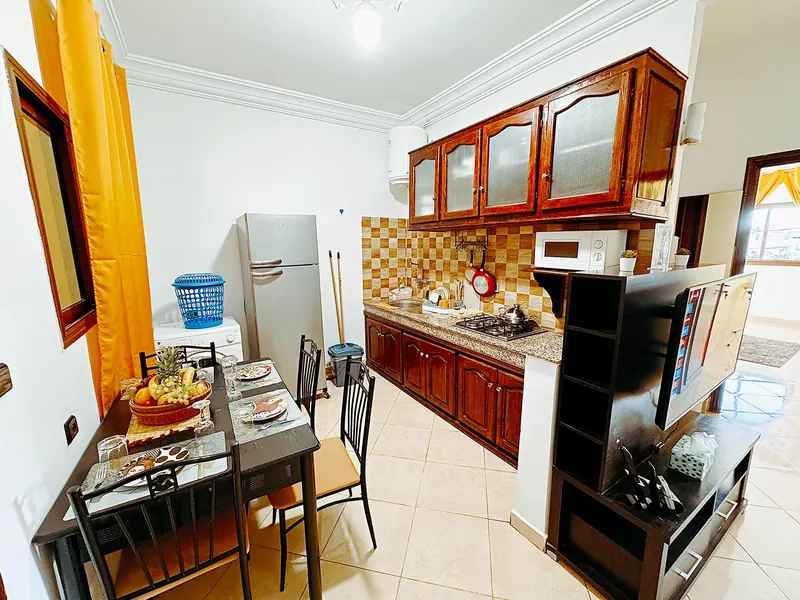
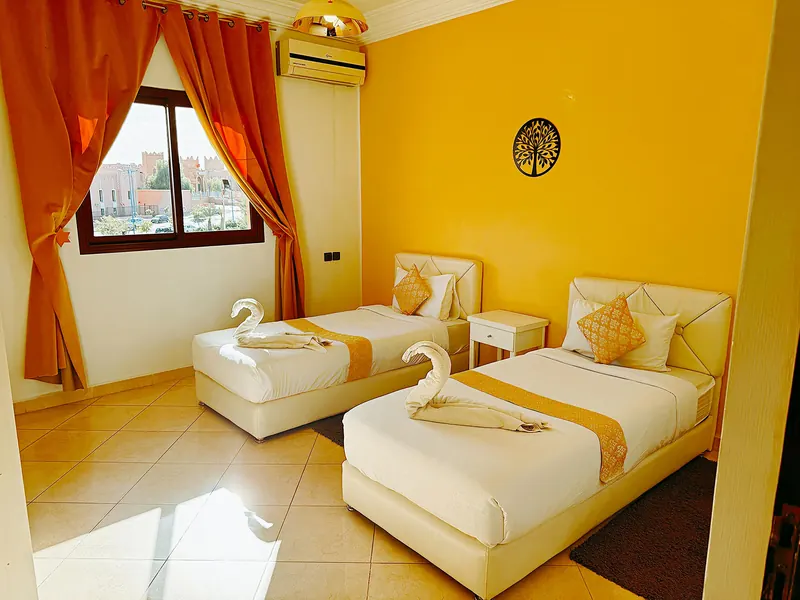
If you are staying in an apartment with a kitchen, such as the apartments at Residence Chay, this makes self-catering easy: buy a bag of oranges and fresh bread in the morning, and pick up tagine vegetables at the market for dinner. When you prefer to eat out, our guide on where to eat in Ouarzazate has ideas.
Practical tips for shopping in Ouarzazate
- Cash: the souks run on dirhams. Withdraw in town; our Ouarzazate practical tips cover ATMs, cards and SIM cards.
- Timing: some shops close for a few hours in the early afternoon and around Friday midday prayers, and reopen until the evening. During Ramadan, the town comes alive after sunset.
- Guides and commissions: if a guide or driver takes you to a shop, prices may include their commission. You are never obliged to buy.
- Restricted items: avoid buying products made from protected wild animals, and check your home country's rules for food, plants and seeds.
- Carry a bag: plastic bags are restricted in Morocco, so bring a reusable bag for the market.
Questions travellers ask
Is shopping in Ouarzazate cheaper than in Marrakech?
Often, yes, especially for carpets and regional crafts, because you are closer to where they are made and there is less tourist pressure. Prices still depend on quality and on your bargaining, so compare before you buy.
Can I pay by card in the souks of Ouarzazate?
Rarely. Market stalls and small shops expect cash in dirhams. Some larger carpet and craft shops accept cards, sometimes with a surcharge, and supermarkets take cards. Withdraw cash in town before you go shopping.
Are shops open on Sundays and Fridays in Ouarzazate?
Many shops in the centre open every day, but some craft workshops and cooperatives close on Sundays, and many businesses pause around Friday midday prayers. During Ramadan, hours shift towards the evening.
Can I bring a carpet home on the plane?
Yes. Flat-woven kilims fold small, and knotted carpets can be rolled and tied by the seller. Check your airline's baggage allowance first, and keep the receipt in case customs at home ask about it.