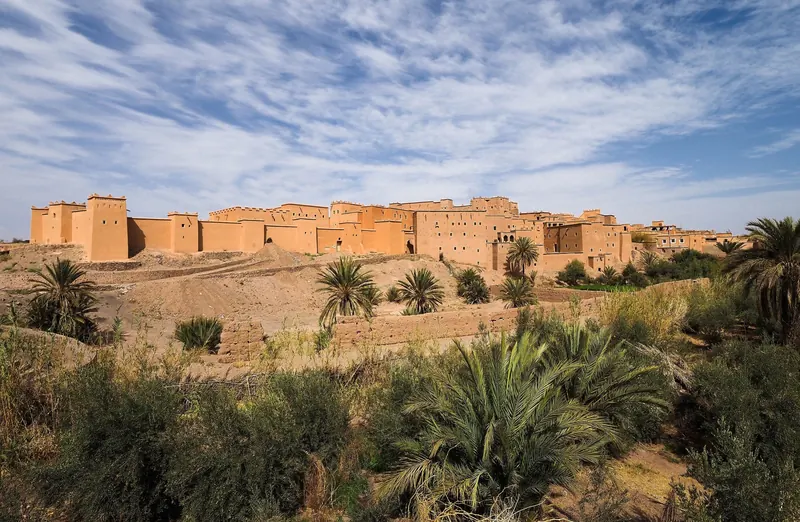
Taznakht Carpets: A Day Trip from Ouarzazate on the Agadir Road
Taznakht is the weaving town of the Aït Ouaouzguite, about 85 to 90 km from Ouarzazate on the road to Agadir. How to get there, what makes its carpets different and how to buy one without regret.
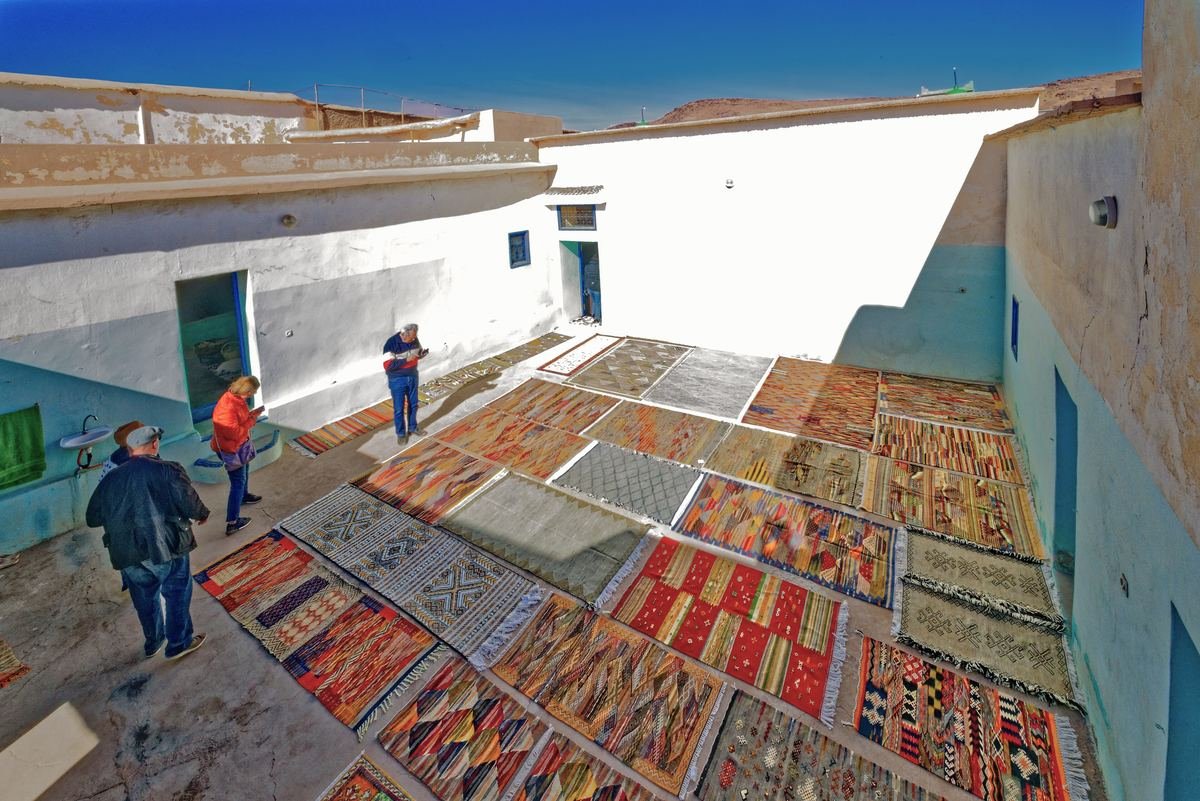
Taznakht carpets are some of the most recognisable rugs in southern Morocco: dense, geometric and warm in colour, woven by women of the Aït Ouaouzguite tribes in the villages around Jbel Siroua. The small town of Taznakht, about 85 to 90 km from Ouarzazate on the N10 road to Agadir, is their market and meeting point. It makes a good half day or full day trip if you are interested in crafts, want to buy a rug closer to the source, or are driving on towards Taliouine and Agadir.
Getting from Ouarzazate to Taznakht
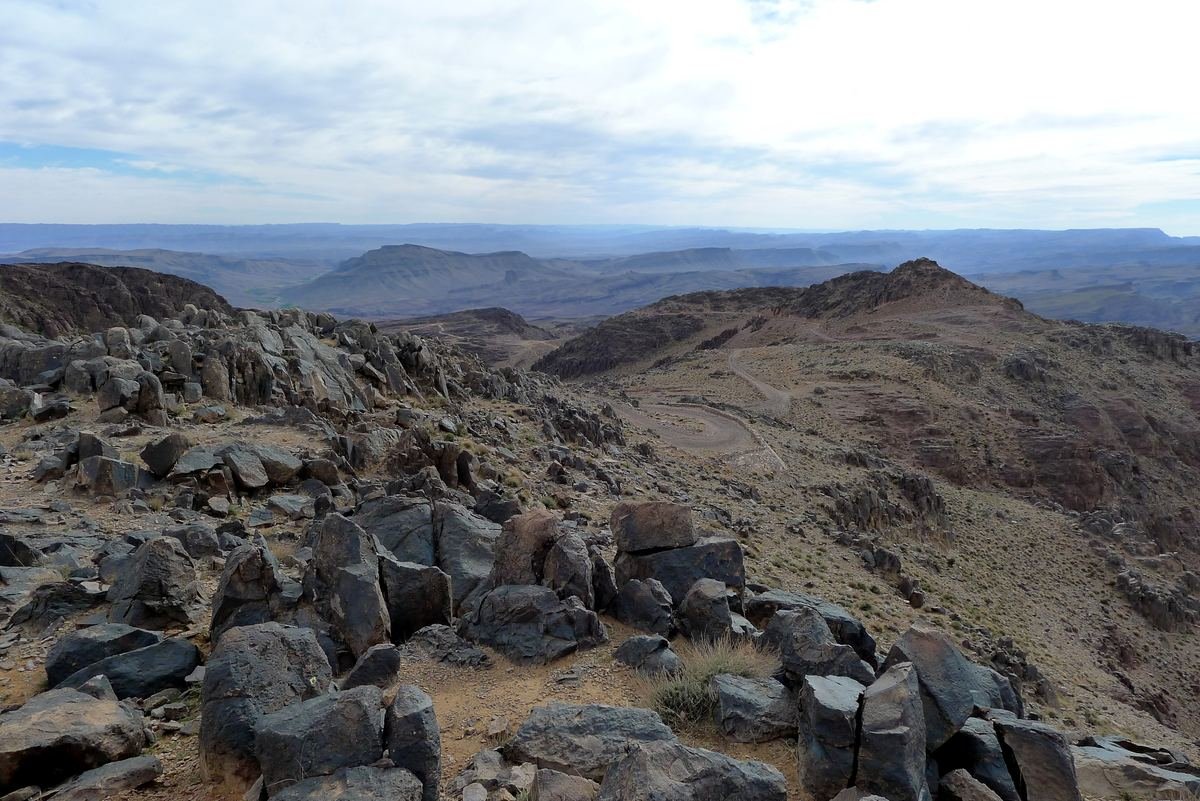
Leave Ouarzazate on the main road west, past Atlas Studios and CLA Studios. For about 25 km the N10 to Agadir shares the road with the N9 to Marrakech. The two then split: the N9 climbs towards the Tizi n'Tichka pass, while the N10 turns south-west across open, stony plateaus with the Siroua massif on the horizon. The road is paved and quiet, with few villages and long straight stretches.
| Stage | Approximate distance | Approximate time |
|---|---|---|
| Ouarzazate to the N9 and N10 fork | about 25 km | about 25 minutes |
| Ouarzazate to Taznakht | about 85 to 90 km | about 1 hour 30 minutes |
| Taznakht to Taliouine | about 85 km | about 1 hour 30 minutes |
| Ouarzazate to Agadir by the N10 | about 370 km | a full day, at least 5 to 6 hours of driving |
Distances are rounded from road measurements; allow extra time for photo stops, roadworks and slow lorries. Fill up in Ouarzazate before you leave, and carry water, as services are sparse between towns.
- By car: the most flexible option. Our guide to car rental and driving from Ouarzazate covers the rules of the road and fuel.
- By grand taxi or bus: shared grand taxis run between Ouarzazate and Taznakht, and buses between Ouarzazate and Agadir pass through the town. See our guide to taxis and buses in Ouarzazate and check current times locally.
- With a driver: worth it if you plan to visit a cooperative in a village outside town, where a local contact makes the visit far easier.
What makes Taznakht carpets different
The rugs sold in Taznakht are usually labelled Aït Ouaouzguite (also written Ouaouzguit or Ouzguita), the name of a confederation of Amazigh tribes living between the High Atlas and the Anti-Atlas. Local accounts list communities such as Aït Ougharda, Iznaguen, Tidili and Taznakht itself among them. Each group has its own habits of colour and pattern, but they share a family resemblance that experienced buyers recognise immediately.
Wool, colour and pattern
- Wool: traditionally from the flocks of the Siroua slopes, a breed valued for clean white or black fleece. The wool is washed, carded and spun by hand in the villages.
- Dyes: older pieces used plant and mineral dyes such as henna, pomegranate rind, madder and alum, giving yellows, reds, oranges and browns, with indigo for blue. Many modern rugs use synthetic dyes, which is not a problem as long as you know what you are paying for.
- Designs: dense geometric compositions of diamonds, triangles, zigzags, squares and stepped lines, often divided into bands or panels. Weavers work from memory and family tradition rather than drawn patterns, so no two pieces are identical.
- Techniques: you will see both hand-knotted pile carpets and flatweaves (kilims), sometimes combined in the same piece.
A single rug can take from several weeks to several months on the loom, depending on its size and density. That time, more than anything, is what you are paying for.
Visiting a carpet cooperative
The most rewarding way to see Taznakht carpets is to visit weavers rather than only shops. Several women's cooperatives work in the villages around the town. One of the best documented is the Iznaguen cooperative, founded in 2009 a few kilometres from Taznakht, which brought together around sixty women from fourteen villages to sell their work more directly. Visits of this kind usually show wool preparation, dyeing and weaving on vertical looms, before you are shown finished pieces.
Some practical points:
- Arrange it in advance: village cooperatives are workplaces and homes, not showrooms with fixed hours. Ask your driver, guide or accommodation to call ahead.
- Do not photograph people without asking: many weavers prefer not to be photographed.
- There is no obligation to buy, but a visit takes the weavers' time, so be clear about your intentions and thank them properly.
- Shops in town along the main avenue also sell large stocks of local rugs. Some are run by families with weavers in the villages; others are traders. Both can be fine, as long as you check the pieces carefully.
Taznakht also has a weekly souk where wool, livestock and rugs change hands. Sources disagree on the day, so if you want to time your visit with the market, ask in Ouarzazate before you set out.
Honest tips for buying a carpet
A rug can be a beautiful souvenir or an expensive regret. These checks help:
- Know your size first: measure the space at home and bring the numbers. Most bad purchases are rugs that do not fit.
- Turn it over: on a hand-knotted rug the pattern shows clearly on the back, with small irregularities. A flat, perfectly even backing suggests a machine.
- Feel the wool: hand-spun wool varies slightly in thickness. Very shiny fibres may be synthetic.
- Ask about the dyes and accept a plain answer. Natural dyes are slower and costlier; a seller who claims everything is natural should be able to explain how.
- Check edges and fringes: they should be firm and straight, with no loose rows.
- Never feel rushed: mint tea and a long display are part of the ritual, not a commitment. Leave and come back if you need time.
- Negotiate calmly: decide your maximum beforehand. Paying by card or arranging shipping changes the price, so agree on everything before you pay and keep a written receipt.
- Be aware of commissions: drivers and guides who bring customers to shops are sometimes paid a share. That is not a scam, but it is a good reason to visit more than one place.
Rolled tightly and tied, a medium rug fits in a suitcase or as checked luggage. For larger pieces, ask the seller for written shipping terms. If you would rather compare with what is available in town first, our guide to souks, crafts and shopping in Ouarzazate covers the craft centre and markets.
Further along the N10: Taliouine and its saffron
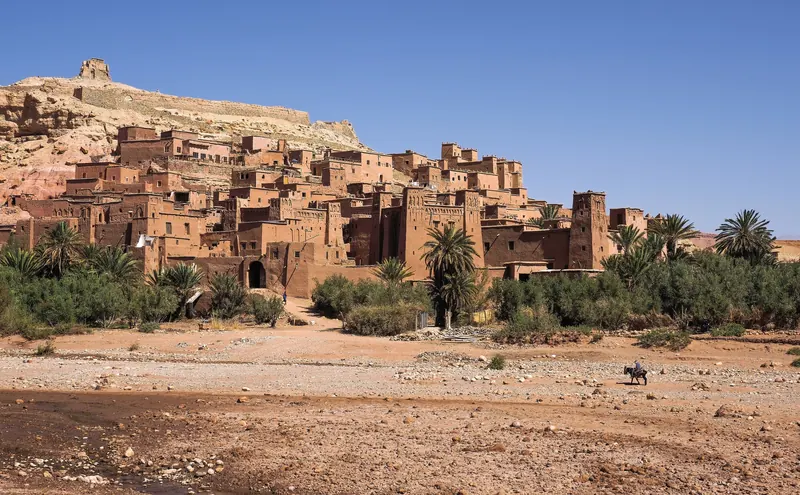
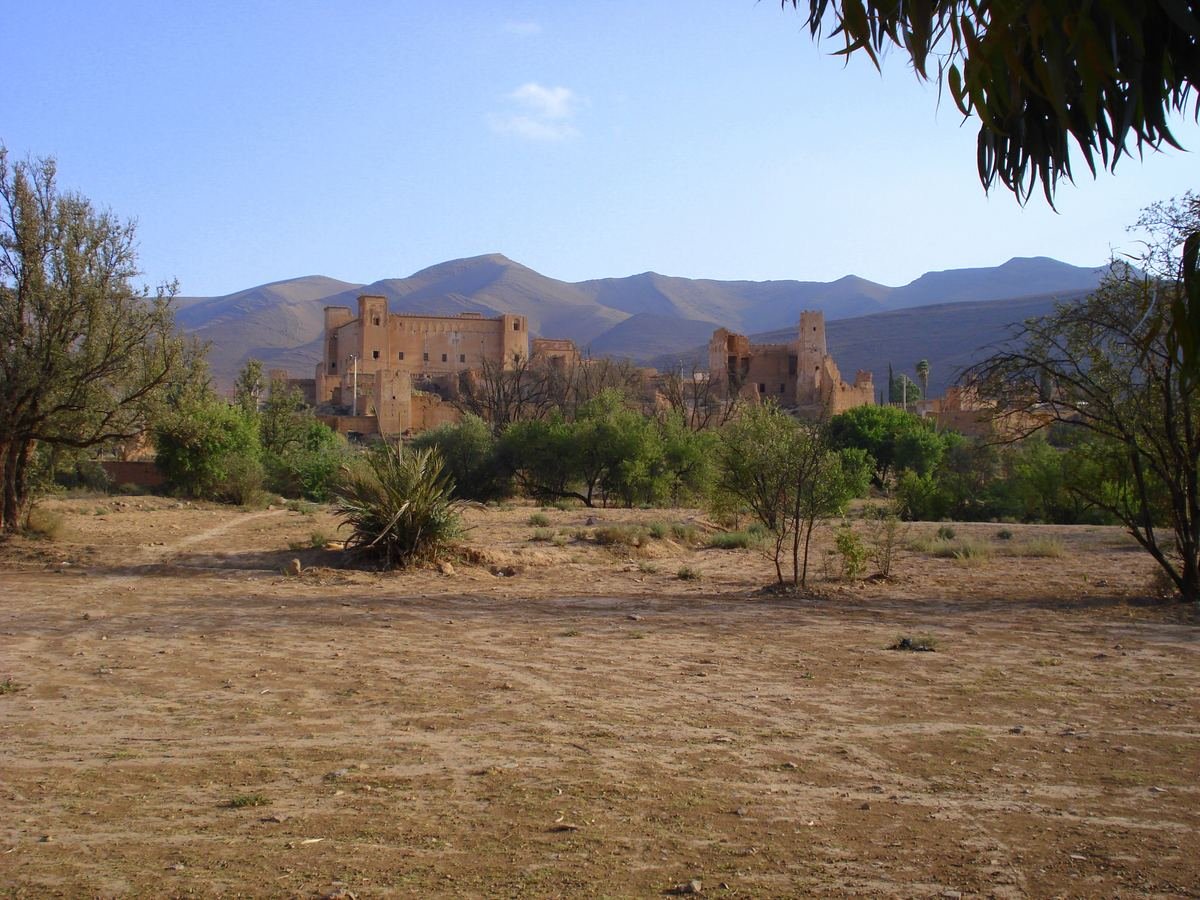
About 85 km beyond Taznakht, the town of Taliouine is Morocco's best known saffron area. The purple crocus flowers are picked by hand over a few weeks from late October into November, and the town holds a saffron fair around that time. Cooperatives in town explain how the stigmas are sorted and dried and sell saffron directly. Taliouine also has an old kasbah of the Glaoui era on the edge of the valley.
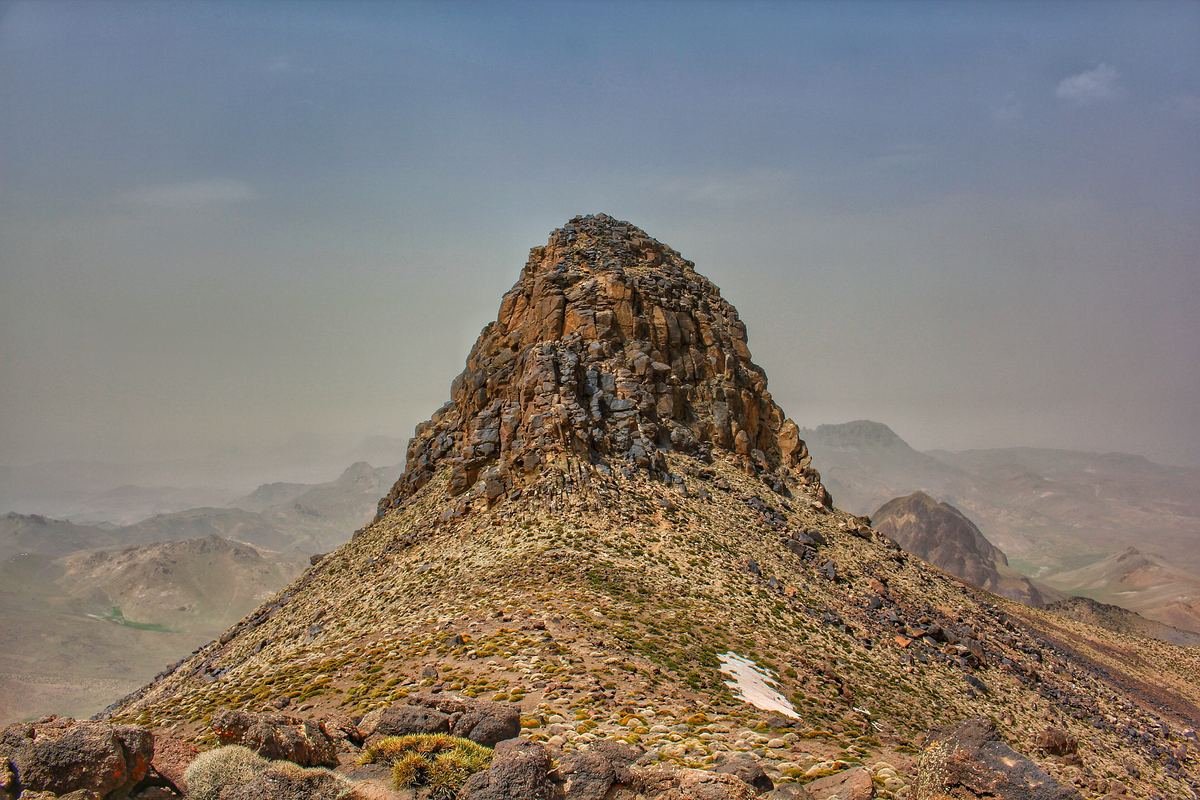
Ouarzazate to Taliouine and back is a long day, about 170 km each way. It works best if you are continuing to Taroudant or Agadir anyway, or if you stay overnight. The Siroua massif, which separates the two towns, is also a trekking area; our guide to hiking near Ouarzazate covers it.
Planning the day
A comfortable plan is to leave Ouarzazate after breakfast, reach Taznakht mid morning, visit a cooperative and a few shops, have lunch in town and drive back in the afternoon light. Allow five to six hours in total. If you are moving on to Agadir or Taroudant, Taznakht and Taliouine make natural stops that break a long drive.
In summer, the plateau is hot and exposed, so travel early and keep the air conditioning on. In winter, mornings can be very cold at this altitude. The trip combines well with two or three days of sightseeing around town; our Ouarzazate itinerary for 2 to 3 days shows how to fit it in.
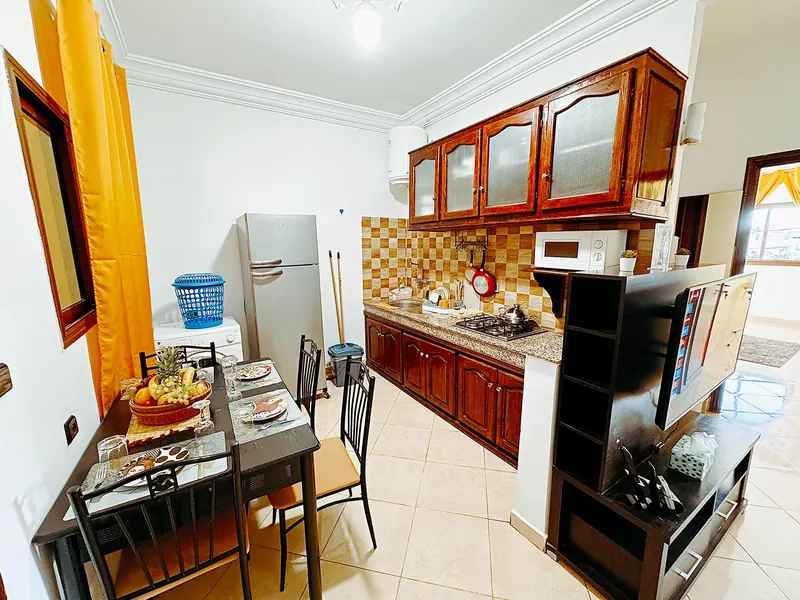
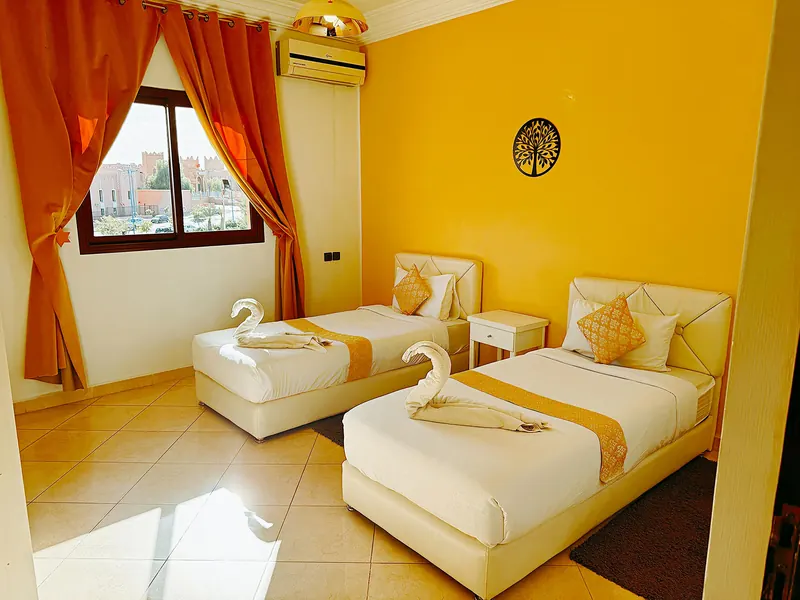
Coming back to Ouarzazate each evening is simple: Residence Chay is about 2 minutes from the airport and 3 minutes from the centre, with free guarded parking for your car, two-bedroom apartments with space to unroll a new rug, and a reception that can help arrange a driver for the day.
Questions travellers ask
How far is Taznakht from Ouarzazate?
About 85 to 90 km by the main N10 road, which takes around one and a half hours by car. Most visitors go as a half day or full day trip and return to Ouarzazate the same evening.
What is special about Taznakht carpets?
They are made by women of the Aït Ouaouzguite tribes around Jbel Siroua, usually from local sheep's wool, with dense geometric designs and warm colours such as saffron yellow, red and orange. Many are hand-knotted, others are flatwoven.
Are carpets cheaper in Taznakht than in Marrakech?
Often, because you are closer to the weavers and there are fewer middlemen, but it is not automatic. The final price depends on size, knot density, wool, dyes and your negotiation.
Can I visit Taznakht by public transport?
Yes. Grand taxis and buses between Ouarzazate and Agadir use the N10 through Taznakht. Times change, so check with the operators or at the Ouarzazate bus station the day before.
When is the saffron harvest in Taliouine?
The crocus flowers are picked over a few weeks from late October into November. Taliouine is about 85 km beyond Taznakht on the same road.